

The Power of Integration—How Companies Shape Transformation from Within

The power of integration: transformation from the inside out
An international company faced three key challenges: employee engagement, process optimisation and customer service. In the past, these issues were addressed separately. However, our experience shows that only integration can produce lasting results.
Those who understand employee engagement, customer service and process optimisation as interlinked success factors lay the foundation for profound transformation from within.
Studies confirm this correlation. According to Harvard Business Review, companies that integrate both customer experience (CX) and employee experience (EX) into their strategies achieve up to a 16% price premium (PwC). Researchers at MIT also show that organizations with high employee engagement achieve twice as much innovation revenue as companies with low engagement.
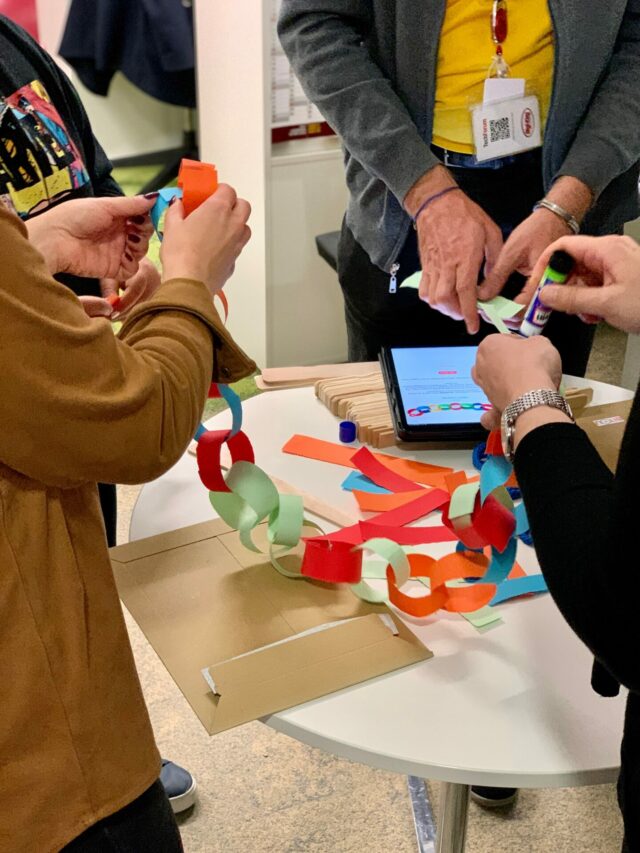
That is why we combined the three areas of action into an integrated simulation for our customer—with impressive insights and measurably better results.
1) Employee engagement: The foundation of an integrated culture
Committed employees are more productive, loyal, and innovative. When properly integrated, they actively drive change. Integrated employee engagement means that human resources strategy, customer focus, and process design are not viewed in isolation, but rather as a shared foundation.
2) Customer service: The integrated business focus
Customer service is at the heart of every company. It should not be reduced to direct customer contact. Excellent service only comes about when it is integrated into all structures, processes, and cultures. Only then does customer focus become the unifying principle of the entire organization.
3) Process optimization: Think holistically, act efficiently
Process efficiency is not an end in itself, but a central component of integration. Optimized processes make work easier for employees, reduce costs, and increase customer satisfaction at the same time. This creates a cycle that strengthens commitment, service quality, and innovation.
The power of integration
When all three factors interact, they reinforce each other:
- Committed employees provide better service.
- Customer-oriented processes increase satisfaction and efficiency.
- Satisfied customers boost motivation and growth.
However, without integration, these areas quickly run into difficulties: without commitment, there is no service; without service, there is no customer satisfaction; without efficient processes, there is frustration at all levels.
A practical example from the hotel industry shows that as employee frustration grew, customer loyalty and market position declined. Only when the company established integration as a strategic guideline did commitment, service quality, and innovative strength increase noticeably. The result: a jump from seventh to third place in a competitive comparison.
Conclusion: Integration is essential
Employee engagement, customer service, and process optimization are not separate disciplines. Integrating them is the key to sustainable transformation, innovation, and competitiveness.
|Andrew Grant
About the author

Andrew Grant is the CEO of the Australian company Tirian, as well as an author and facilitator. He brings many years of experience in the field of team development and is a specialist in innovation and transformation within companies.
With a keen sense for interpersonal dynamics and a great deal of enthusiasm for sustainable change processes, he regularly writes about topics that really help teams move forward.
You can find out more about Andrew and his current projects here.
You may also be interested in

Can AI become a team member?
It is obvious that AI is reliable and cooperative; after all, these systems were developed to reliably fulfil orders. However, the issue of trust in AI by companies and their teams is the subject of much debate.
How can the content of your conference be linked emotionally?
Small adjustments through individualization can set personal accents for your conference. Individualization should not only reflect the company dynamics, but also the topics of the conference.

It is high time to rethink employee motivation!
Whether we are motivated and efficient at work is strongly related to the DELIs. Whether teams realise their performance potential and whether it is fun to work in this team is also a result of motivation and appreciation.