

7 – 300
120 – 240 min (without reflection)
Virtual | Face to Face

Individual strategies, experience-oriented workshops and measurable results for sustainable change in your company. Achieving success together through effective change management.
⭐️⭐️⭐️⭐️⭐️
The workshop with Felix on change management was a real eye-opener for our team.
We not only understood change, we felt it. The combination of the “turnaround” activity and reflection in particular helped us to question entrenched structures and break new ground together.
– Sabrina G., Netze BW
Change is the new constant—is your team ready?
Change is not a project with an end date—change is a permanent state. Digitalization, generational change, restructuring, or new leadership models: the demands on managers and their teams are increasing every day. And with them, the pressure to implement change quickly, sustainably, and without friction.
But many change processes fail – despite a seemingly clear strategy. Why? Because change management doesn’t happen on paper, but in people’s minds and hearts. The change process will only be successful if everyone in the company is on board.
“As a manager, you don’t just shape structures – you guide people through uncertainty.”
BITOU brings change management to life.
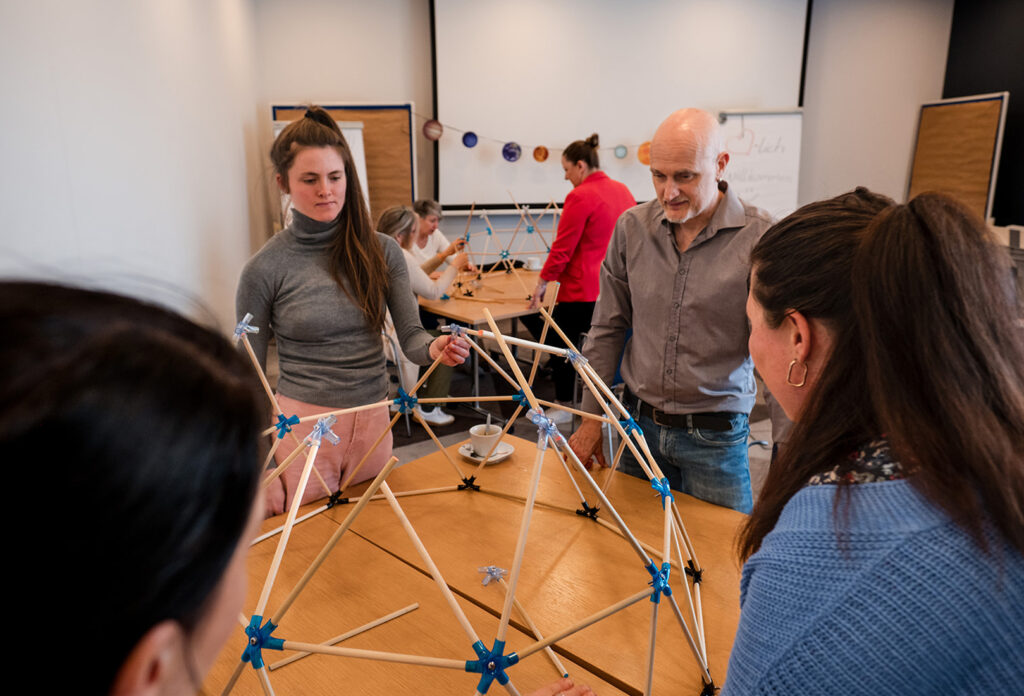
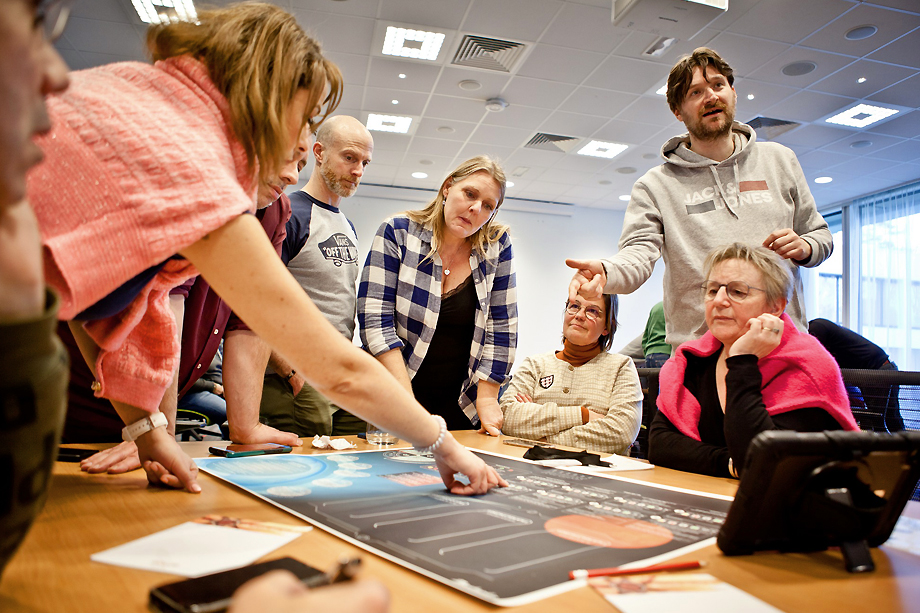
We support managers and their teams with practical, experience-oriented formats that enable them not only to moderate change, but also to actively shape and anchor it. Our change management workshops – such as the proven “Turnaround” format – create a safe space for reflection, a change of perspective, and a genuine willingness to change.

Change requires leadership and structure. With his 8-step model for change management, American Harvard professor John P. Kotter has developed one of the best-known and most practical roadmaps for how companies can successfully shape change processes. At BITOU, we also use this approach in some of our workshop formats to successfully guide teams through transformation.
His approach shows that change is not a coincidence, but follows clear steps – from creating a sense of urgency to anchoring new behaviors in the corporate culture for the long term.

1. Create a sense of urgency
Without a strong “why,” nothing will happen. Employees must recognize why change is necessary now—emotionally and rationally.
2. Build a strong coalition
Change needs supporters. A powerful team of leaders, key individuals, and change agents drives change forward.
3. Develop a vision and strategy
A clear, motivating vision provides orientation. It shows where you are going – and how. The strategy provides the steps to get there.
4. Communicate the vision for change
Clear, consistent, and frequent—good change communication repeats key messages and answers the question “What does this mean for me?” at an early stage.
5. Empower employees on a broad basis
Remove obstacles, provide resources, delegate responsibility—this creates scope for action and participation.
6. Make short-term successes visible
Small, tangible successes motivate. They show that the journey is worthwhile – and create credibility for the change.
7. Consolidate successes and initiate further changes
Change is never completely “finished.” Building on initial successes, processes, structures, and behaviors are further adapted.
8. Anchor new approaches in the culture
Only when the new is reflected in everyday life—in routines, ways of thinking, and leadership behavior—will change be sustainable.
People need guidance. Define early on where the journey is headed—and why. A clear vision provides security, motivates, and helps make decisions in the change process understandable.
Change starts at the top. Managers must visibly exemplify change, actively communicate it, and take questions seriously. Only those who come across as credible can build trust and get employees on board.
Change often fails due to resistance. Involving people early on, rather than just informing them, turns them into co-creators rather than affected parties. Participation creates acceptance – and often better solutions too.
Long-term change requires motivation. Quick wins show that the effort is worthwhile. They strengthen confidence in the process and generate positive energy.
Change management is not purely a numbers and strategy project. It is about people, identity, and security. Those who ignore feelings such as fear, frustration, or overwhelm risk internal resignation and resistance.
Change is only successful when new patterns of thinking and behavior become the norm. This takes time, repetition, and consistent role modeling by leadership.
The challenge:
Managers felt left alone in the company’s transformation process, and many expressed doubts about the feasibility of the change.
The workshop:
A one-day change management workshop was held in collaboration with BITOU. The highlight was the “Turnaround” activity, in which the entire team was confronted with targeted interruptions and unforeseen twists and turns – similar to a real change process.
The effect:
After the playful sequence, it was much easier for participants to talk about personal uncertainties and typical team reactions. The subsequent reflection enabled profound moments of insight – especially with regard to unconscious leadership signals, information flows, and dynamics.
| 09:00–09:30 | Welcome & check-in Gauging the mood, clarifying expectations, speed dating |
| 09:30–10:30 | Impulse: What is change management? Kotter, Lewin & Co. – a brief and practical overview |
| 10:30–11:00 | Reflection: Where are we currently in the change process? Classification using the “change radar” with visualization |
| 11:00–11:15 | ☕ Coffee break |
| 11:15–12:45 | Erlebnisphase: Aktivität „Turnaround“ Veränderung spielerisch erleben – mit Dynamik, Verwirrung & Perspektivwechsel |
| 12:45–13:45 | 🥗 Mittagspause |
| 13:45–14:30 | Auswertung & Transfer Was war zu beobachten? Was bedeutet das für unsere Führung? |
| 14:30–15:30 | Impulse: Erfolgsfaktoren im Change Kommunikation, Beteiligung, Emotionen |
| 15:30–16:30 | Praxiswerkstatt Bearbeitung konkreter Fallbeispiele aus dem Unternehmen mit Reflektion |
| 16:30–17:00 | Abschluss & nächste Schritte Individuelle Commitments & Follow-up-Tools, Buddy-System |