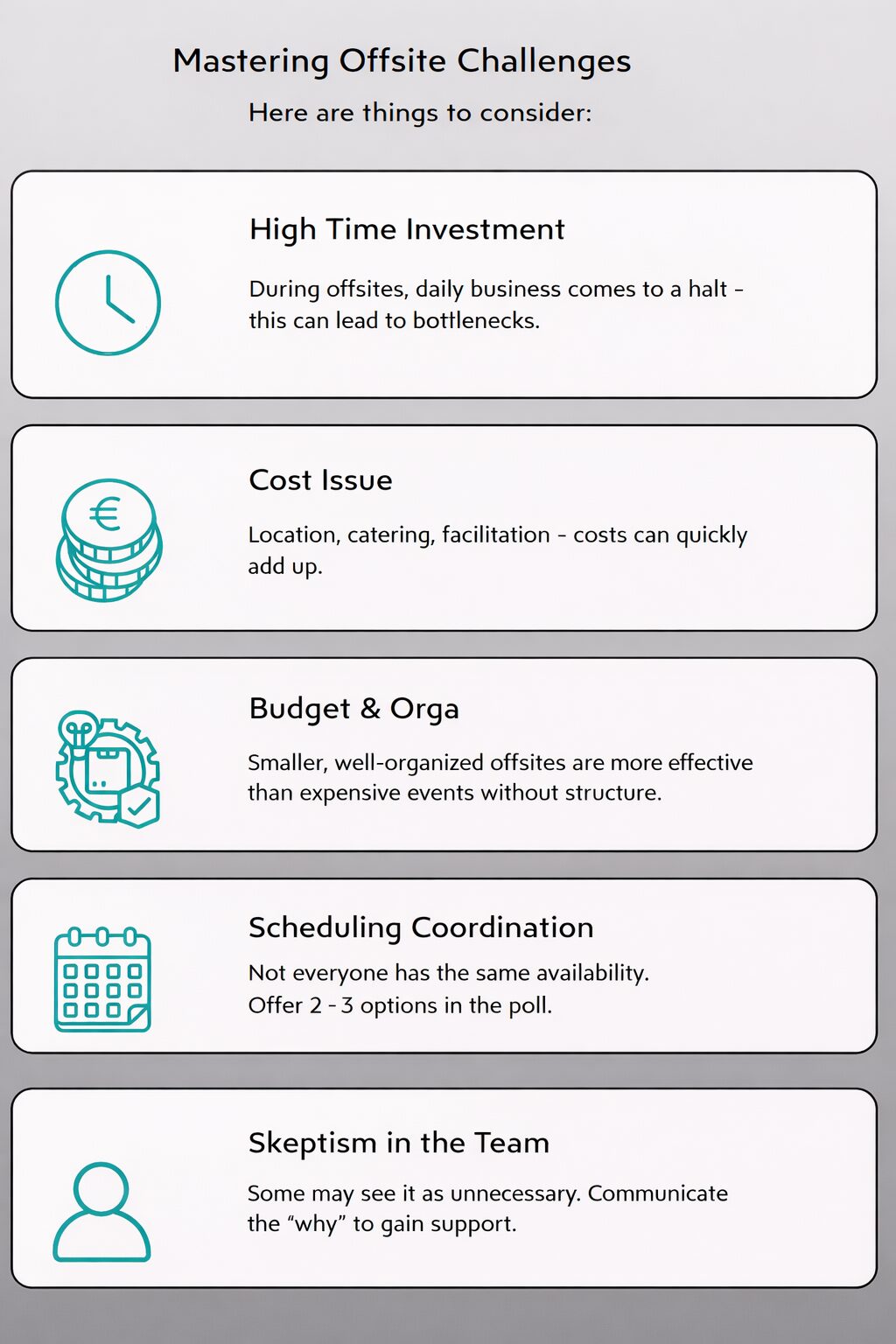
Frequently occurring cost factors include: rent for the venue/conference room, meals and catering, hotel accommodation (if applicable), travel (train/flight/bus), external moderators or trainers, supporting programme/team-building activities and materials. As a rough guide, in Germany, expenses of up to €110 per employee and event are tax-free (this is the allowance up to which, for example, company celebrations can be deducted per person).
There is no such thing as “typical costs” because every offsite is different. Small team events can cost a few thousand pounds in total, while large company retreats can run into five figures.
To measure the success of an offsite event, you should define success criteria during the planning stage. Ideally, these should be derived directly from the offsite goals. Examples: If the goal was to strengthen team cohesion, you could conduct a feedback survey afterwards and ask whether employees feel they have formed new relationships or built trust.
Open dialogue and involvement are the best ways to overcome resistance. Many preconceptions can be dispelled once the benefits and process are understood. Show the team that the offsite is designed to improve their daily work, not to boss them around. Then even critics will usually become curious – and be pleasantly surprised afterwards.
Offsites can last from one day (an 8-hour intensive workshop plus perhaps an evening programme) to several days. Two days is common, often with an overnight stay, as this allows for sufficient working time and team bonding. Smaller offsites (especially local ones without travel) can also be held on a full day – in this case, the goals must be clearly defined.
The frequency of offsites depends on your company and team. Too frequent offsites could lose relevance or take up too much working time.