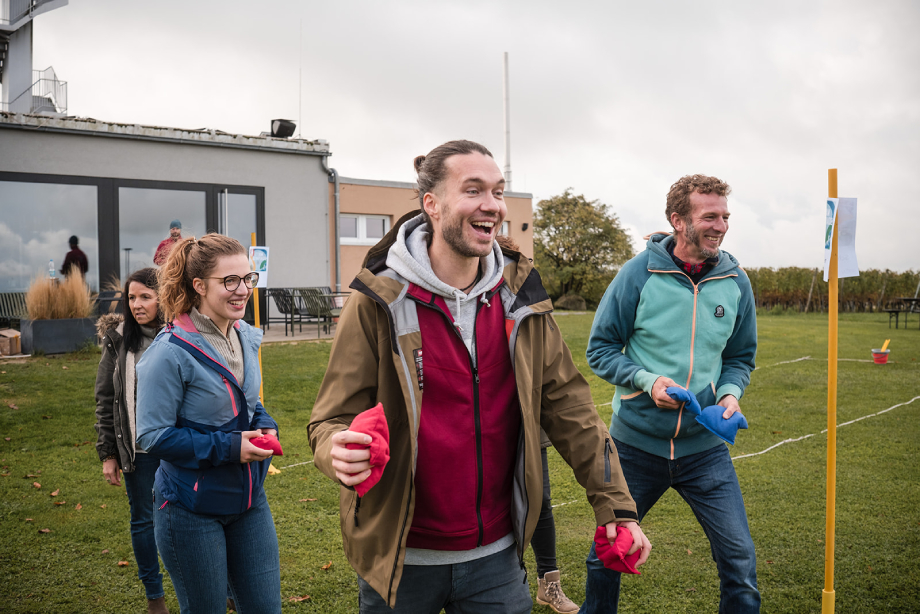
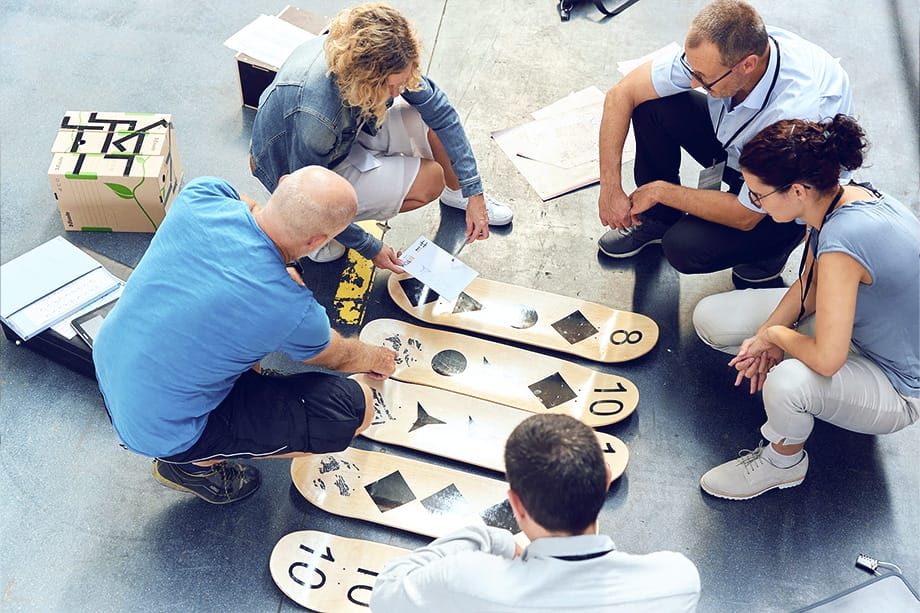
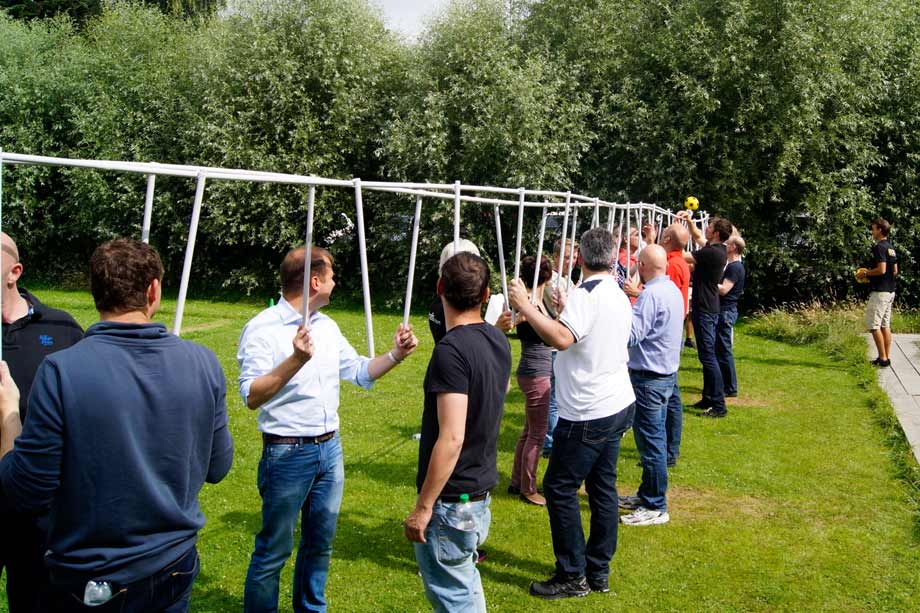
You want to build lasting team spirit and experience a genuine sense of togetherness. Here you can learn how team spirit develops and receive specific measures and tips.
⭐⭐⭐⭐⭐
“On Thin Ice” was a real game changer for our team. After a lot of working from home, our sense of unity had noticeably weakened – the event brought us back together. The challenge of crossing the ‘ice flow’ together showed us how important trust, communication and thinking ahead are. Since then, we often talk about our ‘ice floe moments’ – a lasting impulse with a real team effect.”
– Nadine H., Team Leader, Bosch

The we feeling describes a deep, emotional sense of cohesion, trust and belonging within a group. It arises when people experience themselves not only as individuals, but as part of a common whole – connected by shared goals, values and experiences (cf. Duden, 2024; Eckloff, 2017).
In companies, a sense of unity is a decisive factor for motivation, commitment and sustainable team success. It promotes psychological cohesion, facilitates communication and increases the willingness to take responsibility for one another. Studies show that teams with a strong sense of unity are more resilient, more productive and more innovative – especially in complex or stressful situations.
At BITOU, we use targeted team-building formats to bring this sense of togetherness to life in organisations. Formats such as “On Thin Ice”, “Chain Reaction XXL” and the escape game “Code Crackers” are not purely entertainment offerings – they create emotional anchor points and shared moments of success that bind teams together in the long term.
Our experience shows that a sense of togetherness cannot be imposed – but it can be specifically promoted when people experience something together, overcome challenges and feel a genuine connection. This is exactly why we at BITOU design every single team-building event.

At the start of the project, involving several internal and external partners, the production and sales team at allnatura were looking for a team event that could do more than just entertain: It was intended to bring people together, facilitate new connections and foster a sense of shared responsibility.
The aim: a tangible sense of togetherness that extends beyond departmental and company boundaries.
At short notice, allnatura decided to upgrade from Chain Reaction Compact to the Chain Reaction XXL format – and thus opted for a team event that, like no other, promotes the development of team spirit and trust and is perfectly suited to large groups.
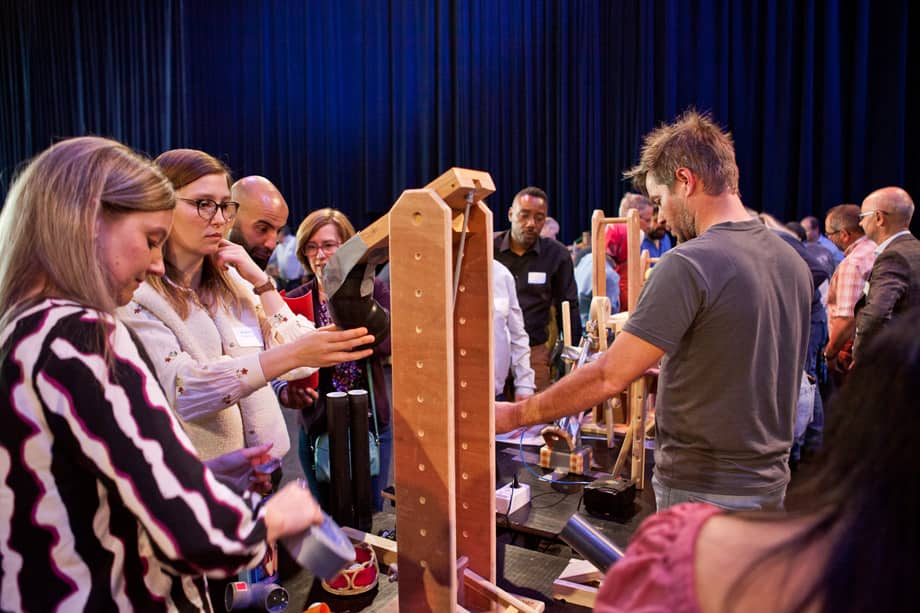
81 people gathered at the company’s own allnatura Campus, where everything had already been perfectly prepared. The small groups worked at 18 team tables, each with a part of the Chain Reaction – but only through the interaction of all groups could the whole thing work.
This is precisely where the sense of togetherness came into play: rather than individual actions, the focus was on connections and collaboration. On communication. On the realisation that my actions have an impact on others – and that we can only succeed together.
From the trainer’s perspective, the moment at Table 15 was particularly impressive: it wasn’t clear whether the chain reaction would go through, as there had been repeated interface issues here in the run-up – but it worked! Suddenly there was this collective smile, this quiet sense of wonder that we can do this together.
It wasn’t loud, it wasn’t spectacular – but that is precisely what a sense of togetherness is: an inner, shared understanding that we belong together.
The feedback was clear: expectations were not only met, but exceeded. Colleagues who had not known each other before worked hand in hand. New connections were formed, silos were broken down – ‘I’ became ‘we’.
For the allnatura project team, this team-building exercise was the perfect kick-off: emotional, unifying and with a lasting impact.
As a next step, BITOU recommends targeted team development programmes, such as those focusing on conflict management or dealing with parallel work processes. After all, where many departments come together, clear communication structures are needed alongside a sense of unity – as well as the courage to resolve tensions together. A good team development format here would be the Chocolate Factory.

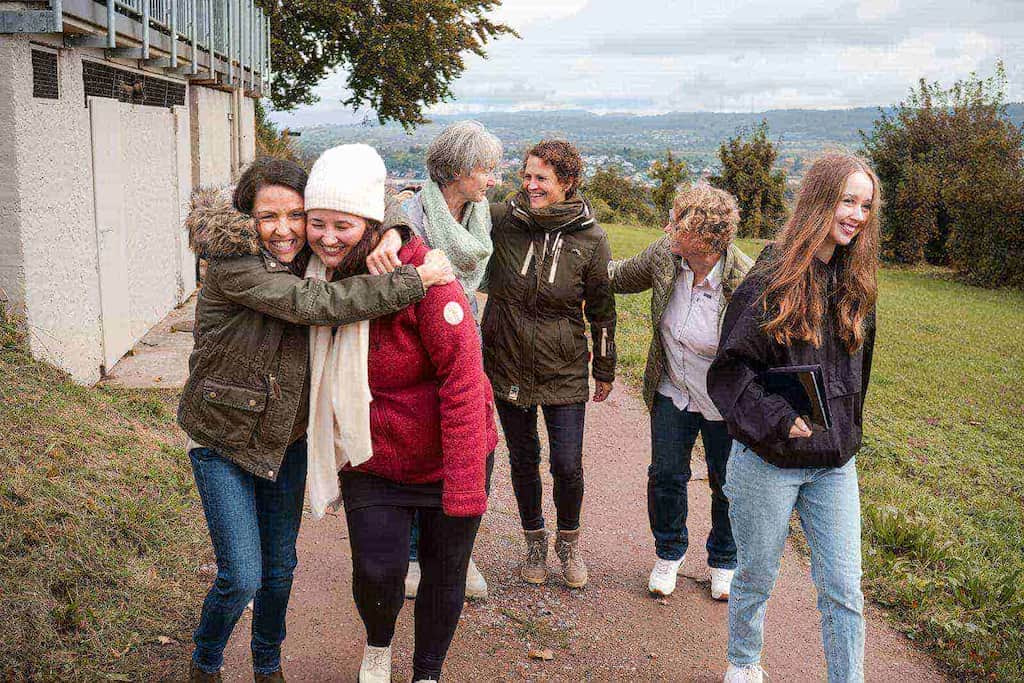


Virtual collaboration lacks the very things that often bring teams together quite naturally: a quick chat in the kitchen, a spontaneous exchange in the corridor, or a shared laugh over lunch. What happens almost automatically in physical office environments needs to be consciously cultivated in the virtual space – especially when it comes to one of the most important elements of successful teamwork: the sense of togetherness.
In virtual teams in particular, this sense is often less palpable. Collaboration is functional, but not necessarily bonding. Information flows, yet the interpersonal aspect falls by the wayside. The danger: isolation, misunderstandings, declining motivation – even though everyone is ‘on board’.
A sense of togetherness cannot be forced – but it can be deliberately nurtured. This requires purposeful spaces for interaction, shared experiences and emotional anchors. Rituals such as virtual check-ins, joint online celebrations or open feedback sessions create structure and trust. Small gestures – a “thank you”, a personal exchange, a genuine “How are you really doing?” – often make the biggest difference.
Even more effective are digital team events that are more than just games: formats that enable reflection, promote communication and create genuine connections.
Every year, the Gallup study examines the question: what is the level of emotional engagement among employees in Germany? What is the level of trust and loyalty within teams, and what can companies learn from this? The key findings from this study form a cornerstone of our work. A company can only thrive if its employees experience joy, a sense of purpose and success in their work.
For the first time in the history of the Gallup Engagement Index Germany, the level of emotional engagement among employees is in single figures. At the same time, the number of employees without emotional engagement has also fallen. The result: the overwhelming majority are doing the bare minimum.
Weak emotional ties are driving a willingness to change jobs: only half of employees want to remain with their current employer in a year’s time, whilst headhunters are more active than ever before. At the same time, trust is declining: not only in the employer’s financial future, but also in its management. How can German companies reverse this trend and regain the trust and loyalty of their employees?
Detailed information and further figures can be found in the report on the Gallup Engagement Index Germany 2024.