

Giving constructive feedback: The key to motivated staff

The Paradox of Recognition – Why Silence Comes at a High Price
“No criticism is praise enough.” In many boardrooms, this phrase is still regarded as a maxim of efficiency. Yet this is precisely where the paradox of recognition lies: whilst managers believe they are maintaining professionalism by refraining from criticism, psychologically they often achieve the opposite. The human brain does not interpret silence as satisfaction, but as disinterest.
In a world of work characterised by skills shortages and a desire for a sense of purpose, feedback has become one of the most valuable assets. Anyone wishing to retain top talent today must understand that employees rarely leave a company simply because of the company itself – they often leave managers who take their performance for granted.
Appreciative feedback is far more than just an occasional, vague pat on the back. It is a key factor in transforming a group of employees into a highly motivated team that delivers top performance not out of a sense of duty, but out of conviction. This is precisely where lasting motivation is born.
Why recognition boosts motivation: The chemistry of success
There is far more to the motivational effect of feedback than just a ‘feel-good factor’. It is a deeply ingrained psychological mechanism. When we receive genuine recognition, our brain reacts in much the same way as it does to a reward in the form of food or money.
1. Neurobiology: The body’s own reward system
As soon as a manager gives specific, positive feedback, the employee’s brain releases a cocktail of neurotransmitters. At the heart of this is dopamine – our ‘motivation hormone’. It not only provides a brief moment of happiness, but also links the performance achieved with a positive stimulus. The result: the brain wants to repeat this state. Self-motivation therefore increases quite naturally, without the need for external pressure.
2. Basic psychological needs
According to self-determination theory (Deci & Ryan) motivation and well-being depend on three basic psychological needs, which are directly addressed through appreciative feedback:
- A sense of competence: The employee receives the reassurance: “I am capable of doing what I do, and my efforts are recognised.”
- Autonomy: Valuing independent decision-making strengthens confidence in one’s own judgement.
- Belonging: Feedback conveys the message: “You are a valuable part of the whole.”
3. The leverage effect for the company
Appreciation is not an end in itself, but a measurable factor for success. People who feel appreciated demonstrate significantly greater resilience to stress. The risk of burnout decreases, whilst identification with the company’s goals increases.
In short: A valued employee doesn’t just work for the pay cheque at the end of the month, but also for the daily confirmation that their work makes a difference. That is precisely why feedback, recognition and motivation are so closely linked.
The anatomy of constructive feedback: precision rather than a scattergun approach
To ensure that feedback doesn’t fizzle out as an empty platitude, it needs a clear structure. A casual “Well done!” in passing is nice, but it lacks the substance needed to generate lasting motivation. Genuine, appreciative feedback is like a tailor-made suit: it has to fit perfectly.
The anatomy of effective feedback can be broken down into three essential components:
1. The specific observation – the anchor
Avoid generalisations such as “You’re always so committed”. When faced with blanket praise, the other person’s brain often tunes out or instinctively looks for counterexamples.
Better: “I noticed how you responded to the customer’s critical objection in yesterday’s meeting. You stayed calm and immediately asked a solution-oriented question.”
Why? Because the employee really feels valued.
2. The effect – the meaning
Feedback only has its full impact when the employee understands the difference their actions make. Explain the consequences – for you, the team or the project.
Example: “This immediately eased the tense atmosphere, and we were able to bring the conversation to a constructive conclusion.”
Why? It conveys a sense of relevance and boosts self-efficacy.
3. Respect for the individual – the message
Link the action to one of the employee’s personal strengths. This will elevate the appreciative feedback from a purely factual level to a more personal one.
Example: “I appreciate your ability to stay focused on the solution, even in stressful situations. That gives the whole team a sense of security.”
Why? It boosts self-esteem, fosters a sense of belonging and helps maintain long-term motivation.
The golden rule is: constructive feedback is not a one-way street. It is not about ‘entertaining’ someone, but about holding up a mirror in which they can see their own strengths crystal clear.
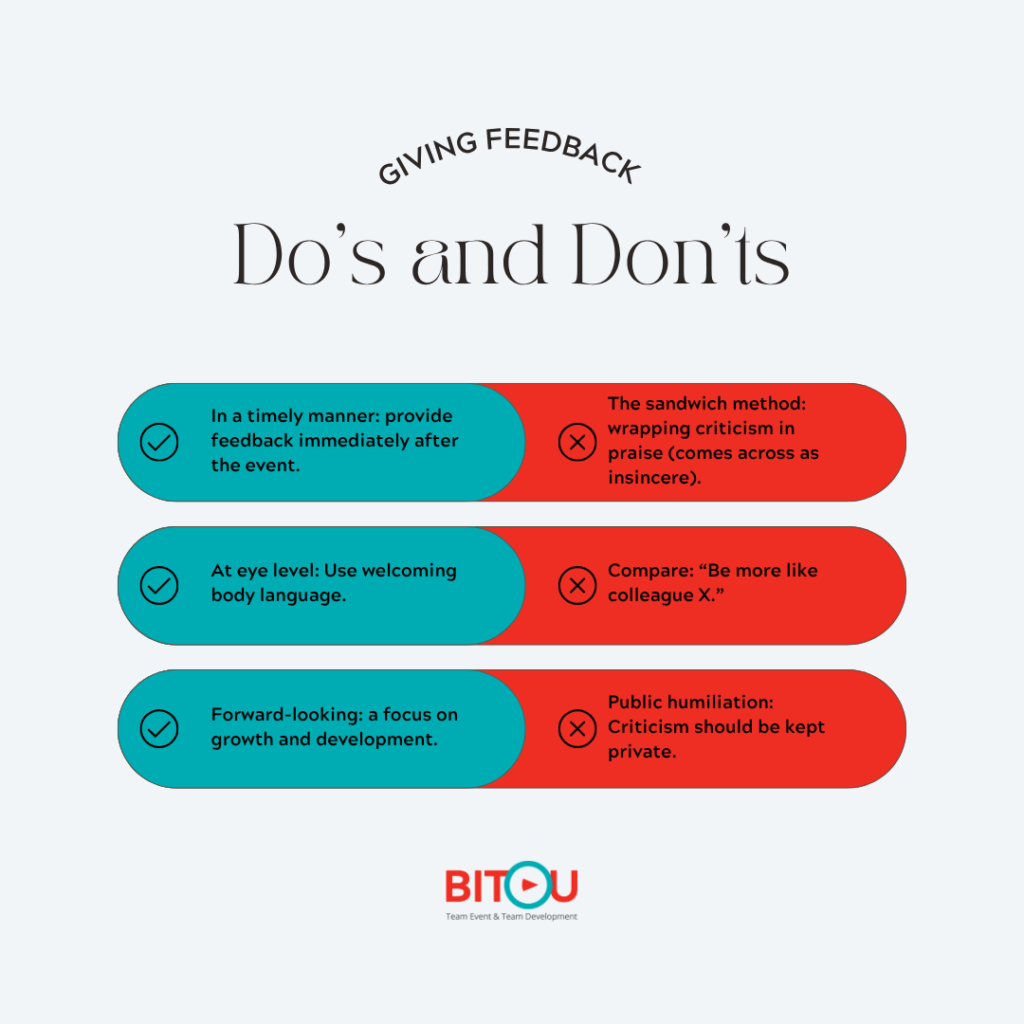
Establishing a culture of feedback: From one-off event to standard practice
A single word of praise can have a big impact in the short term, but genuine motivation only comes from consistency. A vibrant feedback culture means that feedback is not seen as a threatening ‘reckoning’, but as a natural part of working together – just like the daily check-in or the coffee break.
How can you transform your team from a feedback desert into an oasis of growth?
The three pillars of a feedback culture
- Rhythm rather than an annual cycle:
Don’t wait for the annual performance review. Over the course of twelve months, details fade from memory and emotions cool. Instead, make micro-feedback a regular part of your daily routine. A brief, specific piece of feedback following the completion of a project or a presentation is far more effective than a PowerPoint marathon at the end of the year. - Setting an example – Leading by Example:
A culture of appreciation starts at the top. As a manager, actively seek feedback on your own leadership style. When your team sees that you, too, are willing to learn and view criticism not as an attack but as a way to help, everyone else will feel more comfortable speaking up. - Psychological safety and a culture of learning from mistakes:
Respect does not mean sweeping problems under the carpet. In a healthy workplace culture, mistakes are discussed as opportunities to learn. The aim is not to apportion blame, but to analyse the situation together: “What happened, what can we learn from this, and how can I better support you next time?”
Feedback as a 360-degree experience
Encourage your team to give each other constructive feedback. When recognition comes not only from the top down, but also from colleagues sitting next to them, it noticeably strengthens team spirit and trust within the group.
Practical tip: Occasionally start team meetings with a ‘flash feedback’ session, in which everyone briefly mentions one thing that a colleague did last week that was particularly helpful or impressive.
Conclusion: Appreciation as the operating system of success
Appreciative feedback is not merely a decorative accessory of modern leadership, but the foundation upon which motivation, loyalty and performance can flourish. Those who understand that recognition is not a scarce commodity to be saved for ‘special occasions’ can bring about lasting change in their team’s dynamics. It is about putting an end to the invisibility of performance and focusing specifically on what is already working well.
However, an established corporate culture cannot be changed overnight by decree. The transition from a hierarchical culture of criticism to a genuine, respectful working relationship is a process that requires practice and reflection.
An outside perspective often helps here: where internal change gets bogged down by old patterns, targeted team development programmes, facilitated workshops or practical training sessions can provide the decisive impetus. They offer a safe space not only to understand new feedback methods in theory, but also to practise them in real life, thereby laying the foundations for a new, motivating working environment. After all, a healthy feedback culture is not a goal to be achieved, but an attitude that is lived out together anew every day.
|Pia Neugebauer
About the author
 |
Pia Neugebauer is the Managing Director and Head of Human Resources at BITOU GmbH and brings with her many years of experience in human resources management and leadership styles. With a keen understanding of interpersonal dynamics and a passion for sustainable change processes, she regularly writes about topics that genuinely help teams move forward. You can find out more about Pia and her current projects here. |
You might also be interested in

Employee communication: How to keep your team informed
In many companies, important information gets lost in everyday life despite numerous communication channels. Decisions do not reach all employees, priorities are understood differently, and updates disappear in day-to-day business. This article shows how structured employee communication helps to create clarity, organize information flows, and keep teams permanently on the same page.
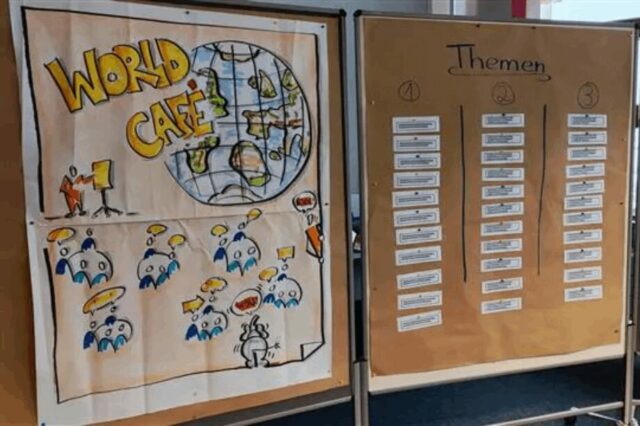
World Café: Creative teamwork for sustainable business success
The World Café is a creative and interactive method that goes far beyond simple brainstorming. It offers numerous advantages, especially for companies that want to promote teamwork and develop innovative solutions at the same time.
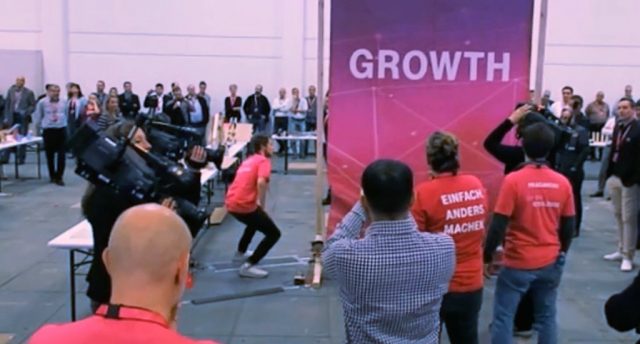
How the individualization of the chain reaction XXL became a full team success
Read here how we not only realized a chain reaction XXL with a total of 2,000 managers, but also made the company’s new service strategy tangible for our colleagues.