
Team-building fatigue: When team events no longer have the desired effect

Another soapbox race? The third mini-golf outing in a row? If the announcement of the next company event elicits nothing but a half-hearted smile or a quiet groan rather than anticipation, your company may be experiencing a familiar phenomenon: team-building fatigue.
After years of similar, run-of-the-mill events, many employees begin to feel a certain sense of saturation. Team-building no longer feels like a reward, a valuable break or an opportunity for genuine interaction. Instead, the event becomes just another item on an already packed to-do list.
The good news is that you don’t have to do away with team-building altogether. What’s crucial, rather, is to re-evaluate the existing formats, objectives and processes. With the following four strategies, you can counteract team-building fatigue and generate new enthusiasm for shared experiences.
1. Creating genuine added value: choosing innovative formats with a connection to everyday life
A common reason for team-building fatigue is the feeling that the event has no discernible benefit: “What does this actually do for our day-to-day collaboration?”
You should therefore opt for innovative formats that combine entertainment with topical issues and specific challenges from everyday working life. When a team-building activity is not only enjoyable but also addresses communication, collaboration or dealing with change, it creates lasting added value.
A fitting example is the Chain Reaction AI. The format explores the currently very prominent role of artificial intelligence in everyday working life and combines it with an innovative and entertaining team-building activity. Participants experience how human creativity, clear communication and the targeted use of AI can work together. As a result, a relevant topic for the future is not dealt with theoretically, but can be experienced collaboratively, playfully and in a practical way.
This connection to everyday life ensures that the event is not seen as just another leisure activity. It provides opportunities for conversation, opens up new perspectives and leads to insights that can be applied to collaboration within the company.
2. Increasing participation: Letting the team help shape the process
Nothing creates distance more quickly than an event that is decided ‘from above’ without consultation. If staff feel they have no say in how it is organised, their motivation to take part often drops as well.
You should therefore involve your team in the planning process at an early stage. Even a short, anonymous survey can reveal the expectations, needs and limitations within the team.
Possible questions include:
- What is the aim of the event: relaxation, getting to know each other better, creativity, or tackling a specific team-related issue?
- Which setting do you prefer: indoors or outdoors, active or more relaxed?
- Which formats have been well received so far, and which have been less so?
The way in which communication is handled also plays an important role. If the event is presented as an invitation and a shared opportunity, it fosters a different attitude to that which arises when it is perceived as a compulsory event. Too much pressure can increase resistance and thus further contribute to team-building fatigue.
3. Creating transparency: Clearly communicating the ‘why’
Why is the event taking place? If the only answer is, ‘Because we do it every year’, there’s no clear purpose to it.
You should therefore make it clear before the event what the aim of the team-building activity is. Is it about thanking staff for their hard work and celebrating together? If so, the business aspect should deliberately take a back seat.
If, on the other hand, the aim is to strengthen team spirit following a reorganisation, improve cooperation between departments or bring a new team together, this may also be stated openly.
Employees do not need to be persuaded with exaggerated promises. Setting honest and clear objectives is often enough. Those who understand why they are investing their time in the event tend to approach it with less scepticism.
4. Leave some breathing space: don’t overload the schedule
A common mistake in event planning is trying to fill every minute with activities. Whilst well-intentioned, this can quickly become exhausting. Employees who find many social situations draining, in particular, may perceive a tightly scheduled event as more of a burden than a welcome change of pace.
You should therefore make a conscious effort to schedule breaks and free time. Not every moment needs to be moderated, guided or linked to a task.
Often, the most valuable conversations arise quite spontaneously: over a coffee, during a short break or whilst winding down together. These unplanned encounters create space for personal interaction and can be just as important for team spirit as the actual programme itself.
Conclusion: Relevance and quality trump routine
Team-building fatigue does not mean that staff are fundamentally uninterested in socialising or shared experiences. Rather, it is an indication that previous formats have lost their impact, have been repeated too often, or no longer meet the team’s current needs.
Those who focus on varied, experience-based formats with a clear objective and a genuine link to day-to-day working life can generate new motivation. Through participation, transparency and sufficient freedom, what might otherwise be perceived as a compulsory event is transformed back into a shared experience that brings people together and leaves a positive lasting impression.

You might also be interested in
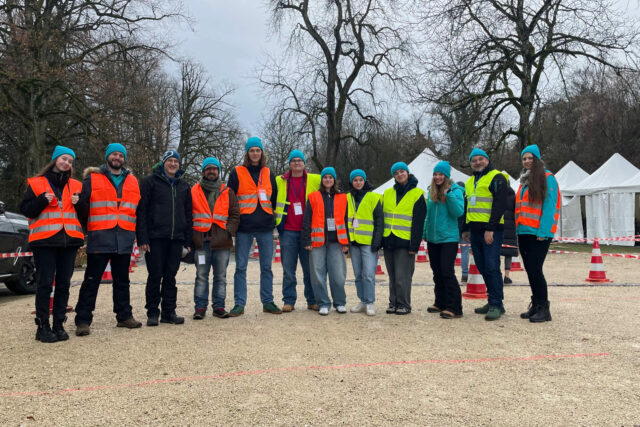
24h Le Mans with a difference – at Marbach Castle
We understand individualization not only as an adaptation of the existing, but also as creating tailor-made events especially for you.
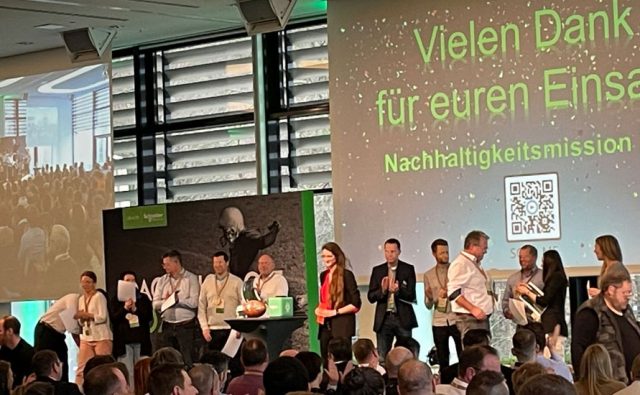
A SALES Kick Off with a “lasting” effect for the entire DACH region
Sustainability – a word that we have been encountering more and more frequently in almost all areas of our lives in recent years. But what exactly does sustainability mean? While in everyday language we associate the term with longevity and environmental protection, among other things, sustainability refers to much more.
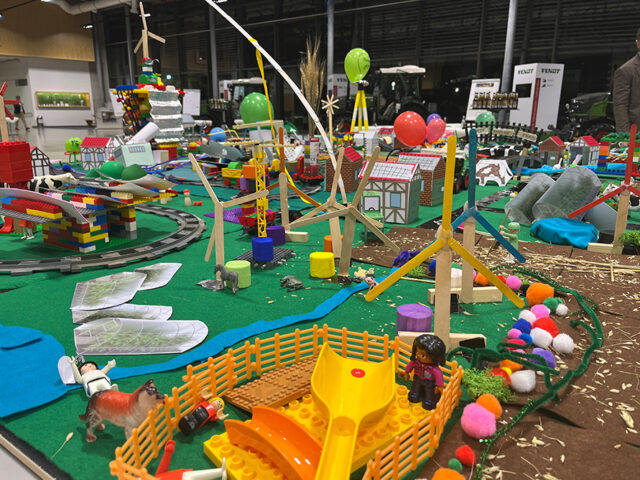
Future Farming with Fendt – What does the future of agriculture look like?
This event with 200 participants shows the uniqueness of individually designed events compared to standard products based on Fendt. Events such as our Smart Challenge, Quer durchs Hotel and Future Farming (City) are the focus and offer content specifically geared towards company-specific topics.