Agility Workshop

Agility is an approach that enables teams to respond to change in a flexible and adaptable manner. In a dynamic working environment where customer requirements and market conditions are constantly changing, agility is crucial for implementing projects efficiently and successfully. Agile teams work in short cycles, known as iterations, and place great emphasis on continuous improvement and direct communication. Through close collaboration and rapid feedback, they can respond flexibly to new challenges and develop solutions at an early stage. This way of working promotes innovation, boosts productivity and leads to better results for the whole team and its projects.

BITOU Agility Workshop Programme

An introductory workshop on agility consists of three phases: knowledge transfer, a practical, hands-on module, and a concluding reflection session focusing on applying the learnings to everyday work.

Introduction and theoretical knowledge on the topic of agility

The workshop begins with an introduction to the fundamentals of agility. Concepts such as Scrum, Kanban and the principles of the Agile Manifesto are presented. Participants learn what agility means, why it is important in today’s working world, and how it can be applied to different areas of work. BITOU draws on its many years of experience with teams to convey the topic in a clear and practical way. This phase serves to establish a shared understanding and lay the theoretical foundations.

Delivering an activity module

In the second part of the workshop, participants apply what they have learnt in a playful way through an activity module. BITOU offers sophisticated modules tailored specifically to teams and designed to foster agility. In a simulated environment, such as our Lego Serious Play, a situation is created in which participants must apply agile principles as a team to tackle a task together. The teams experience first-hand how important collaboration, rapid decision-making and flexibility are. BITOU’s years of experience enable us to design the module in such a way that it is particularly educational and engaging for the group.

Reflection and application to everyday working life

Following the activity module, the experience is reflected upon. Participants discuss the challenges they have overcome, which methods proved helpful, and how the agile principles were specifically applied during the exercise. Our qualified trainer facilitates this reflection session and supports the team in analysing the insights and applying them to their daily work. This transfer process is crucial for embedding what has been learnt sustainably into everyday working life. Through BITOU’s close support, the team can develop clear action strategies and continuously improve.

Benefits of the BITOU approach

Thanks to years of experience working with teams and providing ongoing support, BITOU offers the ideal foundation for integrating agility into day-to-day work. The sophisticated activity modules are practical, engaging and effective at making complex concepts easy to understand. BITOU ensures that participants not only acquire theoretical knowledge, but can also apply it actively and sustainably in their teamwork.

Agility – Teams in Transition

Workshop Agilität

Agile teams in the workplace

Agile teams differ from traditional teams primarily in their flexibility and self-organisation. Whilst rigid hierarchies and fixed plans often dominate in traditional teams, agile teams work in short cycles, known as sprints, and regularly adapt their priorities to new requirements. They place great emphasis on direct communication, rapid feedback and continuous improvement. A key advantage of agile teams is their ability to respond more quickly to change, leading to higher productivity, better collaboration and a stronger focus on customer needs. This enables them to complete projects more efficiently and with fewer delays.

The Agile Manifesto

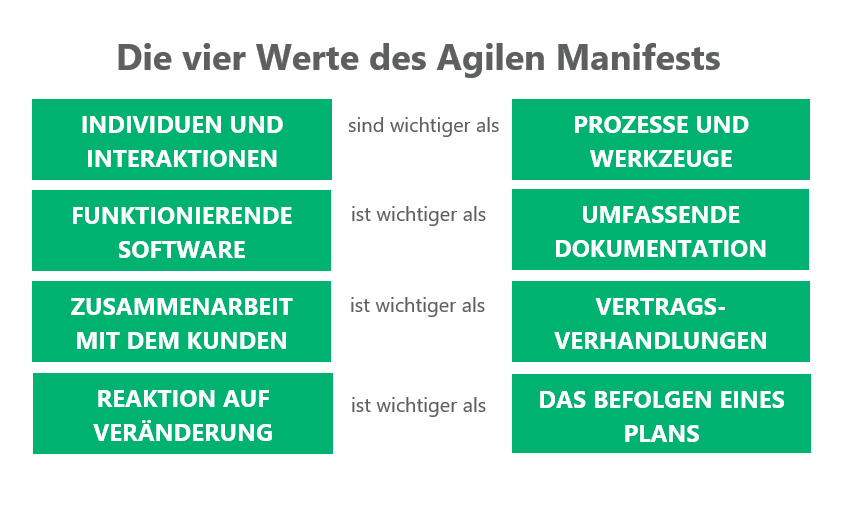
The Agile Manifesto is a seminal document that encapsulates the core values and principles of the agile way of working. It emphasises four key values: people and their collaboration take precedence over rigid processes; working results are more important than extensive documentation; genuine collaboration with the customer is more important than contract negotiations; and flexibility is more important than strictly following a fixed plan. For agile teams, the Manifesto is a valuable tool because it helps them to focus on what matters most: responding quickly to change, working closely as a team, and maintaining a constant focus on customer value. It fosters a culture of adaptability and innovation that empowers teams to work dynamically and efficiently.

Agiles Manifest DE Individual
Quelle: boxcrytor.com
addagile
Quelle: 2.codebay.us

Scrum

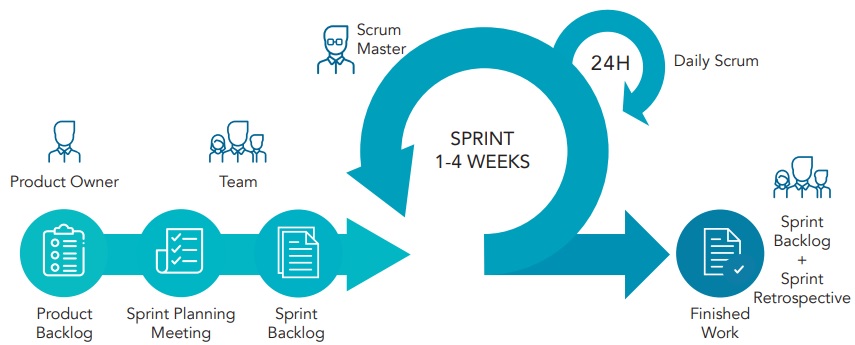
Scrum is a tried-and-tested framework that helps agile teams manage complex projects efficiently. It is based on fixed roles, clearly defined meetings and short work cycles known as sprints. Through regular coordination meetings and retrospectives, Scrum enables teams to adapt continuously to changes and promotes ongoing improvement. This model is particularly valuable for agile teams because it creates transparency, defines clear responsibilities and focuses on rapid, actionable results. Scrum helps teams remain flexible and organised, leading to higher productivity, better collaboration and faster responses to customer requirements.

The benefits of agile teams

An agile way of working can have far-reaching positive consequences for a company in the long term. Through continuous adaptability and a focus on collaboration, agility fosters a culture of innovation and efficiency. Agile teams learn to respond more quickly to market changes and customer needs, giving the company a decisive competitive advantage. At the same time, this way of working strengthens the teams themselves: they become more self-organised, take on more responsibility and continuously improve their work processes. This builds trust – both within the team and between teams and senior management. Over time, agility leads to a more sustainable and resilient company that can operate flexibly and with a secure future.

Change Management Header

Agile in a team – BITOU activity modules

Applying what you’ve learnt to everyday work

Successfully applying the knowledge gained in the workshop to everyday work is crucial to ensuring that agility is practised sustainably and effectively within the organisation. Our workshop is designed to prepare participants from the outset to apply agile principles in their daily work. Our qualified trainers provide intensive support throughout the entire process, ensuring that participants can integrate what they have learnt in the best possible way.

Practical relevance from the outset

Even during the workshop, care is taken to incorporate practical examples and real-life work situations from the participants. This helps to establish a direct link to their professional reality. Through targeted reflection and discussion, the teams develop concrete strategies for integrating agile methods and mindsets directly into their work processes. This ensures that participants have a clear picture from the outset of what agility can look like in their specific working environment.

Support from our trainers

Our experienced trainers, such as Lars Nebe, who specialises in agility, play a central role in the transfer process. They ensure that participants not only understand the theoretical principles but are also able to apply them in practice. Through practical exercises and feedback loops, the workshop focuses on identifying and overcoming potential obstacles in day-to-day work. This ensures a smooth transition to agile working practices.

Ongoing support after the workshop

Support does not end after the workshop: Our trainers remain available to the teams afterwards to continue supporting the transition into everyday working life. They offer individual advice, clarify any outstanding questions and provide support in overcoming challenges that may arise when implementing agile methods. This ongoing support ensures that agility does not remain merely a theoretical concept, but is firmly embedded in everyday working life.

Long-term benefits for teams and organisations

This guided transition process builds teams’ confidence in the new working methods and ensures that agile principles are firmly embedded in day-to-day working practices. In the long term, this leads to stronger team dynamics, improved collaboration and a flexible, adaptable corporate culture. Teams that receive professional support from the outset are better equipped to fully exploit the benefits of agility and ensure long-term success.