

12 team-building activities for businesses
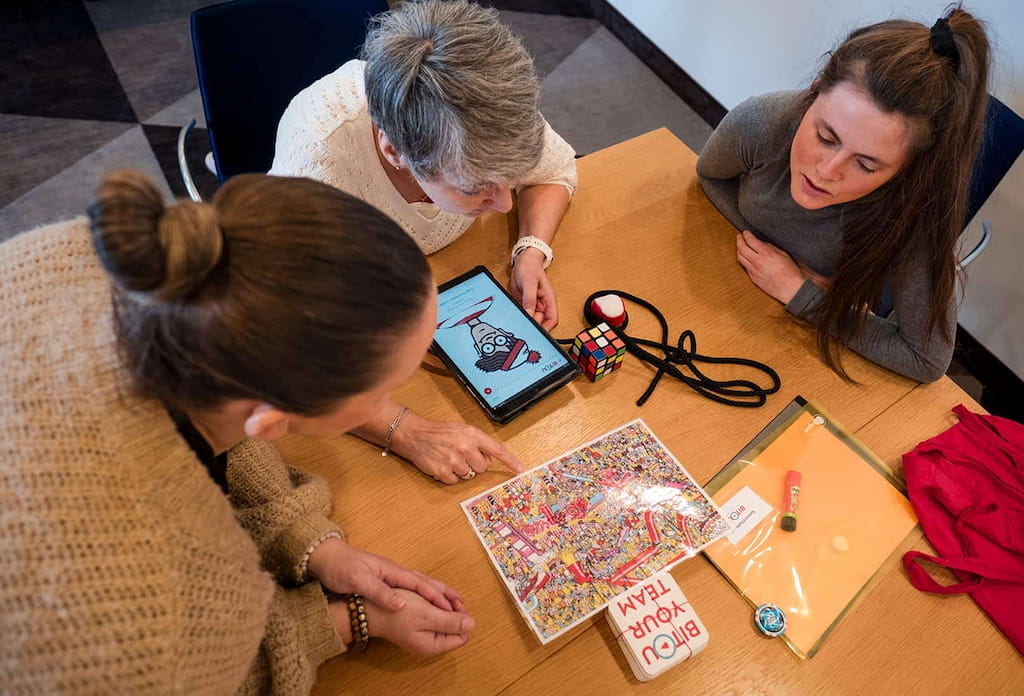
When teams are working at cross-purposes, the next fun outing rarely helps. This is precisely where corporate team-building initiatives come in – they don’t just boost morale, they tangibly improve collaboration. For HR, managers and decision-makers, the difference is crucial: a good programme brings people together. An effective programme changes the way they work together afterwards.
Anyone planning team-building activities in a corporate context therefore faces a strategic question. Is the aim to boost motivation following a particularly demanding period, to improve communication between departments, to rebuild trust after conflicts, or to help new colleagues settle in? Only once the objective is clear can an initiative become a catalyst for team performance.
Which team-building activities are really suitable for companies
Not every team setup requires the same approach. A newly formed project team has different needs to a long-standing management team with simmering tensions. Similarly, a sales team emerging from a period of growth needs a different approach to a hybrid team whose members rarely meet in person.
Effective team-building initiatives for businesses can broadly be divided into four categories: experiential formats, intelligent collaboration formats, development-oriented initiatives and conflict-related interventions. The trick is not to be as creative as possible, but to make an accurate assessment of the situation.
1. Traditional team-building events with a clear objective
Outdoor challenges, quiz sessions, and group cooking or building activities work well when a team needs positive shared experiences. They foster a sense of closeness, lower inhibitions and give groups an emotional fresh start. This can be particularly valuable following periods of high stress or when team cohesion is low.
However, the limitations of these formats are clear. A single event alone will not resolve structural friction. If roles are unclear, leadership is confusing or conflicts remain unspoken, a good day is not enough. In such cases, the experiential format should be deliberately combined with reflection and knowledge transfer.
2. Collaborative tasks with evaluation
Tasks that highlight team dynamics are far more effective than mere entertainment. Escape room-style activities, strategy challenges or cooperative simulation games quickly reveal how decisions are made, who takes responsibility, where communication breaks down and how the team copes with pressure.
The real added value lies in the analysis. When patterns are identified and linked to day-to-day work, an activity becomes a catalyst for development. Teams not only realise that something isn’t running smoothly, but also why.
3. Team development with specific work-related questions
If we want to improve collaboration in the long term, there is little alternative to structured team development. The focus here is not on games and team-building activities, but on questions such as: What do we expect from one another? How do we make decisions? What rules help us in our day-to-day work? Where does information get lost?
Such measures are particularly suitable following reorganisations, changes in leadership, rapid growth or prolonged periods of hybrid working. The advantage is that the team tackles the issues that are holding back performance head-on. The downside is that it requires openness, time and professional facilitation that can handle tension.
4. Team workshops on roles and responsibilities
Many so-called team problems are, in reality, structural issues. When responsibilities are unclear, handover procedures are not properly defined, or multiple people influence decisions, this leads to friction, frustration and unnecessary coordination loops.
A focused workshop on roles, interfaces and responsibilities is often more effective than any incentive. Whilst this may seem less spectacular at first glance, it has a direct impact on efficiency, commitment and trust. People work together more comfortably when it is clear who is responsible for what.
5. Onboarding formats for new teams
Simply training new colleagues in their specialist areas is not enough. To ensure teams are quickly able to function effectively, we need approaches that foster social integration, shared expectations and a sense of security in relationships. This is particularly true during periods of rapid growth, mergers or in international set-ups.
Well-organised team-building activities during onboarding help new employees feel part of the team more quickly. They provide guidance and reduce the risk of new staff members starting their role but failing to truly settle into the team. This has a significant impact on retention and performance, particularly during the first 90 days.
6. Measures for hybrid and remote teams
Remote and hybrid working present a new reality for team-building. Spontaneous encounters are no longer possible, misunderstandings go unnoticed for longer, and social connection must be cultivated more consciously. Standard in-person events cannot simply be replicated digitally.
Formats that structure communication and clarify rules of conduct are particularly useful here. How do we communicate via which channels? When do we need to be in sync? How do we maintain accountability without overloading the schedule with meetings? In teams like these, team-building quickly becomes a matter of having effective collaboration systems in place.
7. Team coaching in the event of friction and conflict
Not every team needs conflict resolution. But when tensions have been known for some time and are simply being ignored, a light-hearted event can often be counterproductive. In such cases, those involved see the initiative as a distraction rather than a source of help.
In situations like these, a facilitated setting is needed where issues can be addressed openly. Team coaching helps to sort through conflicting interests, hurt feelings and misunderstandings, and get the team back on track. This requires experience, as it is essential to provide both psychological safety and clear leadership for the group at the same time.
How to recognise effective measures
In day-to-day business, team-building activities are often chosen based on availability, budget or popularity. This is understandable, but it is short-sighted. What really matters is whether an initiative makes a tangible contribution to team performance.
A good framework meets four criteria. It is suited to the team’s situation, it highlights relevant patterns, it translates insights into concrete behavioural changes, and it ensures that these changes are carried over into everyday practice. Without this connection, the impact is left to chance.
An approach that not only describes team dynamics subjectively but also makes them quantifiable in a structured way is particularly helpful. If, before or after an intervention, it becomes clear how trust, communication, clarity or cooperation are changing, the quality of the decision improves significantly. This is precisely what distinguishes a pleasant memory from genuine development.
How companies choose the right course of action
The first question should never be: ‘What would be nice to do again?’ A better question is: ‘What do we want to do differently as a team from now on?’ This perspective immediately changes the choices we make.
If the focus is primarily on motivation and team spirit, an experiential format may be appropriate. If the focus is on working together under pressure, collaborative tasks that encourage reflection can be helpful. Where expectations are unclear or there are coordination issues, development workshops are more effective. And if tensions have become entrenched, coaching is more appropriate than an event.
Timing is also important. Just before a challenging project, a concise initiative focusing on roles and communication can be very effective. After a crisis, a team often needs to stabilise and rebuild trust before deeper development is possible. So there isn’t a single ‘best’ approach, but rather the right sequence of steps.
Common mistakes in corporate team-building activities
A common mistake is to confuse activity with impact. Just because a format generates energy does not automatically mean it improves collaboration. A positive atmosphere is helpful, but it is no substitute for clarity.
Team-building without management involvement is just as problematic. If managers merely approve the initiative but do not actively support it, the impact will be limited. Teams pay very close attention to whether new agreements are actually put into practice later on.
The third mistake is a lack of follow-up. A team workshop can provide a powerful boost, but its impact is lost if, after four weeks, nobody is referring to it anymore. Brief follow-ups, check-ins or measurable steps towards development make all the difference here.
What specific improvements this brings for businesses
When team-building is implemented effectively, the benefits are evident in more than just the atmosphere. Teams coordinate more clearly, conflicts escalate less frequently, responsibilities are taken more seriously, and coordination requires less effort. This saves time and improves the ability to get things done.
At the same time, a sense of togetherness does not grow as an end in itself, but as a foundation for performance. People are more likely to get involved when there is trust. They give feedback more openly, make more sound decisions and are more likely to take responsibility for one another. This is precisely why team-building is not a mere soft extra, but a vital part of effective organisational development.
Companies that make professional use of this approach do not treat team-building activities as one-off events, but as part of a clear development pathway. BITOU deliberately employs formats that combine engagement, reflection and measurable change. This is particularly effective when the aim is not just for teams to have an experience, but to demonstrably improve their collaboration.
Ultimately, what matters is not how original an initiative was, but what becomes easier, clearer and more effective for the team as a result. Anyone who understands team-building in this way is not investing in a pleasant day out, but in better collaboration that delivers real benefits for both people and the organisation.
About the author
 |
Pia Neugebauer is the Managing Director and Head of Human Resources at BITOU GmbH and brings with her many years of experience in human resources management and leadership styles. With a keen understanding of interpersonal dynamics and a great deal of enthusiasm for sustainable change processes, she regularly writes about topics that really help teams move forward. You can find out more about Pia and her current projects here. |
You might also be interested in
Energizer Games: How to Boost Engagement in Meetings
Activation games are a real game changer for meetings, as they get rid of the meeting grump from both sides: The participants are motivated again and the moderator gets an attentive audience again – a win-win situation.
How can you effectively strengthen team spirit?
How can you strengthen team cohesion? This article highlights effective ways to build trust, improve communication and foster measurable collaboration within the team.
A SALES Kick Off with a “lasting” effect for the entire DACH region
Sustainability – a word that we have been encountering more and more frequently in almost all areas of our lives in recent years. But what exactly does sustainability mean? While in everyday language we associate the term with longevity and environmental protection, among other things, sustainability refers to much more.