

Why traditional team-building fails and what actually works

Year after year, companies in Germany invest millions of euros in team-building initiatives – and yet the vast majority of these efforts come to nothing, with no lasting impact. At BITOU GmbH, we support over 700 events and team development processes every year. Time and again, we observe the same patterns: well-intentioned initiatives that leave no mark on day-to-day working life. In this article, we explain why traditional approaches so often fail – and what actually works instead.
Why do so many companies fail with traditional team-building activities?
The problem usually lies not with the event itself, but with the lack of strategic integration. Many companies book a team-building event as a one-off initiative, without defining clear objectives or planning follow-up processes. The result: a pleasant day that is forgotten within a matter of weeks.
In our day-to-day work, we often encounter a typical scenario: the HR department organises a go-kart race or a group cook-along, everyone has a good time – and by the following Monday, everything in the office is back to normal. This is because traditional team-building is often seen as a reward or a compulsory activity, rather than as part of a deliberate team development strategy. Without concrete links to the team’s real-world challenges, the event remains an isolated experience.
Among the most common mistakes we see are:
- No clear objective: the event is intended to “strengthen cohesion” – but exactly what that means remains unclear.
- Lack of preparation and follow-up: What has been achieved? What will the participants take away from it? These questions remain unanswered.
- Targeting the wrong audience: Not every team needs the same thing. A diverse team with internal conflicts needs a different approach to a new team in its formative stages.
- Too much focus on fun, too little on application: experiences alone do not change behaviour – it is reflection that brings about lasting change.
Added to this is a structural problem: many decision-makers do not view team-building as a strategic investment, but rather as a cost item that, at best, pays for itself through an improved working atmosphere. This attitude prevents the necessary resources from being made available for effective planning and support right from the start.
What distinguishes effective team-building from ineffective team-building?
The key difference lies in the link between experience and reflection. Effective team-building creates situations that bring genuine team dynamics to the surface and deliberately links these experiences to the participants’ day-to-day work.
At BITOU, we take an approach that goes far beyond the traditional ‘fun event’. We design experiences in which teams must work together, communicate and make decisions under realistic conditions. Whether working together on a complex project, tackling a creative challenge or navigating a simulated crisis situation – the key is that participants experience genuine group dynamics: role distribution, communication patterns, conflict resolution strategies and leadership behaviour.
The factors that make a lasting difference can be broken down into several key areas:
- Needs analysis prior to the event: We always conduct a detailed briefing in advance. What is currently on the team’s mind? What conflicts are simmering beneath the surface? What goals need to be achieved?
- Tailor-made design: No two teams are alike. That is why we develop formats tailored to each specific situation – not off-the-shelf standard solutions.
- Experienced facilitation: Our trainers are qualified team development experts who provide professional support for group development processes and are able to respond to unexpected dynamics.
- Structured reflection: After each activity, we set aside time for a group debrief. What went well? What didn’t? And what lessons can we apply to our day-to-day collaboration?
- Sustainable follow-up: A good team-building event is the starting point, not the end point. We recommend accompanying measures to ensure that the lessons learnt are applied in day-to-day collaboration.
A concrete example from our practice: A medium-sized company in the logistics sector approached us because two departments had been locked in a simmering conflict for months. A traditional team-building event would probably have made the situation even worse. Instead, we developed a format that first brought the respective perspectives to light, then focused on shared challenges, and finally worked out concrete agreements for collaboration. Six months later, the company reported a significant improvement in cross-departmental communication.
Which formats really work – and why?
There is no single ‘best’ team-building format. What works depends on specific needs, team size, corporate culture and the objectives being pursued. Nevertheless, there are certain characteristics that generally distinguish effective formats.
In our experience, having organised over 700 events a year, certain approaches have proven to be particularly effective. Formats that require genuine collaboration under a little pressure are especially effective in the long term – because it is only when people step outside their comfort zones that familiar patterns of behaviour become visible and can be changed. This does not mean that it has to be uncomfortable. It means that the setting is challenging enough to provoke genuine reactions.
Among the formats that we at BITOU particularly value and use successfully are:
- Experience-based team building: outdoor activities, escape games, creative construction projects or interactive city treasure hunts in which teams must work together to solve tasks – always followed by a debrief.
- Skills-based workshops: formats that focus specifically on communication, conflict resolution or leadership skills and address real-life situations faced by the team.
- Hybrid events: Hybrid formats are particularly well-suited to teams working across different locations or remotely, as they offer the opportunity to create shared experiences whilst still catering to individual circumstances.
- Long-term team development processes: We achieve the most effective results when we support teams over a period of several months – using a series of modules, clear milestones and ongoing feedback.
Another key factor is the attitude of senior management. If management dismisses team-building as unimportant or does not take part themselves, this sends a clear message to the team. Managers who get actively involved are signalling that this is a serious investment. This increases the willingness of everyone involved to open up and really get involved.
How do you plan team-building activities that actually have a lasting impact?
Effective team-building begins long before the actual event – with an honest assessment of the current situation. If you want to know what your team really needs, you must first understand where it currently stands: in terms of development, communication and conflict resolution.
We always recommend the same starting point to our clients: ask yourselves three questions before approving a budget. Firstly: what should be different after the event compared to before? Secondly: how will we measure this? And thirdly: what will happen after the event to reinforce the experience? These three questions clearly distinguish effective team-building from ineffective team-building.
For sustainable planning, we recommend the following approach:
- Needs analysis: Discussions with managers and team members, supplemented where necessary by anonymous surveys, in order to gain a realistic picture of the team’s situation.
- Objective: To define specific, measurable goals – e.g. improved cross-departmental communication, greater psychological safety within the team, or more clearly defined roles.
- Choosing the right format: Select the appropriate format based on the analysis – not on trends or what was done last time.
Professional support: Work with experienced trainers who can shape and guide the process. - Ensure knowledge transfer: After the event, agree on specific measures to apply the insights gained in day-to-day work – and make sure these are firmly established.
We see it time and time again: teams that were initially sceptical make remarkable progress in a surprisingly short space of time when the right conditions are in place. The key isn’t the most spectacular event, but the most effective process.
Conclusion
Traditional team-building doesn’t fail because the concept is flawed – but because there is a huge gap between how it is implemented and what is expected of it. One-off events without clear objectives, a lack of reflection, and a failure to apply the lessons to everyday work are the most common reasons why well-intentioned investments fail to have the desired effect.
At BITOU, we take a different approach: we view team-building as a strategic process based on a genuine understanding of the team’s situation, professionally facilitated, and with a lasting impact on day-to-day working life. With over 700 events a year and many years of experience in team development, we know that if the foundations are right, a single format can make all the difference – between a pleasant day out and real change.
Would you like to find out which team-building format is right for your team? We’d be happy to advise you – with a personalised, practical approach and no one-size-fits-all solutions.

You might also be interested in
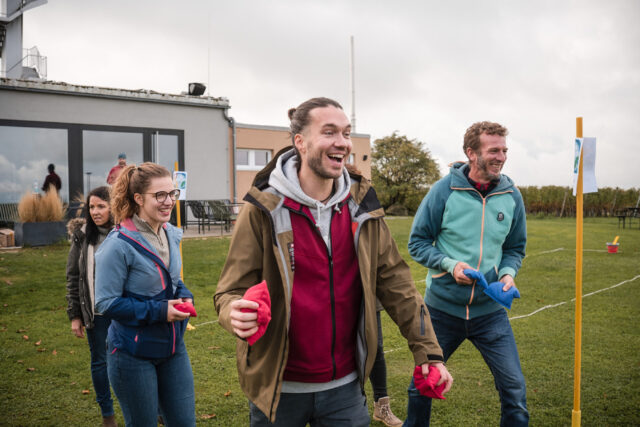
Outdoor team building games: combining nature and team spirit
Outdoor team building activities are much more than just a light-hearted break from the daily grind. They encourage communication, strengthen relationships and help teams to overcome challenges together.

Employee communication: How to keep your team informed
In many companies, important information gets lost in everyday life despite numerous communication channels. Decisions do not reach all employees, priorities are understood differently, and updates disappear in day-to-day business. This article shows how structured employee communication helps to create clarity, organize information flows, and keep teams permanently on the same page.
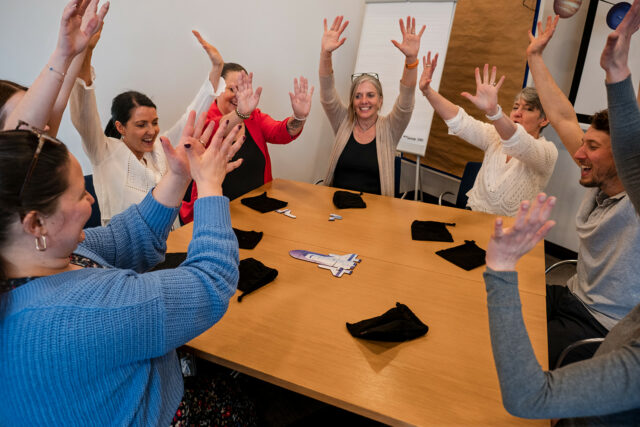
Energizer Games: How to Boost Engagement in Meetings
Activation games are a real game changer for meetings, as they get rid of the meeting grump from both sides: The participants are motivated again and the moderator gets an attentive audience again – a win-win situation.