
Request without obligation & free of charge.
Response guaranteed within 24 hours.


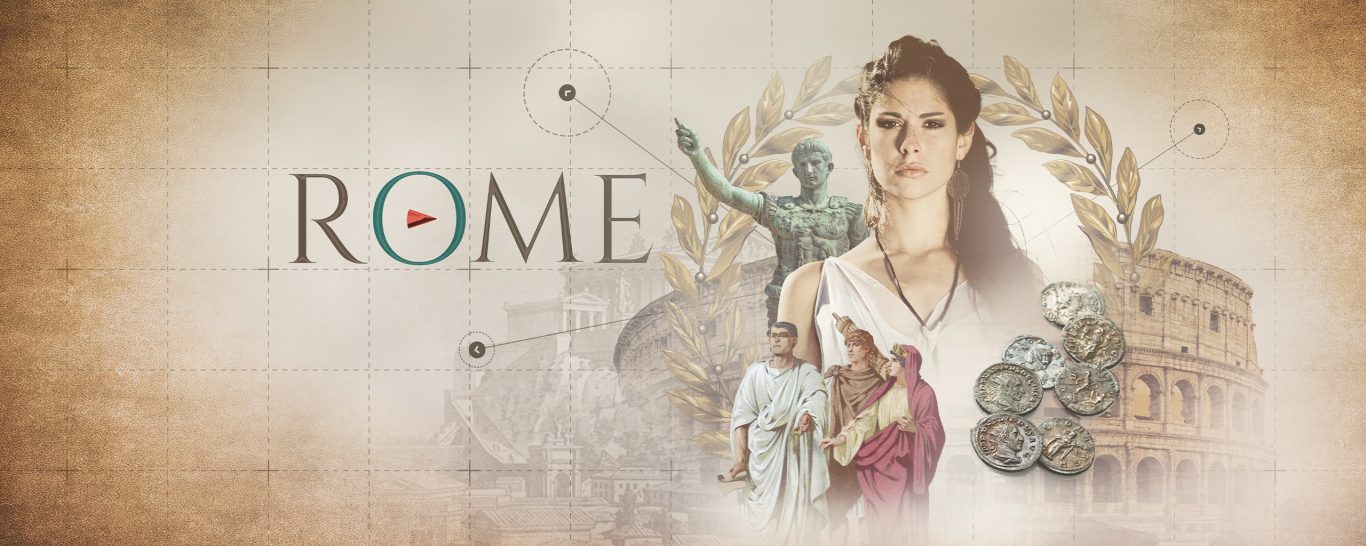
Rome
- 7 – 300
- 180 – 240 min (without reflection)
- Face to Face
- Indoor
- Level 3
- Promotion of leadership, negotiation skills and tactical communication
- Realistic dynamics: balance of power, cooperation, competition & joint decision-making
- Ideal for management teams, project teams and companies undergoing transformation
- Promotes networked thinking, crisis management and sustainable cooperation
- Strong emphasis on reflection: team roles, influence and decision-making processes become visible
The moment when teams recognise themselves
In the scenario set in the ancient Roman Empire, seven cities with different resources are in play. Each city is on its own – yet at the same time completely dependent on the others.
Resources must be traded. Buildings must be constructed strategically. Crises arise unexpectedly. Time is constantly ticking against the team.
What initially appears to be a game quickly develops into a realistic representation of collaboration within a company.
For one thing becomes immediately clear:
No one can reach their goal here alone.
This is how Rome works – from experience to true understanding
Introduction & Scenario – A Journey into the Empire
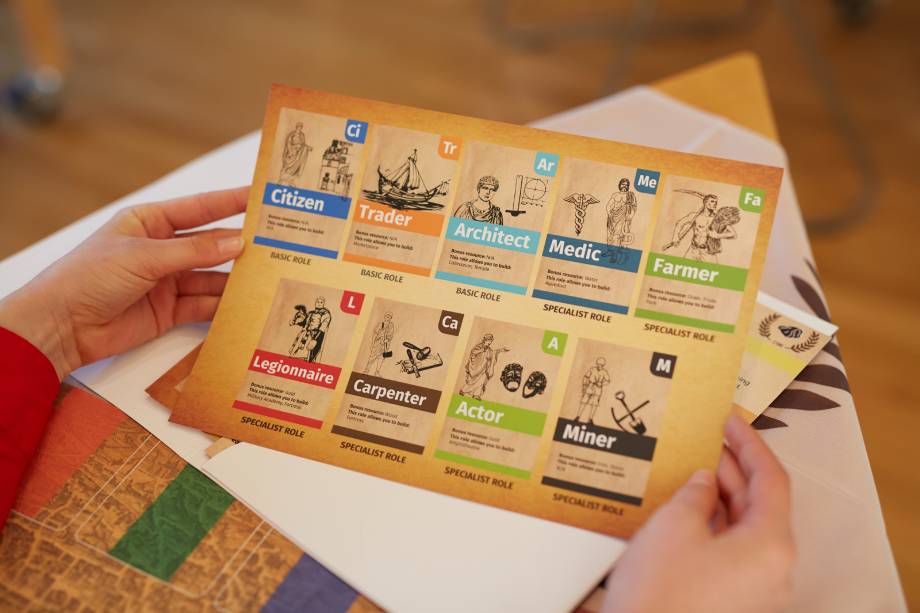
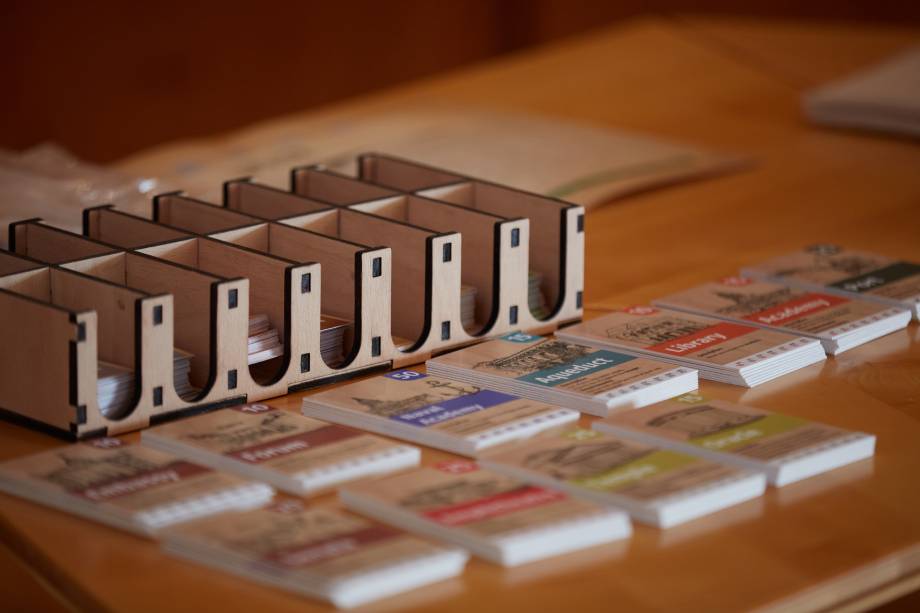
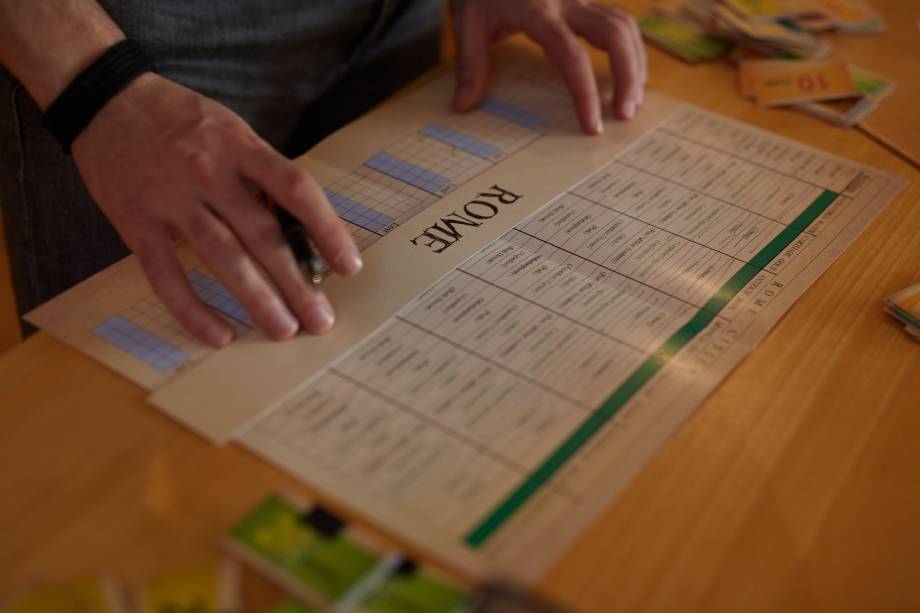
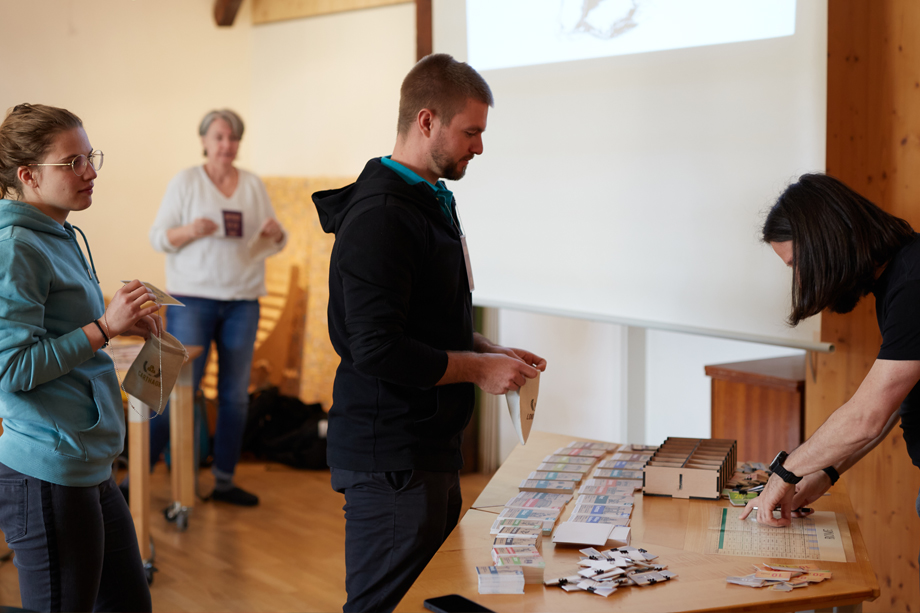
The room is transformed into the world of ancient Rome: coats of arms, maps and the setting immediately create the atmosphere. The teams become independent cities, each with their own resources, tasks and objectives.
It soon becomes clear that whilst every city can act independently, success comes only to those who understand the bigger picture. As the initial explanations unfold, a sense of anticipation builds and the key question hangs in the air:
How will we work together as a team within this system?
Game phase – When teamwork comes to the fore under pressure
Time is running out; decisions need to be made. Resources are being allocated, deployed and constantly reprioritised – whilst crises introduce further complications.
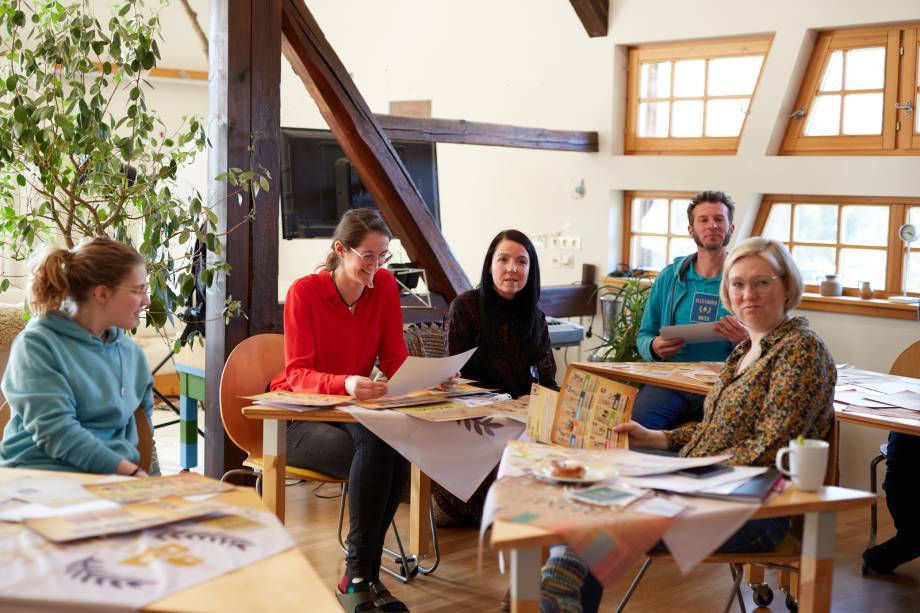
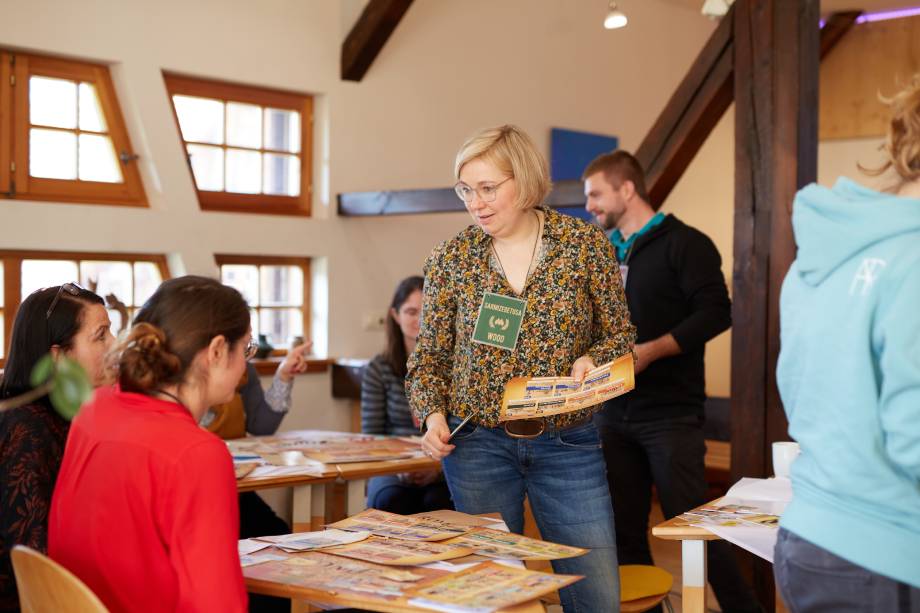
The room comes alive with activity: people are discussing, negotiating and coordinating. At the same time, it becomes clear how teams really work – who takes responsibility, who looks out only for their own interests, and who keeps the bigger picture in mind.
The game becomes a mirror of collaboration.
Erkenntnisphase – Muster erkennen und verstehen
After the intense phase, calm returns, and with it clarity. Initial insights begin to emerge, often surprisingly direct and honest.
Teams begin to reflect on why they acted in a certain way, which decisions worked, and where they got in their own way.
Typical patterns become apparent, and that is precisely where the real ‘aha’ moment lies.
Reflection & Application – From Play to Everyday Life
Together with the coach, the experiences are reviewed and linked to everyday working life. The parallels are clear: communication, roles, priorities and decision-making are evident in the game just as they are in a real team.
The difference is that in the game, the effects are immediately visible. That is precisely what makes reflection so effective – because it is not theoretical, but is based on real-life experience and provides practical ideas for everyday life.
The BITOU Event Journey – A Step-by-Step Approach
Rome cannot be viewed in isolation – it is the starting point for a tailored team trip.
- Rome – The Basis (Level 3)
Understanding how the team currently works
→ Focus: Current situation, roles, collaboration - Adventure Everest – Goal-orientation (Level 3)
Working towards a clear goal
→ Focus: Decisions, Strategy, Priorities - Before Mars – Future & complexity (Level 3)
Trading under conditions of uncertainty and with a long-term perspective
→ Focus: sustainable decisions, forward thinking
This journey builds logically on each other – from understanding → Apply → Further develop.
The benefits of the Rome at a glance:
✔ An honest assessment of the team’s current situation: Rome provides an unvarnished view of how teams currently work together.
✔ Communication becomes visible and tangible: A lack of coordination, misunderstandings or a lack of clear agreements have an immediate impact.
✔ Roles & responsibilities are becoming clear: Who is responsible for what, and why?
✔ Managing resources and priorities: Teams see how decisions affect the system as a whole.
✔ Strong integration into everyday working life: The parallels with real-world corporate structures are immediately apparent.
✔ Recognising silo mentality & self-interest: Teams experience first-hand the consequences of everyone working solely for themselves, and how much more effective genuine cooperation is.
✔ Dealing with time pressure & decision-making under uncertainty: The clearly structured flow of the game makes it clear how teams prioritise, make decisions and cope with time pressure.
✔ An awareness of the bigger picture: Rome clearly demonstrates how important it is to think beyond one’s own area of responsibility and to make decisions within the context of the wider system.
What our customers say
Rome is BITOU Level 3
The Rome team development programme is classified as Level 3.
It combines an intensive, strategic experience with in-depth reflection, and brings to light collaboration, role behaviour and decision-making structures within the team.
This isn’t just about playing together, but about gaining real insights:
Teams experience first-hand how they manage resources, how they communicate, and whether they act in the best interests of the organisation as a whole – with direct relevance to their day-to-day work.
BITOU Level 3 is particularly suitable:
- when teams want to truly understand their collaboration and develop it in a targeted way
- in the event of changes, growth or new structures within the company
- when existing patterns need to be brought to light and changed in a lasting way
Rome often serves as the starting point for a longer team trip.
The next step:
Building on this, programmes such as Adventure Everest or Before Mars build on the insights gained and guide teams through the implementation process – for sustainable development and long-term impact.
Frequently asked questions about Rome- FAQ’s
Which teams is Rome particularly suitable for?
What sets Rome apart from other programmes such as Adventure Everest?
Is the event very theoretical?
How deep is the reflection?
Do participants need prior experience?
At a glance
Included services
- Extenisve advice beforehand
- Implementation and presentation (on-site or online)
- Licence costs
- Workbook for each participant
- Analysis and reflection by our team trainer*
*only available if you book the active module with trainer.
Facts
-
7 – 300
-
180 – 240 min (without reflection)
-
Face to Face
-
Europe
-
German, English
-
2 m2 per participant, at least 20 m2
-
Year round
Suitable for
- Leadership teams
- High performance teams
- Teams on all hieratic levels