

9 Team-building approaches for remote change teams

In change processes, two conflicting dynamics often come into play: successful change management requires trust, guidance and close coordination. At the same time, the physical distance in remote teams makes it difficult to establish precisely the kind of connection that is particularly important during a transformation.
When teams are driving change predominantly from home or from different locations, the traditional virtual after-work drink is therefore no longer sufficient. Whilst it fosters informal contact, it does not resolve uncertainties, communication problems or unclear responsibilities.
Successful organisational development requires targeted team-building that fosters psychological safety, alleviates fears and brings the corporate culture to life even across screen boundaries. The following nine approaches can be integrated directly into day-to-day working life and, where necessary, supplemented by more intensive team-building or team-development formats.
Which team-building activities support change processes?
Change processes almost always create uncertainty. Roles shift, established routines become obsolete, and new processes do not run smoothly straight away. Team-building activities in change management should therefore achieve more than simply providing entertainment.
Good processes help teams to
- address uncertainties openly,
- play an active part in shaping change,
- break down silos and bridge information gaps,
- try out new behaviours in a safe environment
- and to apply these insights to day-to-day work.
1. The „Failure & Learning“-ritual
If staff are afraid of making mistakes when tackling new tasks or processes, the transformation can quickly grind to a halt. Problems are kept under wraps, experimentation is avoided and decisions are subject to unnecessary safeguards.
Here’s how it works:
Arrange a 30-minute meeting every two weeks. During this meeting, each team member voluntarily shares an experiment, a mistake or an assumption that turned out to be wrong. The focus is not on assigning blame, but on gaining insight: what have we learnt from this, and what will we do differently next time?
Important:
Führungskräfte sollten mit gutem Beispiel vorangehen und auch eigene Fehlentscheidungen oder Fehleinschätzungen offen ansprechen. Nur so entsteht glaubwürdige psychologische Sicherheit.
Effect:
Das Ritual fördert eine konstruktive Fehlerkultur, senkt die Hemmschwelle für neue Ideen und unterstützt die Teamförderung auf Augenhöhe.
2. Virtual Change Retrospectives
In day-to-day business, there is often little time to reflect on the ongoing process of change. However, without regularly taking stock of the situation, frustration, misunderstandings and recurring problems can arise.
How it works:
Hold a virtual retrospective every two to four weeks. Digital whiteboards such as Miro or Mural enable all team members to participate visually and on an equal footing.
One suitable option, for example, is the „Sailboat Method“:
- What gives us a boost?
- What is holding us back?
- What risks or ‘pitfalls’ lie ahead?
- What goal do we want to achieve together?
By the end, one to three specific actions should be agreed upon, assigned to responsible individuals, and reviewed at the next retrospective.
Effect:
The retrospective highlights obstacles and blind spots within organisational development. At the same time, the team experiences how feedback is not merely collected, but actually triggers change.
Matching BITOU accessory:
If you want the team not only to discuss changes but also to experience how their own behaviour changes under varying conditions, Turn Around is an ideal choice. This team-building exercise highlights how teams react to new priorities, disruptions and unexpected changes. The subsequent joint reflection then enables the lessons learnt to be applied to the specific change process.
3. Cross-Functional Peer Shadowing
During change, new interfaces between departments often emerge. If these links are not actively shaped, existing silos will simply be transferred to new processes or digital systems.
How it works:
Two people from different departments support each other virtually whilst they work for one to two hours. Alternatively, they can have a structured discussion about their tasks within the change process.
Some helpful guiding questions are:
- What changes will affect my area of work?
- What information do I need from other departments?
- Where are delays or misunderstandings currently occurring?
- How do my decisions affect other teams?
Both people then agree on a specific improvement for the shared interface.
Effect:
Peer shadowing promotes an understanding of other roles, breaks down silo thinking and fosters a cross-functional corporate culture.
4. Virtual hackathons for change initiatives
Employees are more likely to accept change if they are not merely affected by it, but can also help to develop solutions themselves. A virtual hackathon provides a clear framework in terms of both time and methodology for this.
How it works:
Set aside half a day or a full day. The team will work in small, cross-disciplinary groups to tackle specific challenges arising from the change process, such as:
- How can we simplify a new approval process?
- How can we improve the flow of information between two departments?
- How do we organise the onboarding process for a new system?
- How can we identify resistance at an early stage?
The groups develop simple prototypes, process designs or specific measures and present their findings at the end. It is important that at least one idea is then actually tested.
Effect:
The hackathon transforms passive concern into active participation. At the same time, it fosters creativity, personal responsibility and cross-functional collaboration.
Matching BITOU accessory:
For more extensive change initiatives, a facilitated change management workshop by BITOU can provide the framework. This combines theoretical principles with experiential, activity-based modules. This enables teams not only to discuss change, but also to try out new patterns of communication and behaviour straight away.
What are the best team-building activities for remote teams?
With remote teams, the challenge is not just the physical distance. A high number of digital meetings can also reduce attention levels and engagement. Effective remote team-building should therefore not automatically lead to even more video conferences.
A combination of the following is particularly effective:
- short, synchronous exchange formats,
- asynchronous communication,
- clearly facilitated team-building activities
and targeted face-to-face or hybrid meetings.
5. Asynchronous „Wins & Challenges“-Check-ins
In distributed teams, opportunities to meet up are often few and far between. At the same time, many team members lack an overview of what others are currently working on and where support is needed.
How it works:
At the start of each week, every team member shares a short video, audio or text message, for example via Slack, Microsoft Teams or Loom.
The message answers two questions:
- What have I or we managed to achieve over the past week?
- Which current challenge do I need help with?
Contributions should be kept deliberately brief. Two to three minutes per person is usually sufficient.
Effect:
The check-in ensures transparency, highlights successes and enables early support without cluttering the calendar with yet another routine meeting.
6. Targeted micro-icebreakers
General opening questions such as “How are you all doing?” often lead to superficial answers in remote meetings. In change processes, more specific questions are more helpful because they also provide a quick snapshot of the mood.
Here’s how it works:
Start selected meetings with a clear rating or assessment question:
- On a scale of 1 to 10: How clear is the objective of the current phase of change?
- How confident do you feel about using the new process?
- How heavy is your current workload?
- Where do you need more guidance?
Responses can be given via chat, by digital voting or by a show of hands. If the results are unusual, sufficient time should be set aside for follow-up questions.
Effect:
Micro-icebreakers help to identify concerns and gaps in knowledge at an early stage. At the same time, they signal to the team that their perceptions and attitudes regarding change management are being taken into account.
7. Strength-based allocation of roles
New processes and projects often lead to a reallocation of tasks. If this is done solely on the basis of existing hierarchies, skills remain untapped and staff are more likely to perceive the change as an additional burden.
How it works:
Start by identifying the individual strengths, experiences and interests of the team members in a joint workshop. These are then matched against the tasks and challenges of the change project.
In this context, the question should not only be: ‘Who is formally responsible?’, but also:
- Who can explain complex topics in a way that’s easy to understand?
- Who is particularly good at identifying risks at an early stage?
- Who brings together different perspectives?
- Who can keep track of things when there’s uncertainty?
- Who can inspire others to come up with new solutions?
Effect:
A strengths-based allocation of roles boosts motivation and a sense of personal responsibility. At the same time, it provides a personalised and resource-oriented foundation for team development.
Matching BITOU accessory:
The Chain Reaction Hybrid approach enables teams in different locations to work towards a shared overall outcome. This immediately highlights the strengths that each participant brings to the table, how well the interfaces are functioning, and where further coordination is required. The individual designs are linked via digital interfaces, resulting in a shared outcome that transcends geographical boundaries.
8. Structured Appreciation Loops
In the office, recognition often happens in passing: after a conversation, by the coffee machine, or immediately after a task has been successfully completed. In remote teams, many of these spontaneous moments are lost.
Particularly during periods of intense change, this can give the impression that extra effort or mutual support is going unnoticed.
How it works:
For example, set up a ‘Kudos’ channel where team members can publicly thank each other for specific support. It is crucial that the appreciation is expressed as precisely as possible.
Instead of ‘Thank you for your help’, for example, it’s more helpful to say:
“Thank you for explaining the new process clearly again yesterday and for compiling the outstanding questions. That meant we were able to carry on working straight away today.”
In addition, a brief round of appreciation can take place at the end of a weekly meeting.
Effect:
Specific recognition strengthens cohesion, highlights desirable behaviour and fosters a positive corporate culture in the digital space.
9. Joint off-site milestones as a hybrid success factor
Digital collaboration can be efficient and effective. Nevertheless, purely virtual formats can only go so far in replacing personal connection. A face-to-face meeting can strengthen collaboration in the long term, particularly at key milestones.
How it works:
Do not plan in-person off-site events as isolated rewards, but rather as a deliberate part of the change process. Suitable times include, for example:
- the start of a new change phase,
- the introduction of a centralised system,
- a new role or team structure,
- the completion of an important sub-project
- or a necessary reorientation.
The meeting was intended to provide an opportunity for strategic work, personal interaction and joint reflection. Following this, specific arrangements for the next virtual working phases will be set out.
Effect:
The offsite recharges the team’s ‘relationship battery’, builds trust and creates a common foundation for further digital collaboration.
Matching BITOU accessory:
Adventure Everest is ideal for teams spread across different locations, as the format can be delivered in person, virtually or in a hybrid format. The collaborative simulation highlights communication, decision-making, trust and the ability to cope with uncertainty – key factors for teams that need to navigate change together.
If the aim is to deliberately combine physical activity with digital collaboration, Black Out is another possible addition. Small groups gather clues from different locations and then work together to solve tasks during an online meeting. This creates a unifying experience without all participants having to be in the same location.
Which team-building approach is best suited to which phase of change?
Not every format is equally suitable at every point in time. The choice should be based on the team’s current situation.
At the start of the change process
The focus is on guidance, trust and participation. Suitable options include micro-icebreakers, change retrospectives or a format such as ‘Turn Around’, which helps to visualise how change is managed.
During implementation
Above all, teams need effective interfaces, open communication and rapid learning cycles. Failure-and-learning rituals, peer shadowing, hackathons and asynchronous check-ins can help here.
During challenging or deadlocked periods
More intensive team-building activities may be beneficial. A facilitated simulation enables participants to observe existing patterns under realistic conditions and evaluate them together.
At key milestones
Hybrid or face-to-face team-building activities help to strengthen relationships. The bonds formed in this way make it easier to continue working together in day-to-day remote working.
Conclusion: Team-building as an ongoing part of change
Successful team-building in remote teams is not a one-off event, but an ongoing process. Short rituals as part of the daily work routine, regular reflection sessions and targeted shared experiences should be meaningfully interwoven.
What matters is not the number of measures, but how they relate to the actual change process. Team-building is particularly effective when teams can experience and reflect on their collaboration and draw concrete conclusions for their day-to-day work.
Those who view change management and organisational development as an opportunity to actively reshape collaboration do more than simply foster acceptance of individual changes. In the long term, this creates a resilient, transparent and future-proof corporate culture in which remote teams remain capable of acting together even across geographical boundaries.

You might also be interested in
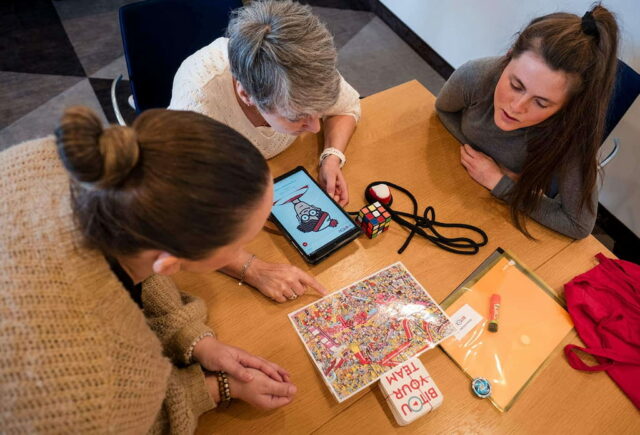
12 team-building activities for businesses
12 effective team-building activities for businesses – from events to team coaching. How to boost collaboration, trust and performance.
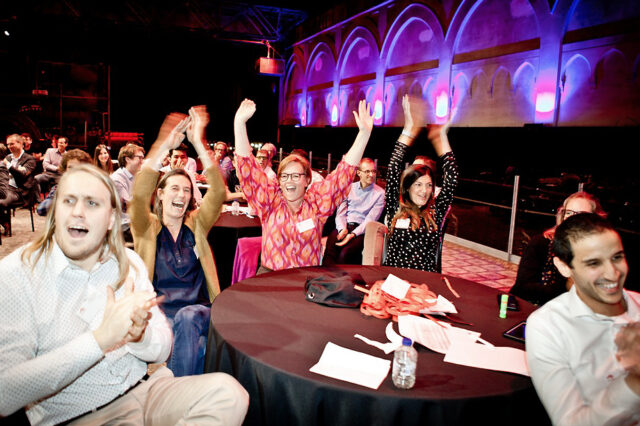
9 team-building ideas for companies
9 effective team-building ideas for companies that boost collaboration, trust and motivation – delivering tangible results rather than just a nice social programme.
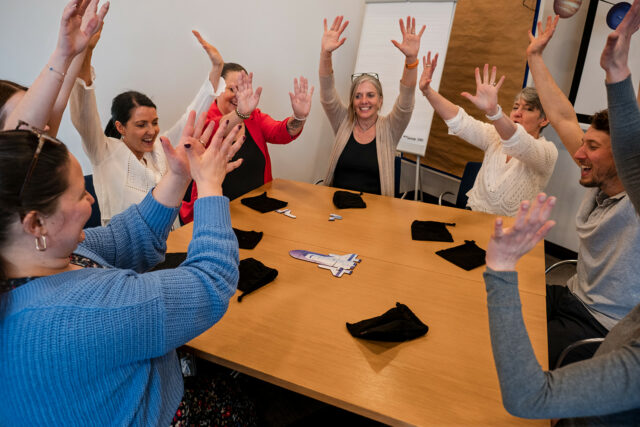
Energizer Games: How to Boost Engagement in Meetings
Activation games are a real game changer for meetings, as they get rid of the meeting grump from both sides: The participants are motivated again and the moderator gets an attentive audience again – a win-win situation.