

Offsite Workshop: Building an Effective Team
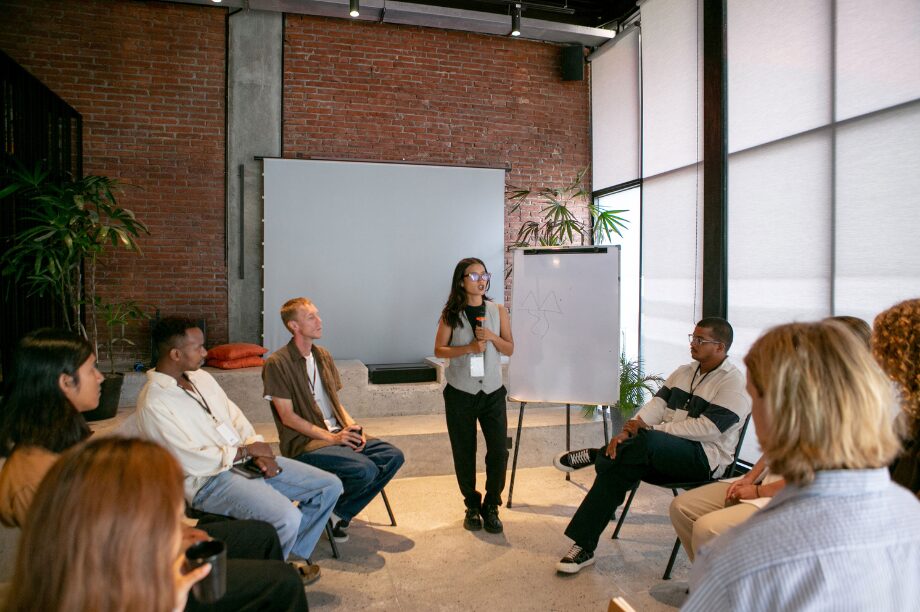
When teams get stuck in their day-to-day routines, it is rarely due to a lack of motivation. More often than not, what is missing is the space to properly identify the root causes, openly discuss expectations and realign their collaboration. This is precisely where an offsite workshop can help develop a team – provided it is not just well-intentioned, but well-designed.
An offsite is often too quickly seen as merely a change of scenery. A nice location, some distance, perhaps an inspiring spark. That can be beneficial, but it doesn’t solve any structural problems within the team. If you really want to develop a team, you need more than just a venue and an agenda. What matters is whether the workshop brings behaviours to light, addresses friction, and results in concrete working principles for day-to-day life.
Why an off-site workshop really helps teams make progress
The greatest benefit of an off-site is not the distance from the office, but the distance from routine. In normal working conditions, many dynamics remain hidden because deadlines loom, roles are well-established, and conflicts are often glossed over under time pressure. An external setting provides the necessary break for a team to reflect on itself – honestly, in a structured way, and without the usual rhythm of day-to-day business.
This is particularly valuable following periods of growth, reorganisation, changes in leadership or ongoing tensions. At such times, teams do not need a pleasant diversion, but rather a clearly facilitated space for development. This is where they can address issues that are too rarely discussed properly in day-to-day work: What is working well between us? Where do misunderstandings arise? What expectations remain unspoken? What form of collaboration do we really need going forward?
An offsite is not an end in itself. It works when reflection leads to a sense of commitment. Otherwise, it may leave you feeling good, but it won’t bring about any real change.
Developing a team through an off-site workshop: When is this approach worthwhile?
Not every team needs a large-scale development programme straight away. Sometimes, a few targeted interventions in the day-to-day work routine are enough. An off-site meeting is particularly worthwhile when there are issues on the agenda that require concentration, openness and effective facilitation.
This is the case, for example, when a team needs to gel again following a change, when collaboration between departments is stalling, or when management and the team have differing views on responsibility and performance. An off-site meeting is often a more appropriate setting than a brief meeting in the conference room, particularly in the case of simmering conflicts, following a merger of sub-teams, or when there is a decline in commitment to working together.
It is important to assess the situation honestly. If the aim is simply to boost motivation for a short period, a traditional team-building event may suffice. If roles are unclear, trust is lacking or performance is suffering due to friction, team development is required. Making this distinction saves money and prevents unrealistic expectations.
What sets an effective off-site workshop apart from a pleasant outing
Many off-site meetings fail not because of a lack of commitment, but because they lack focus. The agenda is packed, yet there is no clear thread running through it. Everyone joins in the discussion, but no one identifies the actual problem. In the end, there is a good atmosphere and a group photo, but no change in meetings, handover procedures or responsibilities.
An off-site only becomes effective when it brings together three elements: emotional engagement, clarification of content, and application to day-to-day work. Teams need to experience each other so that trust can grow. But they also need to reflect on their interactions so that patterns become apparent. And they need to make decisions so that insights can be turned into concrete new rules.
This involves clearly defining objectives in advance. Is the aim to improve communication? To clarify roles? To foster collaboration following a change? Or to address leadership issues within the team? The clearer the development objective, the more effectively the format can be tailored.
The five key elements of a successful off-site
A robust offsite is not based on a show-and-tell approach, but on a developmental approach. In practice, five key elements have proven their worth.
1. Clear definition of the task
The starting point is not the method, but the diagnosis. Managers, HR and, where appropriate, team members should first establish where the team really stands. Often, there is a significant gap between how the team sees itself and how others see it. It is precisely this discrepancy that is valuable, as it highlights blind spots.
2. Clear target architecture
A team shouldn’t end up going home with ten resolutions, but rather with a few specific development goals. For example: We agree on clear responsibilities. We address conflicts at an early stage. We improve our coordination at points of interface. Such goals are manageable and measurable.
3. Experience and reflect
Experiential elements have their place, provided they are not used in isolation. Group tasks, changes of perspective or collaborative challenges can bring team dynamics to light. The key lies in the debriefing. It is only through reflection that it becomes clear how the behaviour observed relates to day-to-day working life.
4. Specific team agreements
An off-site needs a point at which the team commits to certain principles. What are the rules of communication? How do we make decisions? What do we expect from one another during critical phases? Such agreements are more effective than general calls for greater openness or better teamwork.
5. Transfer and monitoring of effectiveness
The most common mistake occurs after the workshop. Without follow-up, many initiatives fizzle out within a few weeks. It makes sense to put clear implementation measures in place, conduct brief follow-ups and assess what has actually changed. This step is particularly crucial for companies that want not only to feel the impact, but also to demonstrate it.
Which topics are particularly suitable for an offsite
An off-site retreat is particularly effective when it comes to collaboration that has come under strain in day-to-day work. Topics such as trust within the team, clarity regarding roles and expectations, conflict resolution, coordination issues, understanding leadership, or aligning the team following changes are particularly well suited to this setting.
This format is less suitable when the aim is simply to deal with operational decisions. In such cases, team development is not required; rather, a well-organised working session is needed. Similarly, in the event of acute, escalating conflicts, a general workshop is often insufficient. In such instances, a conflict-focused setting is more appropriate, offering greater diagnostic depth and clear facilitation.
So it all comes down to the right fit. The best offsite isn’t necessarily the most creative one, but the one that fits the team’s situation perfectly.
How HR and management can set the right framework
For internal organisers, preparation is often the factor with the greatest impact. It is crucial not to treat the workshop as a one-off event, but as part of a wider process. This starts with communication. If an off-site is presented as a compulsory event, people are unlikely to be open to it. If it is clear why the team is coming together and what needs to be improved, there is a greater willingness to engage in genuine discussion.
The role of leadership is also a delicate one. Managers should provide guidance, but not anticipate every specific answer. Teams need the space to develop, where they can take responsibility for their own collaboration. At the same time, an off-site meeting must not become an open wish list without a clear business framework. Effective facilitation strikes a balance between the two.
It is also important for HR not to measure success solely by the atmosphere. A positive experience is helpful, but not enough. What matters more is whether collaboration changes noticeably after the offsite – for example, in terms of commitment, coordination, conflict management or clarity in working together.
Why measurability makes all the difference in team development
Many companies invest in off-site events, but struggle to articulate their impact. This quickly leads to scepticism within the organisation. Was it a worthwhile initiative, or just a well-organised day away from the office?
This is precisely why an approach that makes progress visible is worthwhile. Before-and-after comparisons, structured assessments, team checks or delta analyses provide a better basis for decision-making. Not to artificially restrict team dynamics, but to make progress tangible. The BITOU Team Power Check is particularly well-suited to this purpose.
A team doesn’t have to emerge from an off-site meeting in perfect harmony. But it should have a clearer understanding of what it is working on, which patterns it wants to change, and how progress can be measured. It is precisely this that builds buy-in among management, HR and the team itself. For years, BITOU has relied on formats that combine emotional engagement with structured evaluation and practical application.
Common mistakes at off-site meetings – and how to avoid them
A common mistake is overloading the agenda. If too many topics are crammed into a single day, none of them are dealt with in sufficient depth. It is better to have a clear focus on a few points that are truly crucial.
An overly harmonious approach is just as problematic. Not every team issue can be resolved with positive energy. Sometimes, growth requires friction, honest feedback and the ability to tolerate differing viewpoints. This is more challenging, but often more effective than a day where nobody causes any friction.
The wrong balance between freedom and structure can also be counterproductive. Too much openness can quickly lead to a lack of focus. Too much control stifles personal responsibility. A good off-site provides direction, but leaves the team enough space to develop their own insights and reach workable agreements.
What should happen after the offsite
The true value only becomes apparent afterwards. It is when teams come under pressure again in their day-to-day work that it becomes clear whether new agreements are working. That is why results should not simply end up in documentation, but should be translated into routines. This could take the form of a modified meeting format, a clearer decision-making process, or a mandatory monthly feedback loop.
It is also helpful to schedule a review meeting a few weeks down the line. This gives you the chance to assess together what has improved, where old habits are creeping back in, and what support is still needed. That is precisely where sustainability takes root.
A good off-site doesn’t have to be spectacular. It needs to get the team to the point where collaboration becomes clearer, more honest and more effective. Once this point is reached, not only does the sense of togetherness grow – performance also regains a solid foundation.

Das könnte Sie auch interessieren

Effective task distribution in a team: strategies for managers
Effective task allocation is one of the greatest levers for successful team leadership. When responsibilities are clear, talents are deployed in a targeted manner and communication is transparent, efficiency and motivation are created at the same time. In this article, you will learn how managers not only advance projects through strategic task allocation, but also strengthen their teams in the long term.

The Power of Integration—How Companies Shape Transformation from Within
Employee engagement is the driving force behind business success. Those who manage to truly engage their employees lay the foundation for profound cultural change and sustainable growth. Excellent service does not come about solely through friendly front-line staff—it comes about when every step of the process is conceived and designed with the customer in mind.

Planning and facilitating hybrid team-building events 2026
In 2026, hybrid team-building will be one of the key challenges for companies that want to truly bring their teams together, regardless of where they work.