
Planning a team workshop within the company
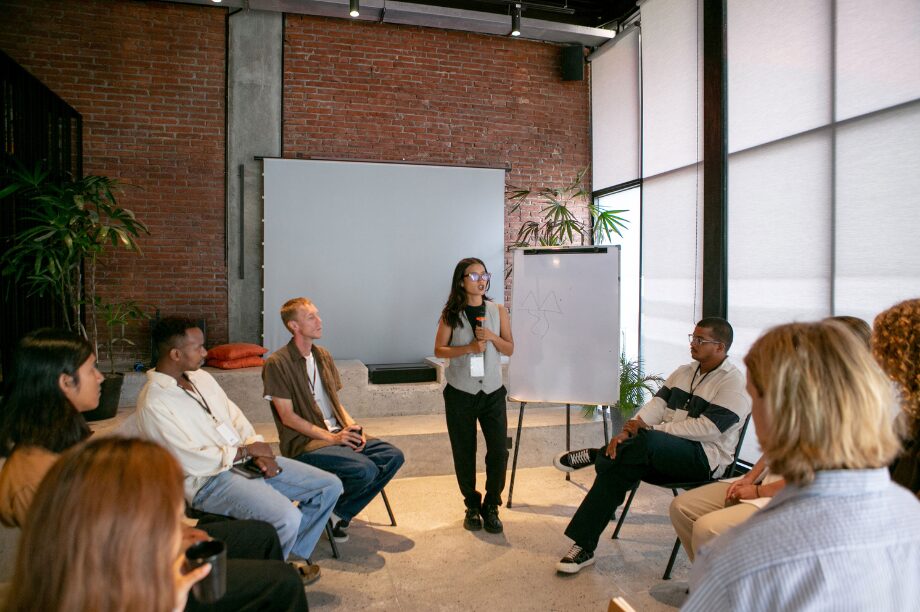
When companies plan a team workshop, it is rarely just about booking a date in the calendar. There is usually more to it than that: friction within the team, unclear roles, a lack of coordination between departments, or a team that needs to find its feet again following growth, staff turnover or pressure to change. This is precisely why it is not the venue that determines success, but rather the question of which problem the workshop is actually intended to solve.
A good team workshop does more than simply bring people together. It creates clarity, reveals dynamics and provides impetus that carries over into day-to-day work. For HR, managers and internal organisers, the challenge lies in avoiding both knee-jerk reactions and an event-driven mindset. Anyone planning a team workshop within a company needs a robust design: one with clear objectives, suited to the team’s situation and with demonstrable transferability.
Planning a team workshop within a company – clarify the objective first
The most common planning mistake happens right at the start. People discuss the date, venue and agenda before it is even clear what the team is supposed to be working on. This leads to workshops that feel good but bring about little change.
A simple distinction is more effective: is the workshop intended to bring people together, align them, develop them, or resolve a conflict? These four objectives may sound similar, but they require different formats. A team that, following an onboarding phase, first needs to get to know one another and build trust requires a different approach to a department facing coordination issues and growing frustration.
The more precise the objective, the better the structure. When it comes to motivation, emotional engagement alone is often not enough. When it comes to collaboration, communication patterns, responsibilities and expectations need to be addressed. When it comes to performance, there must also be a clear translation into commitments, priorities and concrete next steps.
The key question here is helpful: What should be noticeably different in the team after the workshop? Anyone who simply answers “a better atmosphere” hasn’t gone deep enough. Better formulations include: decisions are made more quickly, meetings run more smoothly, conflicts are addressed earlier, or roles at interfaces are clarified.
What is the team’s situation really like?
Not every team problem is a team development problem. Sometimes there is simply a lack of clear leadership. Sometimes the causes lie in excessive workloads, unclear objectives or conflicting directives from the organisation. A workshop can make a big difference, but it is no substitute for structural decisions.
That is why a sober assessment is worthwhile before planning. How long has the team been in place? Have there been changes in leadership or composition? Which tensions are overt, and which are more indirect? Where exactly is collaboration stalling? And which issues are currently having a parallel impact within the company, such as restructuring, growth or hybrid working?
Diese Einordnung ist entscheidend, weil sie über Intensität und Methodik bestimmt. Für ein stabiles Team mit leichter Reibung kann ein kompakter Workshop genügen. Bei verhärteten Mustern oder verdeckten Konflikten braucht es meist mehr als einen einzelnen Tag. Dann ist ein Prozess sinnvoller als eine punktuelle Maßnahme.
Gerade im Unternehmenskontext gilt: Der richtige Workshop ist nicht der kreativste, sondern der passendste. Wirkung entsteht nicht durch maximalen Erlebniswert, sondern durch den Fit zwischen Anlass, Teamreife und Zielbild.
Den richtigen Rahmen für den Teamworkshop wählen
Wer einen Teamworkshop im Unternehmen planen möchte, sollte das Format aus dem Bedarf heraus entwickeln. Ein halber Tag kann reichen, wenn es um Orientierung, Rollenklärung oder einen fokussierten Startimpuls geht. Ein ganzer Tag ist oft sinnvoll, wenn Reflexion, Austausch und erste Vereinbarungen sauber miteinander verbunden werden sollen. Für tiefere Entwicklungsthemen, etwa Vertrauen, Zusammenarbeit unter Druck oder teamübergreifende Spannungen, ist ein größeres Zeitfenster meist wirksamer.
Auch die Frage nach intern oder extern wird häufig zu oberflächlich entschieden. Externe Orte schaffen Distanz zum Tagesgeschäft und helfen, festgefahrene Muster leichter zu verlassen. Interne Formate sind pragmatischer und günstiger, funktionieren aber nur dann gut, wenn das Team wirklich geschützt arbeiten kann und nicht ständig vom Alltag unterbrochen wird.
This assessment is crucial because it determines the intensity and methodology. For a stable team with minor friction, a compact workshop may suffice. Where patterns have become entrenched or conflicts are hidden, more than a single day is usually required. In such cases, a process makes more sense than a one-off measure.
Particularly in a corporate context, the following applies: the right workshop is not the most creative one, but the most appropriate one. Impact is not created by maximising the experience, but by the fit between the occasion, the team’s maturity and the desired outcome.
Choosing the right framework for the team workshop
Anyone wishing to plan a team workshop within a company should develop the format based on the specific needs. Half a day may suffice when the aim is orientation, role clarification or a focused kick-start. A full day is often advisable when reflection, discussion and initial agreements need to be neatly integrated. For deeper development topics, such as trust, collaboration under pressure or cross-team tensions, a longer timeframe is usually more effective.
The question of whether to hold the workshop internally or externally is also often decided too superficially. External venues create distance from day-to-day business and help break out of entrenched patterns more easily. Internal formats are more pragmatic and cost-effective, but only work well if the team can work in a truly protected environment and is not constantly interrupted by everyday tasks.
For companies with a clear focus on performance, this connection is key. Collaboration is not improved by a positive atmosphere alone, but through more conscious patterns, clearer agreements and a genuine commitment to these.
Who needs to be involved in the planning?
A team workshop is never solely the organisation’s responsibility. If HR does all the planning and the manager is only brought in at the last minute, the crucial perspective on day-to-day operations, tensions and the desired outcome is often missing. Conversely, it is not enough for the manager alone to dictate the format. This risks resulting in a workshop that, from the team’s perspective, feels more like a lecture than a space for development.
It makes sense to have coordinated preparation between the client, management and, where appropriate, an external facilitator. Three questions should be clarified: What is the occasion? What can be discussed openly? And how will success be recognised afterwards?
Transparency with the team is also key. If staff do not know why the workshop is taking place, mistrust or resistance can quickly arise. Good communication clearly states the purpose without pre-empting the discussion. It makes it clear that this is not about keeping people occupied, but about improving collaboration.
Measurability fosters acceptance
Particularly in companies under significant pressure to coordinate, it is no longer sufficient to evaluate team initiatives solely through feedback forms or spontaneous enthusiasm. Decision-makers want to be able to determine whether a workshop was more than just a well-facilitated day.
Measurability does not mean simplifying human dynamics. Rather, it helps to make development tangible. Beforehand, it is possible to assess how the team currently rates issues such as trust, communication, role clarity or collaboration. After the workshop and during the implementation phase, it is possible to check whether anything has changed.
This isn’t just relevant for the business side of things. Teams also benefit when development becomes visible. It strengthens commitment and prevents good intentions from fading away in the day-to-day routine after just two weeks. Impact-focused providers such as BITOU focus precisely on this: experiences and reflection are not viewed in isolation, but are translated into concrete development opportunities and tangible changes.
Transfer determines the real benefit
Many workshops fail not on the day itself, but in the period that follows. The energy is there, the discussions were open, the atmosphere positive – and yet, after a short time, everything goes back to the way it was before. The reason is rarely a lack of will. More often than not, there is no clear bridge to everyday life.
Transfer requires more than a photo record. The team should leave the workshop with a few, clearly prioritised agreements. Who is doing what differently? Which rituals are being adapted? Which meeting rules will apply in future? Where is leadership needed to make decisions? And when will it be checked whether the agreements are actually being put into practice?
In this context, less is often more. Fifteen measures may look ambitious, but they can be overwhelming to implement. Two or three specific changes with clearly defined responsibilities have a far greater impact. The transfer of learning is particularly effective when managers explicitly include their own behaviour. Teams are very keenly aware of whether development is seen as a shared responsibility or merely as a call to action for employees.
Common mistakes when companies plan a team workshop
A workshop rarely fails to deliver because the facilitation was poor. More often, it is down to unrealistic expectations. If a half-day session is expected to resolve several months’ worth of pent-up conflicts, disappointment is inevitable. The opposite can also happen: a genuine development issue is phrased too vaguely out of caution and, in the end, is only dealt with superficially.
An overly rigid design is equally problematic. Teams need structure, but not an agenda that reacts to every piece of feedback with the next item on the agenda. Good workshops have a clear framework and enough flexibility to address what is actually happening in the room.
Another classic mistake is confusing consensus with clarity. Not every workshop needs to create harmony. Sometimes it is already a step forward if differences are openly acknowledged, expectations clarified and tensions made manageable in a factual way. Impact is not always evident in euphoria, but often in improved ability to work.
Anyone planning a team workshop within a company should therefore focus less on finding the most spectacular format and more on identifying the most effective lever. What will really help this team move forward? That is precisely where good planning begins.
Ultimately, it doesn’t matter whether everyone enjoyed the workshop. What matters is whether people work together more effectively afterwards, take on responsibility more seriously and feel more effective as a team. When this aim guides the planning, a meeting becomes a genuine opportunity for development.

You might also be interested in
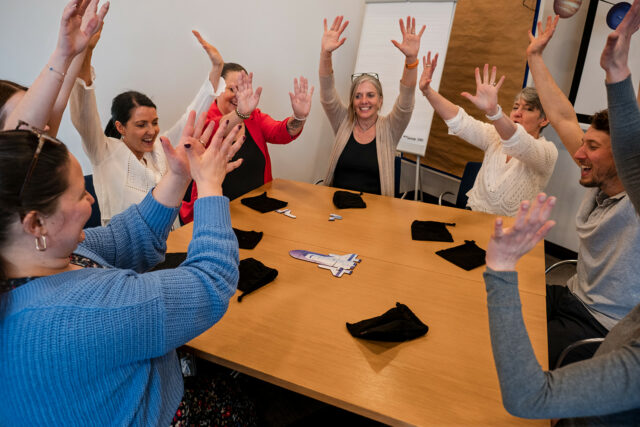
Energizer Games: How to Boost Engagement in Meetings
Activation games are a real game changer for meetings, as they get rid of the meeting grump from both sides: The participants are motivated again and the moderator gets an attentive audience again – a win-win situation.

Effective Debriefing: How Structured Evaluation Drives Success
When done properly, a debriefing is far more than a formal routine: it’s a structured process of evaluation designed to consciously reflect on experiences, gain insights, and use these learnings for future success.

Employee communication: How to keep your team informed
In many companies, important information gets lost in everyday life despite numerous communication channels. Decisions do not reach all employees, priorities are understood differently, and updates disappear in day-to-day business. This article shows how structured employee communication helps to create clarity, organize information flows, and keep teams permanently on the same page.