

Team-building vs company outing: Which is more effective?
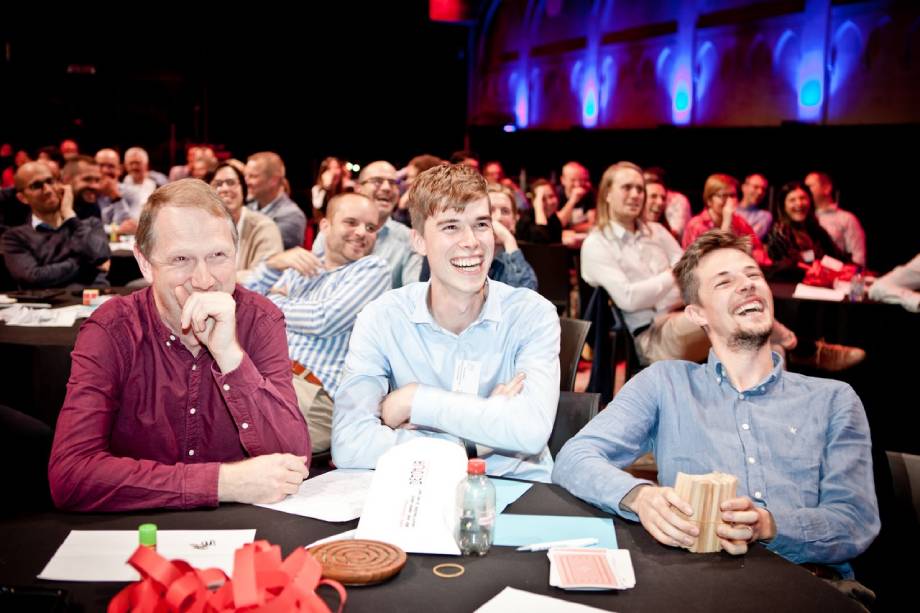
When a team needs to pull together again after months of heavy workloads, friction or changes, the debate between ‘team-building’ and a ‘company outing’ often crops up quickly. This is precisely the point at which it’s worth taking a closer look. Because both can be useful – but they don’t both serve the same purpose.
A day spent together outside the office may seem similar at first, whether it involves raft-building, a city treasure hunt or a dinner. However, in terms of the impact on the team, it makes a significant difference whether an activity primarily fosters appreciation and shared experiences, or whether it specifically improves collaboration, communication and the clarification of roles. Making a clear distinction here means investing not only in team morale, but also in development that yields tangible results.
Team-building vs company outing – the crucial difference
A company outing is usually a shared experience focused on variety, motivation and social interaction. It fosters informal encounters, breaks down barriers and can be an important gesture of recognition. This is particularly valuable following intensive project phases or as part of a positive corporate culture.
Team-building has a different objective. It is not primarily about having a nice day out, but about specifically strengthening team performance. Good team-building activities bring collaboration to life, highlight patterns within the team and create opportunities for reflection. They help to build trust, reveal communication barriers and translate concrete ideas for development into day-to-day working life.
In short: a staff outing often strengthens the sense of togetherness on a social level. Team-building, on the other hand, also focuses on the effectiveness of collaboration.
This distinction is particularly relevant for HR, managers and in-house organisers. After all, the real question is rarely simply: ‘What will go down well?’ Rather, it is: ‘What does this team actually need right now?’
When a company outing is the better choice
Not every team needs a development-oriented format straight away. There are situations in which a company outing is exactly the right thing. For example, when a team simply needs a break, when successes are to be celebrated together, or when, following an intense period, the focus is on a positive shared experience.
Even in teams that work well together and are not currently experiencing any major friction, a staff outing can be very beneficial. It encourages interaction beyond work roles and the pressure of deadlines. People get to know each other on a more personal level, hierarchies take a back seat for a moment, and it is often precisely this that leads to new connections being formed.
The limitation becomes apparent when expectations exceed what the format can deliver. A team-building outing can improve morale. However, it cannot automatically resolve unclear responsibilities, conflicts or a lack of coordination. Anyone approaching such an event with these expectations is often left disappointed.
When team-building is more effective
As soon as teams are working on specific challenges, team-building is usually the more appropriate framework. This is particularly true in cases of silo mentality, tensions between sub-groups, poor coordination, leadership changes, rapid growth or changes in structure and roles.
A professionally designed team-building exercise goes beyond mere activity. It creates situations in which team dynamics become apparent. Who takes the lead? Who steps back? How are decisions made? Where do misunderstandings arise? It is precisely these patterns that are often familiar in day-to-day working life, yet are rarely discussed openly.
The added value does not come from the exercise alone, but from the structured reflection that follows it. It is only when teams understand what they have just experienced and how this can be applied to their day-to-day work that the activity turns into development. Then it is no longer just about feeling good, but about better collaboration.
For companies, this is a crucial point. After all, the impact is not simply that an event was enjoyable. Impact is demonstrated by meetings becoming clearer, responsibilities being better defined, and the team working with greater trust and commitment.
Why the wrong expectation is often the real problem
In many companies, the decision between a staff outing and team-building is made too late or too superficially. Decisions are based on budget, availability or perceived appeal. The team’s actual situation is left in the background.
This is precisely where misunderstandings arise. A team with underlying tensions is given a nice outing and returns feeling relaxed, but the underlying friction remains. Or a team that currently needs recognition and a light-hearted atmosphere is given a development programme that is too heavy-handed and experiences the day more as an additional chore.
Impact-oriented planning therefore does not begin with the activity itself, but with the assessment. What specifically should improve as a result of the programme? Is it about motivation, connection, clarifying roles, communication or trust? The clearer the answer to this question, the more appropriately the programme can be selected.
Team-building vs company outing in different team situations
A newly formed team often benefits from a combination of both. At the outset, it needs a sense of security, personal interaction and positive shared experiences. At the same time, it is helpful to address patterns of collaboration early on, before misunderstandings become entrenched.
A long-established team with a high level of professional expertise but increasing friction, on the other hand, rarely needs just a leisure activity. In such cases, a team-building session with facilitated reflection is often significantly more effective, as it addresses existing tensions without dramatising them.
With hybrid or cross-location teams, there is an additional factor to consider. In such cases, it is often not a lack of goodwill that is the problem, but rather the lack of consistent quality in collaboration. Time spent together in person is valuable, but it should be carefully planned. An outing fosters a sense of closeness. Effective team-building harnesses this closeness to make working relationships more sustainable.
Management teams are also often approached in the wrong way. Where there is operational friction, decision-making bottlenecks or unclear responsibilities, a joint evening programme is not enough. In such cases, a format is needed that strengthens trust and openness, whilst at the same time enabling behavioural patterns to be addressed in a concrete way.
How to recognise effective team-building
Not every team-building exercise automatically promotes significant development. Many formats bear the name but remain at the level of a mere event. That is not bad in itself, but it should be honestly acknowledged.
Effective team-building has a clear objective. It is tailored to the team’s situation, professionally facilitated and builds a bridge to day-to-day working life. The activity is a means to an end, not the end in itself. It is particularly important that reflection, application and concrete next steps are factored in.
The benefits are even greater when progress can be made visible. This applies not only to the subjective experience, but also to tangible changes in team dynamics, the quality of communication or coordination. This is precisely where the difference lies between a successful day and an initiative with a lasting impact.
BITOU therefore works with a structured approach to impact: experience, reflect, translate, develop further. For companies, this means greater certainty in their choice and a clearer answer to the question of what a team-building format is actually intended to achieve.
How companies make the right decision
Anyone wishing to choose between team-building and a company outing should clarify three questions. Firstly: What is the occasion? Secondly: What is the current team situation? Thirdly: How would we know that the day was a success?
If the answer lies primarily in appreciation, motivation and time spent together, a company outing is often the right choice. If the answer focuses more on collaboration, trust, role clarification or the quality of communication, there is a stronger case for team-building.
In practice, a phased approach also makes sense. A team can initially be brought together through a positive shared experience and later move on to a more targeted development programme. Alternatively, a team-building session may deliberately include lighter elements so that, alongside reflection, energy and a sense of connection are fostered. It is not a question of an ‘either/or’ approach on principle, but rather of finding the right fit.
For HR and leadership in particular, this means that it is not the most attractive format that wins out, but the one that is most effective for the specific need. This perspective fundamentally changes the quality of team-building activities. A nice activity becomes a conscious investment in collaboration.
Ultimately, the question of team-building versus a company outing is not a matter of personal preference. It is a question of leadership and development. Teams can sense very clearly whether a format is merely well-intentioned or whether it genuinely helps them to work better together. If you take this distinction seriously, the result is not just a positive experience, but genuine progress within the team.

Das könnte Sie auch interessieren

Agile thinking as the core of modern leadership intelligence
Accepting ambiguity and using it productively is not purely a question of attitude. It is a skill that can be developed and is a central component of modern leadership intelligence. In a world that is increasingly volatile, complex, and interconnected, leadership intelligence is becoming a decisive factor for success.

Effective Debriefing: How Structured Evaluation Drives Success
When done properly, a debriefing is far more than a formal routine: it’s a structured process of evaluation designed to consciously reflect on experiences, gain insights, and use these learnings for future success.

Effective task distribution in a team: strategies for managers
Effective task allocation is one of the greatest levers for successful team leadership. When responsibilities are clear, talents are deployed in a targeted manner and communication is transparent, efficiency and motivation are created at the same time. In this article, you will learn how managers not only advance projects through strategic task allocation, but also strengthen their teams in the long term.