
Team event or team development?
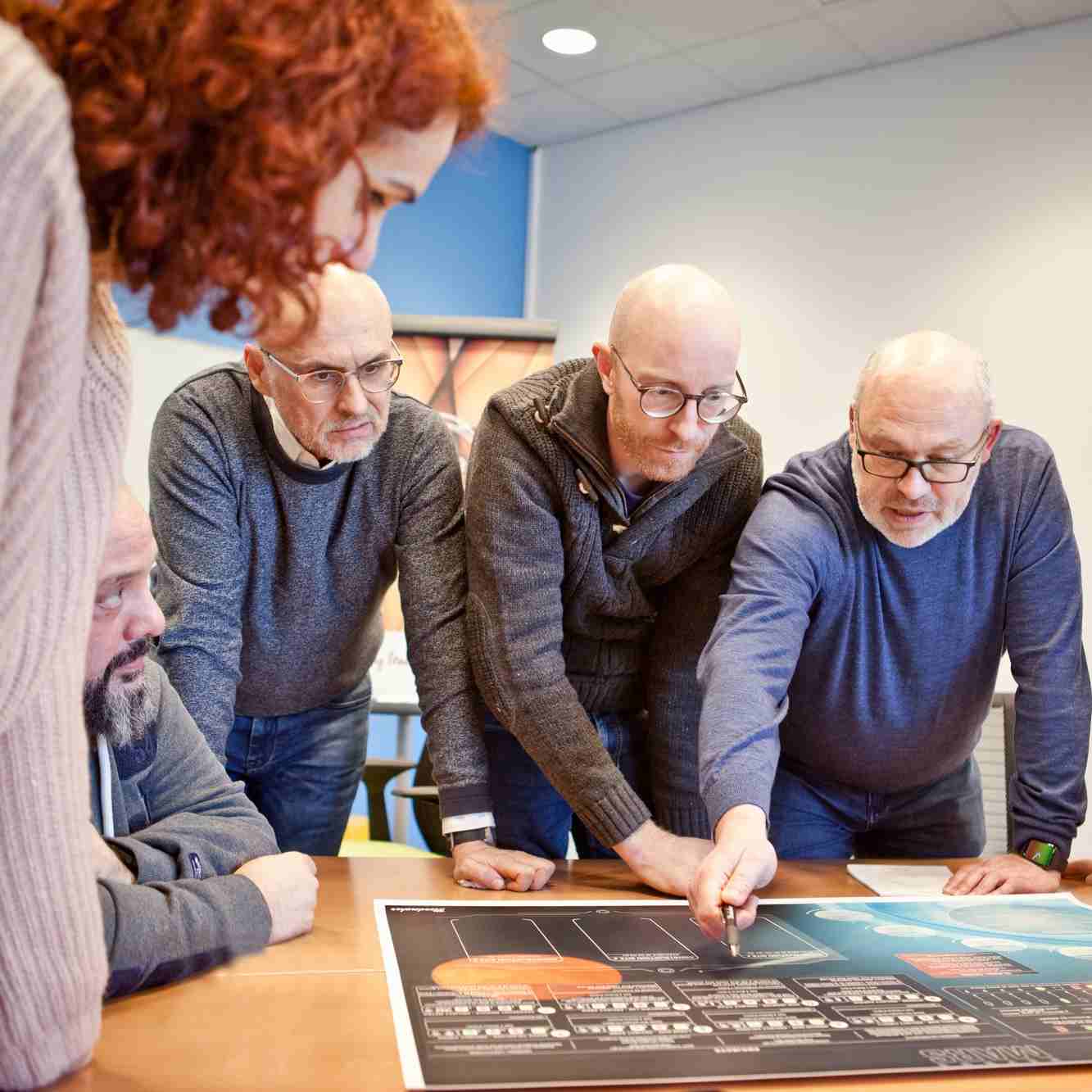
A team is tense, collaboration has stalled, two departments are working against each other rather than with each other – and yet, when it comes to planning, the word ‘offsite’ is often the first to come up. This is precisely where the real question arises: team event or team development? For companies, this decision is not just a question of budget, but one of impact. If you choose the wrong format, you may end up with a pleasant day out, but no tangible improvement in day-to-day working life.
Team event or team development – what’s the difference?
A team event is primarily aimed at creating shared experiences. It generates positive energy, takes people out of their daily routines and can boost motivation, foster closer bonds and strengthen a sense of togetherness. This can be particularly beneficial following periods of intense work, the successful completion of projects or as a way to kick off the new year.
Team development has a different objective. It is not just about making a team feel better, but about enabling it to work together more effectively. Issues such as role clarification, communication, trust, taking responsibility, conflict patterns and areas of overlap are deliberately addressed. The approach is therefore more in-depth, more structured and more focused on sustainable change.
Both have their place. It only becomes problematic when an event is expected to take the place of a developmental solution. An escape game can lift spirits. However, it does not resolve unclear lines of responsibility. A team-building day can foster a sense of togetherness. However, it is no substitute for proper reflection when friction within the team has long since been affecting performance.
The BITOU 4-Level System
Where does your team stand right now?
BITOU makes team development tangible: from the classic event to team coaching – with Team Power measurement integrated into every level.
Click on the areas → go to the right page
Team Power measurement in every level
Do you already know where your team stands today? The free TK-15 check delivers your score in 10 minutes.
When a team event is the right choice
A team event is most effective when the team has no underlying issues but needs a boost to foster connection, motivation and shared experiences. This applies, for example, to newly formed groups, to teams that have been under a great deal of pressure, or to organisations that wish to consciously strengthen a sense of belonging.
A well-chosen event can also make a big difference in recruitment, onboarding or cross-departmental interactions. People get to know one another in a different context; hierarchies are temporarily softened, and conversations flow more easily. This can be a useful starting point, particularly when the aim is to build trust initially.
The only important thing is to have realistic expectations. A team event generates emotional engagement. This effect is valuable, but often short-lived. Without reflection and application, what often remains is simply the memory of a good day. For some objectives, that is enough. For others, it is not.
Typical occasions for a team event
An event is often a good idea after a successful quarter, as a token of appreciation, to help new colleagues network more effectively, or as a motivational kick-off ahead of a busy period. Even if a team is generally functioning well and simply needs greater team spirit or a fresh burst of energy, an experience-based format is a suitable choice.
In that case, however, the event should be planned for what it actually is: a targeted initiative to boost motivation and foster team spirit – not as a covert attempt to skilfully gloss over structural team issues.
When team development is the better choice
As soon as collaboration starts to falter beyond superficial issues – with performance, pace or accountability visibly affected – it usually takes more than just a single event. Team development is particularly useful when tensions have been simmering for some time, roles are unclear or conflicts keep recurring. A development-oriented approach is also often the more effective choice following restructuring, changes in leadership, rapid growth or as part of change processes.
The difference lies in the logic behind the format. Team development does not focus solely on the atmosphere, but on the conditions for effective collaboration. The team works together to examine patterns, expectations, communication channels and specific levers for change in day-to-day work. Effective facilitation ensures that the process does not merely involve discussion, but leads to decisions, agreements and next steps.
This is more demanding than a one-off event. It requires openness, methodological rigour and clearly defined objectives. That is precisely why the impact is often much more sustainable.
Typical signs of team development
When meetings drag on, responsibilities are constantly being passed back and forth, conflicts are only dealt with indirectly, or managers are constantly having to mediate between individual interests, a team-building event is usually too short-sighted. The same applies when teams have been formally restructured following a reorganisation but have not yet developed a shared understanding of how to work together.
It is then worth considering the real question behind the request for a change of format: should the team take a brief breather – or become more effective in the long term?
Why companies often confuse the two
It’s easy to see why people get them mixed up. Team events are easier to visualise, quicker to book and often easier to sell internally. They create a positive impression, appeal to people’s emotions and promise an immediate response. Team development, on the other hand, may initially sound more demanding, more formal or more conflict-prone to some of those involved.
That is precisely why, in practice, an event is often chosen even though what is actually needed is development. The result is then sobering: morale improves in the short term, but after a few weeks the same patterns resurface. Not because the event was bad, but because it was aimed at the wrong objective.
So if you want to make an impact, you need to make a clear diagnosis. Where does the team stand today? What, specifically, is hindering collaboration? Is it a question of motivation, relationships or performance? And how would you know if the measure had been successful?
The key question: What outcome are we aiming for?
Not every team situation calls for the same format. That is why the choice should always be based on the desired outcome, not on the most appealing activity. If the aim is to strengthen a sense of belonging, restore energy or foster connections, an event may be just the thing. If the aim is to improve coordination, resolve conflicts, clarify roles or encourage people to take on more responsibility, team development is what is needed.
In many organisations, there is also a transitional phase. The team generally functions well, but there are isolated areas of friction or it is on the cusp of a new phase. In such cases, a well-designed team development programme can be beneficial – in other words, a solution that combines experience with reflection. This is often where the greatest impact is felt: the team shares an experience together, but this is not without its carry-over into day-to-day working life.
This distinction is crucial for HR, People & Culture and senior management. This is because teams do not judge measures on the basis of creativity, but on the basis of relevance. If the intervention is appropriate to the situation, it will be accepted. If it misses the mark, it will quickly be seen as a mere formality.
Team events or team development in times of change and growth
The question of whether to opt for a team event or team development arises particularly frequently during periods of change. Teams grow, structures change, hybrid collaboration calls for new routines, and leadership is distributed differently than before. In such situations, motivation alone is rarely enough.
Of course, an event can help to bring people back together emotionally. This is a particularly important factor following periods of separation, high stress or when teams are spread out. However, as soon as processes, responsibilities or expectations have also shifted, a framework is needed within which these changes can be addressed collectively.
This also applies to new managers. When a team gets a new manager, it is valuable to have a joint kick-off session. It becomes even more valuable if, in addition to getting to know one another, the session also covers leadership principles, role expectations and collaboration. Impact is created where relationships and clarity come together.
How to recognise good formats in both cases
A good team event is more than just entertainment. It is chosen to suit the team’s current stage of development, professionally facilitated and designed to foster genuine interaction. It encourages participation rather than passive consumption and creates space for the team to truly experience itself as a team.
Effective team development goes one step further. It begins with clearly defining objectives, makes team dynamics open to discussion, and translates insights into concrete behavioural and work-related actions. It is particularly effective when progress is not merely perceived but made tangible – for example, through structured assessments, team reviews or measurable development goals.
This is precisely what distinguishes a nice programme from an effective initiative. Anyone wishing to improve teamwork should not rely solely on experiential activities, but on an approach that makes change visible and embeds it in everyday life. BITOU therefore works with clear stages of development, diagnostic elements and programmes that do not stop at simply engaging participants, but drive concrete progress in collaboration and team performance.
The best decision is rarely an ideological one
It’s not a question of pitting team events against team development. A strong team sometimes needs one, sometimes the other. And sometimes the best solution is a clever combination: first building connections, then exploring topics in greater depth. Or first highlighting problems and later consolidating the new way of working together through a bonding experience.
What matters most is being honest about the starting point. If a team needs a break, motivation and positive energy, an event makes sense. If it needs direction, clarity and development, that is exactly what you should choose. After all, teams do not automatically grow closer simply by spending time together. They grow closer when the format suits their reality – and when a good day leads to a better working day.

You might also be interested in
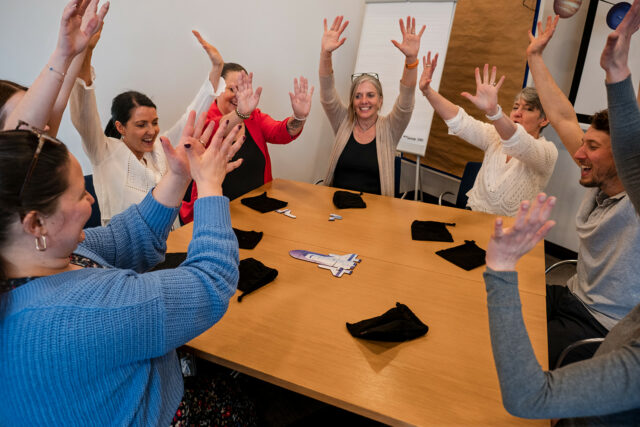
Energizer Games: How to Boost Engagement in Meetings
Activation games are a real game changer for meetings, as they get rid of the meeting grump from both sides: The participants are motivated again and the moderator gets an attentive audience again – a win-win situation.
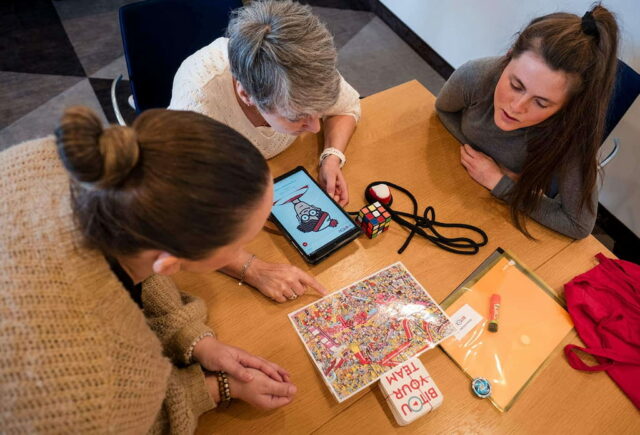
12 team-building activities for businesses
12 effective team-building activities for businesses – from events to team coaching. How to boost collaboration, trust and performance.
9 team-building ideas for companies
9 effective team-building ideas for companies that boost collaboration, trust and motivation – delivering tangible results rather than just a nice social programme.