

Measuring team performance following an off-site meeting
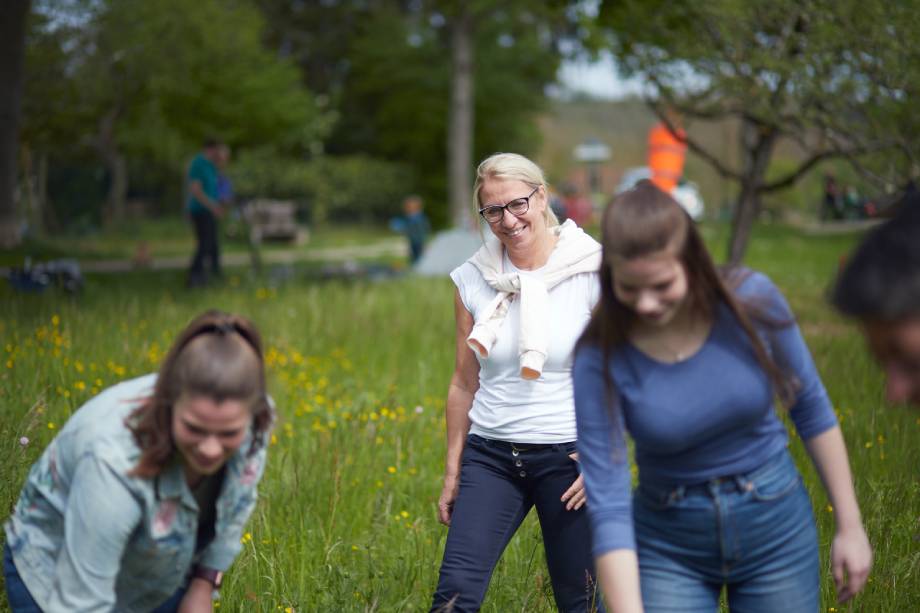
The offsite was a great success. Good discussions, honest reflection, and a palpable sense of greater trust in the room. And then? It is precisely at this point that it is decided whether a team-building exercise is merely fondly remembered or actually has an impact on day-to-day working life. Anyone wishing to measure team performance following an offsite therefore needs more than just a snapshot of the mood immediately after the event. What is needed is robust evidence of whether collaboration, coordination and implementation within the team have actually improved.
For HR, managers and People & Culture teams, this is not just an academic question. Off-site events take up time, budget and attention. They are intended to provide direction, break down silos, clarify roles or realign a team following change. The relevant measure of success is therefore not whether the food was good or whether people enjoyed the activity. What matters is whether the team organises itself more effectively, communicates more clearly and delivers more reliably in its day-to-day work.
Measuring team performance after an off-site means separating the impact from the experience
Many teams initially view an off-site positively because it went well on an emotional level. This is valuable, but it does not automatically equate to better team performance. A productive day away from the office can boost motivation without bringing about any noticeable change in the quality of meetings, the taking on of responsibility or cross-functional collaboration.
That is why it is worth distinguishing between three levels. Firstly: reaction. How was the offsite experienced? Secondly: learning and insights. What did the team understand or decide? Thirdly: impact on behaviour and performance. What is different four to twelve weeks later compared to before? It is only at this third level that team performance becomes tangible.
If you mix these levels together, what you end up measuring is primarily satisfaction. Whilst this is useful for employer branding or acceptance, it is insufficient for a serious assessment of impact. Particularly in organisations where there is significant pressure to coordinate, a measurement framework is needed that brings together team dynamics and operational collaboration.
Which key figures are really relevant
Accurate measurement depends heavily on the purpose for which the off-site was organised. Was it to align strategy, resolve conflicts, support onboarding following growth, or to generally strengthen collaboration? The clearer the purpose, the more accurate the measurement of success.
In practice, indicators from four areas in particular have proven their worth. The first area is collaboration. This involves questions such as: Is information shared more promptly? Are handover procedures clearer? Do team members visibly pull together when making decisions? The second area is communication. This includes meeting discipline, the quality of feedback, how conflicts are addressed, and clarity in coordination.
The third area concerns accountability and implementation. Are agreed measures being adhered to? Is there less need for course correction? Do decisions move more quickly from being made to being implemented? The fourth area is the sense of belonging and trust. This may sound soft, but it is often a powerful driver of performance. Teams tend to work faster and with greater courage when psychological safety and role clarity increase.
Depending on the team, additional operational metrics may also be useful, such as lead times, error rates, the number of outstanding interface issues or escalations. However, it is important to bear in mind that not every change can be clearly attributed to an offsite. If a reorganisation is taking place at the same time or there are changes in personnel, any interpretation must be treated with caution.
How to measure team performance after an offsite
The most effective approach is a combination of pre- and post-measurements and qualitative analysis. A single feedback form completed immediately at the end of the off-site meeting is not enough. A simple three-step measurement design is preferable.
Before the offsite, a baseline assessment is carried out. This can be done via a concise team check, brief self-assessments and, where necessary, additional input from management or relevant stakeholders. It is important that the questions are phrased in terms that relate closely to day-to-day work. Rather than asking abstract questions about culture, ask specific questions about decision-making processes, coordination, a sense of responsibility and conflict resolution skills.
This is precisely where BITOU’s Teamkraft can be put to use. Teamkraft helps to visualise the impact of an off-site in a more structured way, for example through questionnaires before and after the event, a short survey conducted on the spot, or supplementary self-assessments. This provides a clearer picture of how team dynamics, collaboration and team performance are developing.
An initial interim assessment takes place immediately after the offsite. This is less about impact and more about clarity and motivation. Does the team have shared priorities? Are roles clearer? Are there clear agreements in place for the transfer of knowledge? This phase is important because it shows whether the reflection has already led to concrete courses of action.
The actual impact assessment takes place a few weeks later. Four to eight weeks is often a good timeframe, though it may be longer for more significant changes. At that point, it is possible to assess whether decisions have been adhered to, whether routines have changed, and whether friction losses have decreased. It is precisely this delta analysis that is valuable: it is not the absolute value alone that counts, but the progress made compared to the starting point.
The BITOU 4-Level System
Where does your team stand right now?
BITOU makes team development tangible: from the classic event to team coaching – with Team Power measurement integrated into every level.
Click on the areas → go to the right page
Team Power measurement in every level
Do you already know where your team stands today? The free TK-15 check delivers your score in 10 minutes.
Typical measurement errors following off-site events
The most common mistake is to leave it too late to think about measurement. Once the offsite is over, there is often no baseline. All that remains is a gut feeling as to whether anything has improved. That can be useful, but it is prone to bias.
A second mistake is trying to do too much. Some companies want to measure everything straight away: motivation, productivity, staff retention, leadership, innovation and culture. This rarely leads to clarity. It is better to have a focused set of just a few indicators that are directly relevant to the purpose of the off-site meeting.
Thirdly, soft and hard criteria are often pitted against one another. This is unnecessary. Trust, openness and a sense of belonging are not trivial matters, but are often prerequisites for better performance. At the same time, they should not be assessed in isolation from day-to-day working life. What matters is not just whether the team feels closer-knit, but whether this leads to clearer decision-making and makes collaboration easier.
A fourth mistake is a lack of accountability for implementing changes. Even the best measurement is of little use if no one acts on the results. If roles remain unclear or agreements fall by the wayside in day-to-day operations, the measurement may reveal that things have come to a standstill, but it does not change the situation. Impact is only achieved when diagnosis, reflection and corrective action come together.
What good questions achieve
Effective measurement depends on good questions. These must be clear, relevant to everyday life and analysable. Rather than asking about team spirit in general terms, it is more helpful to assess whether the team addresses conflicts at an early stage, whether decisions are made transparently and whether responsibilities are clear to everyone.
Equally important is a diversity of perspectives. The team’s self-assessment is key, but it is not always sufficient. Sometimes a team perceives itself internally as having improved significantly, whilst neighbouring departments continue to perceive a lack of clarity or friction. This is why an additional external perspective is particularly valuable when dealing with cross-functional issues.
Anyone wishing to measure team performance following an offsite should also take differences within the team seriously. Not everyone experiences progress in the same way. If leadership has gained clarity, but operational team members continue to struggle with unclear priorities, this is not an outlier but an important finding. Good measurement highlights such tensions rather than glossing over them.
From measurement to development
Measurement is not a tool for monitoring the team. It is a tool for the team’s development. This approach is crucial if openness is to flourish. Teams will only give honest feedback if it is clear that the results are not used to hold them to account, but to improve collaboration and performance.
That is why the analysis should never stop at the figures. A score shows where progress has been made or where it is lacking. The real strength lies in joint reflection: What has improved? What is still holding things back? Which two or three behavioural changes will now have the greatest impact? In this way, measurement becomes a structured process of knowledge transfer.
Experienced providers use clear checks, benchmarks and delta measurements to highlight progress and identify specific areas for development. This is precisely what distinguishes a well-facilitated experience from an effective team-building exercise. BITOU has been consciously applying this approach for years, because teams need not just a good day out, but better collaboration in their day-to-day work. With ‘Teamkraft’, there is a concrete way to make the impact and team performance associated with off-site events more measurable and to utilise the results for further application.
When it’s particularly worth the effort
Not every off-site requires the same level of measurement. For a small team-building event aimed at boosting motivation, simply following up on the agreed steps is often sufficient. The situation is different when it comes to conflicts, reorganisation, leadership changes, strong growth or strategic realignment. In such cases, systematic impact measurement is almost always advisable, as the risks in day-to-day operations are higher and expectations of the format are significantly more specific.
This is relevant for HR too. Those responsible for organising internal off-site events need evidence of their effectiveness. Accurate measurement highlights which formats drive genuine development and where the focus tends to be more on the event itself. This helps with budget decisions, selecting appropriate measures and determining how teams should be supported in the long term.
Ultimately, it’s not about equipping every offsite with an overly complex system of metrics. It’s about taking impact seriously. If, following an offsite, a team communicates more clearly, collaborates more reliably and implements decisions more consistently, that is precisely what should be evident. After all, a strong sense of ‘we’ is valuable. What is even more valuable is when this results in a noticeably improved team performance in day-to-day work.

You might also be interested in
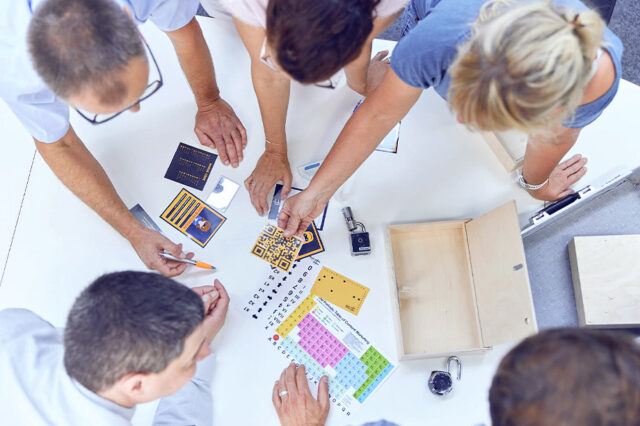
Effective task distribution in a team: strategies for managers
Effective task allocation is one of the greatest levers for successful team leadership. When responsibilities are clear, talents are deployed in a targeted manner and communication is transparent, efficiency and motivation are created at the same time. In this article, you will learn how managers not only advance projects through strategic task allocation, but also strengthen their teams in the long term.

It is high time to rethink employee motivation!
Whether we are motivated and efficient at work is strongly related to the DELIs. Whether teams realise their performance potential and whether it is fun to work in this team is also a result of motivation and appreciation.

Offsite Workshop: Building an Effective Team
An off-site workshop designed to develop the team fosters focus, trust and clear collaboration – with structure, knowledge transfer and measurable results.