


Request without obligation & free of charge.
Response guaranteed within 24 hours.


Race for Space
- 16 – 320
- 60 - 120 minutes
- Face to Face
- Indoor
- Level 2
- Promotes strategic thinking, creativity and cross-departmental collaboration
- Team building that impressively combines innovation, team intelligence and a sense of adventure
- Exciting mission structure with clear goals, deadlines and team roles
- Professional facilitation ensures structure, dynamism and flow
Communication that really gets through
In the Race for Space, participants embark on a communicative space training programme. They build a rocket, repair a cockpit and construct a lunar base – yet each task demonstrates in a different way just how quickly messages can be misunderstood. The format highlights the fact that communication is not successful simply because something has been said, but only when it is properly understood by the other person.
Event schedule – One mission, three levels of communication
Arrival & Mission Briefing – The Launch into Space
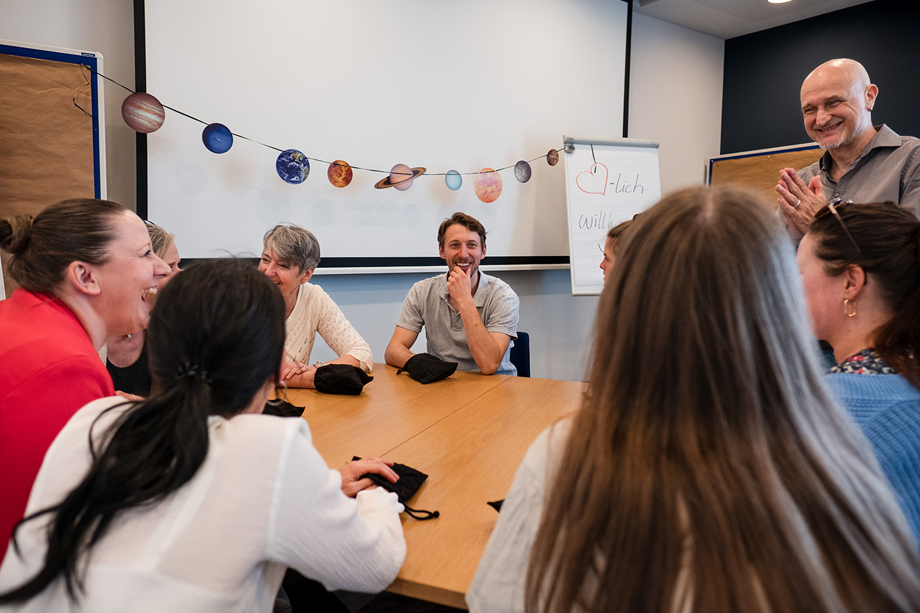
The atmosphere changes the moment you step into the room. Ideally, the room is slightly dimmed, a constellation is projected onto the ceiling, and the team stations are already set up. This immediately sparks curiosity: What’s going on here? What task awaits us? And why does the meeting room suddenly no longer look like a meeting room?
The facilitator introduces the participants to the story: the teams are preparing to launch to the Moon and set up a base there. However, this mission can only succeed if information is passed on accurately and understood correctly. Following the introduction, the first communication training session begins.
Training Camp 1 – Assembling the rocket
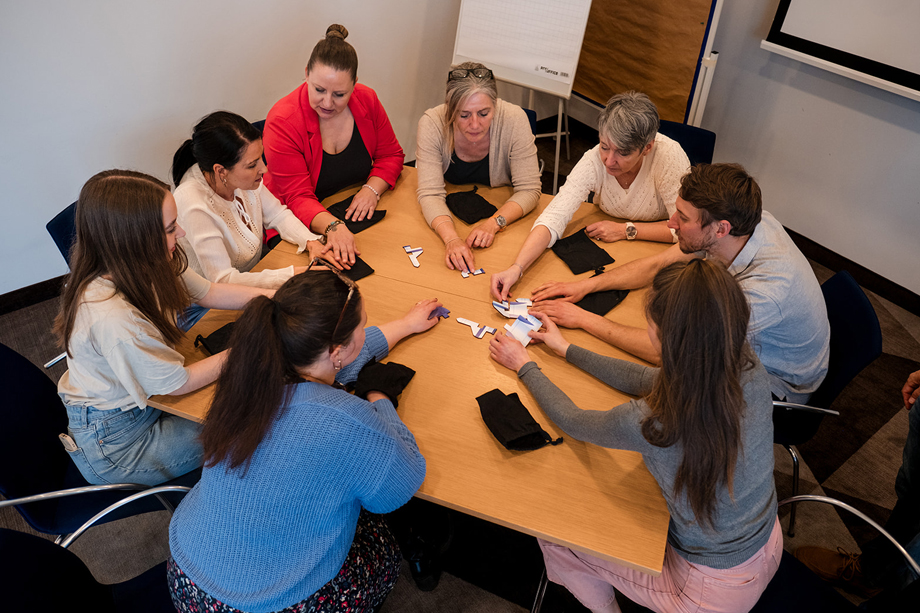
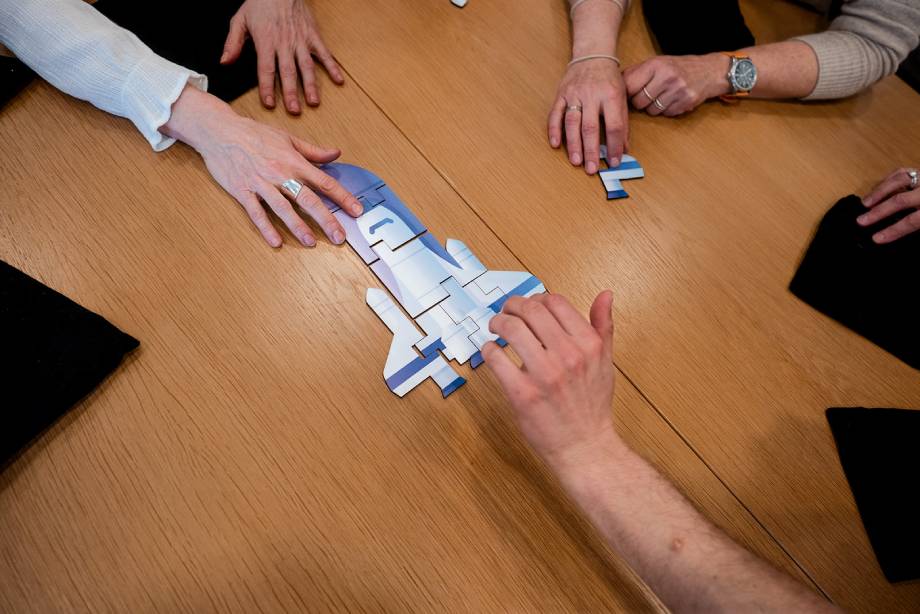
In the first phase of the game, the teams build a rocket out of jigsaw pieces. The key point is that the participants cannot see the pieces; they can only feel them and describe them. Black touch bags contain different shapes – and the team must work out which jigsaw piece appears only once or is missing.
What sounds simple at first quickly becomes a test of communication. How do you describe a shape that others cannot see? Which terms are actually helpful? And when do you find yourselves talking at cross-purposes? Immediately afterwards, the team uses an evaluation form to assess how well the strategy, problem identification, alignment, connection and evaluation worked – and what could be improved next time.
Training Camp 2 – Repairing the cockpit
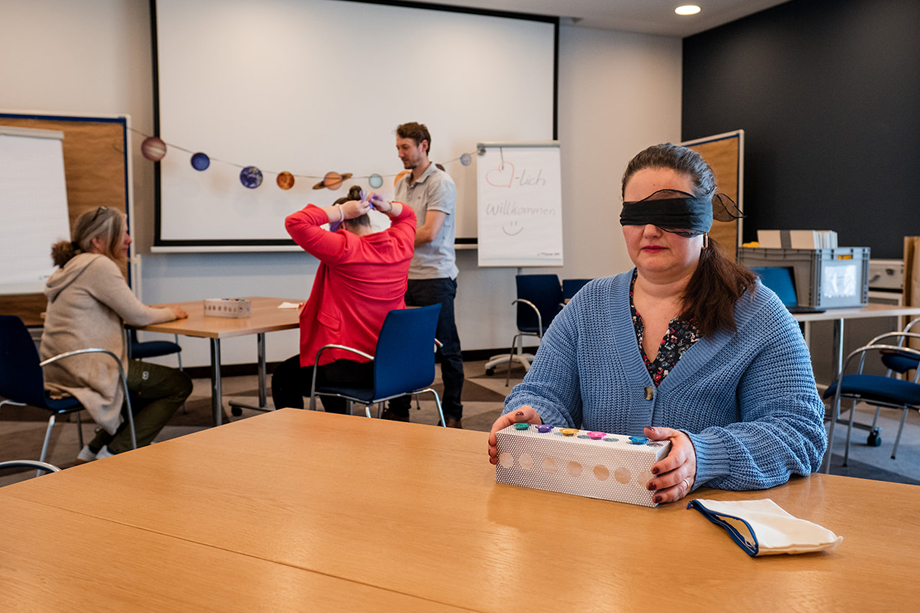
In the second phase, the rocket has been built, but something is wrong in the cockpit. The wiring – or rather, the control panel – needs to be put right. However, the circuit diagram is not with the person carrying out the work, but in another room. Team members have to memorise the information, return and explain to someone how the system needs to be set up correctly again.
Here, communication under challenging conditions becomes apparent: information must be taken in, retained, translated and passed on accurately. One person may take action but cannot see the original plan. Others are aware of the plan but must describe it in such a way that it leads to its correct implementation. After this round, too, the teams reflect on what they have learnt and how they can improve their communication for the next task.
Training Camp 3 & Overall Reflection – Building the Moon Base
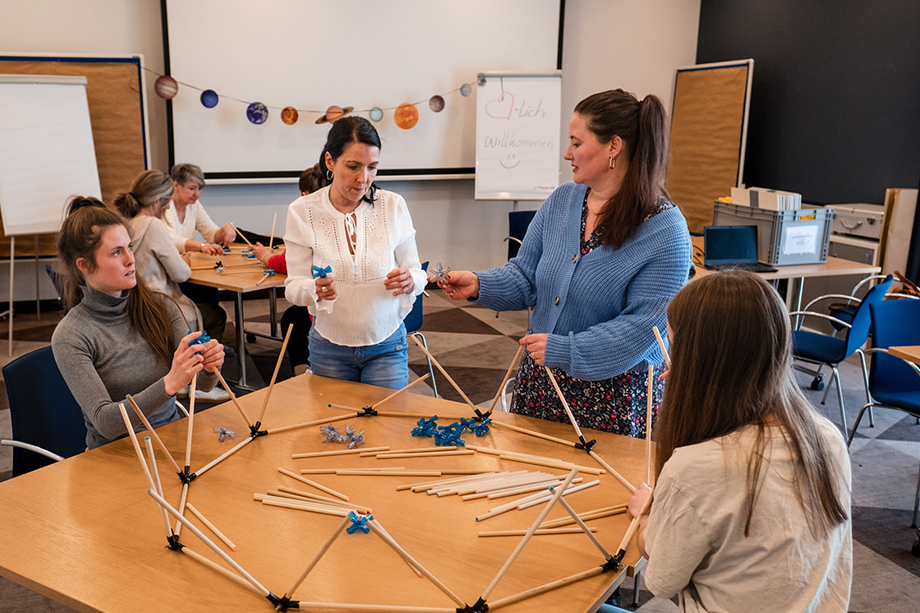
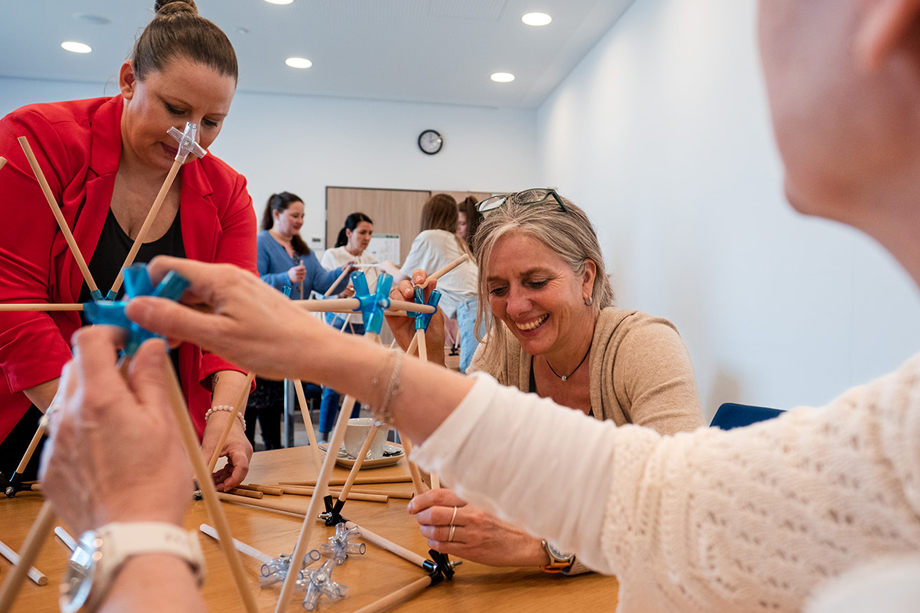
In the third phase, the insights gained from the first two rounds are brought together. The teams must build a so-called ‘dome’ – in other words, a lunar base – out of rods. They first have a strategy and orientation phase, during which they can examine the model and plan their approach. However, as soon as anyone starts putting the parts together, the strategy phase ends prematurely – and the construction phase begins.
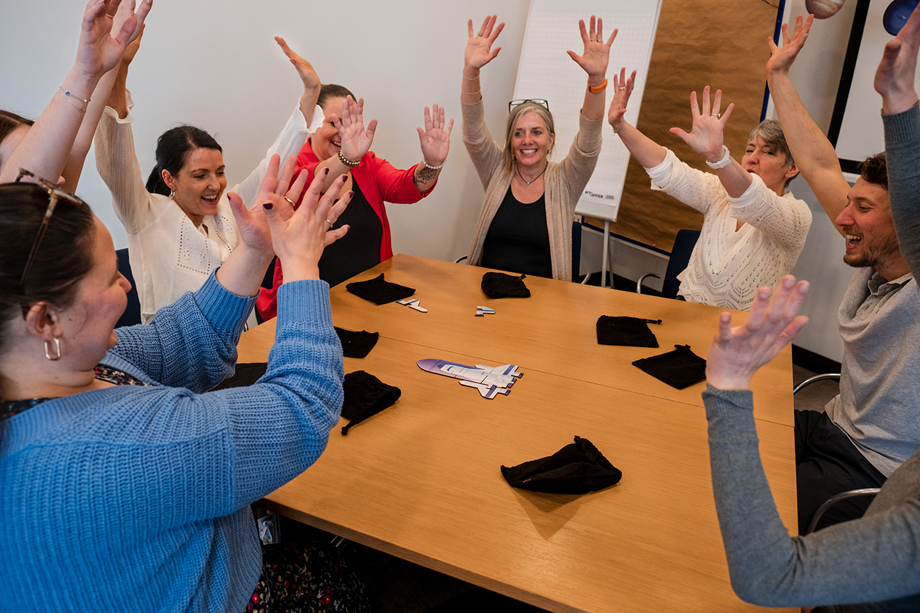
This task highlights particularly clearly whether a team has learnt from previous experiences. Do they consult first, or take immediate action? Is knowledge shared, or does it remain with individuals? Is it clearly communicated when strategy ends and implementation begins? This is followed by the final evaluation: the teams summarise their findings, discuss ways to improve, and apply what they have learnt to their day-to-day communication at work. Depending on the objectives, this final reflection can be kept brief or explored in much greater depth.
Classification within the BITOU 4-level system
Race for Space is part of Level 2 – Intelligent Team Building – of the BITOU 4-level system.
This means that the format remains active, playful and accessible, but goes beyond mere team-building. Participants not only share an experience together, but also reflect specifically on what their behaviour reveals about communication, understanding and cooperation.
In Level 2, an event becomes a space for insight: teams can see where coordination is working, where messages are getting lost, and how they can improve their communication. Race for Space is therefore particularly suitable when a team is not yet looking for an in-depth development programme, but wants to take away more than just a shared experience.
The benefits of the Race for Space at a glance:
✔ Communication becomes a tangible experience: Participants learn first-hand that good communication means more than simply ‘having said something’. What matters is whether the message is understood by the other person and enables them to take action.
✔ Awareness of differing perceptions: Race for Space highlights the fact that people can interpret the same terms in different ways. This fosters greater awareness of language, word choice and perspective.
✔ Gradual improvement rather than a one-off ‘aha’ moment: Thanks to the three consecutive phases of the game, the team can adapt their communication immediately, try it out again and improve it.
✔ A brief reflection on everyday working life: After each round, we review what went well and what ‘could be even better if…’. This provides specific starting points for the next working day.
✔ Ideal for international teams: This format is particularly useful for teams that work in English or in a shared second or third language. It is precisely in such situations that misunderstandings and linguistic nuances become particularly apparent.
✔ Encourages clear instructions and active questioning: The exercises show that communication is not solely the responsibility of the sender. Asking questions, seeking confirmation and reaching a shared understanding are also crucial.
✔ Strengthens collaboration under time pressure: The teams experience how they exchange information, make decisions and act together within a limited timeframe.
✔ Easy access with a powerful learning impact: The exercises are deliberately designed to be easy to understand. This is precisely what leads to ‘aha’ moments, without the format coming across as difficult or theoretical.
What our customers say
Race for Space as part of the BITOU event tour
Race for Space is a Level 2 format. It combines a playful experience with clear reflection and highlights communication within the team. The focus is not just on having fun, but on gaining initial, concrete insights into collaboration.
From here, the team’s journey can take various paths:
- Level 1 – Classical team event:
Events such as the Smart Team Challenge, the Team Olympics and the Highland Games generate energy, encourage physical activity and create shared experiences. - Level 2 – Intelligent team building:
Race for Space enhances communication and understanding. Anyone wishing to continue working at this level can use formats such as Turn Around or Chain Reaction XXL to further highlight collaboration and coordination. - Level 3 – Team development:
If the aim is to apply and review communication in greater depth following the Race for Space, On Thin Ice is the ideal next step. There, participants can experience the topic of communication once again in a more challenging practical scenario. - Level 4 – Team coaching:
If this reflection reveals specific communication patterns, conflicts or recurring misunderstandings, individual team coaching can help to address these issues in a sustainable way.
In this way, Race for Space can serve as a starting point for a targeted communication journey for the team.
This format is one of twelve directly bookable measures – see all team building measures at a glance.
Frequently Asked Questions about the Race for Space
What is Race for Space all about?
Is Race for Space more of a game or a training programme?
How long does Race for Space last?
Does the room require any special conditions?
For which teams is Race for Space particularly suitable?
What do participants take away from the programme?
At a glance
General services:
- Professional facilitation by experienced BITOU trainers
- Introduction to the storyline, objectives and game mechanics
- Preparation of team stations and materials
- Facilitation of the three game phases
- Structured evaluation after each round
- Final reflection with application to everyday working life
- Adaptation to group size, venue and desired level of reflection
Product-specific services:
- Space setting with an atmospheric introduction
- Three communication tasks centred on a rocket, a cockpit and a lunar base
- Evaluation form after each round of play
- The SPACE framework as a guiding principle: strategy, anticipating problems, alignment, connecting, evaluating
- Communication exercises involving various sensory and information barriers
- Reflection on the sender-receiver principle
- Optional in-depth evaluation for teams with specific communication needs
- Space-saving indoor delivery possible in the existing conference room
Facts
-
16 – 320
-
60 - 120 minutes
-
Face to Face
-
Germany, EU and Switzerland
-
Year round
-
German, English
-
Indoor 2 qm / pax
Suitable for…
- Teams experiencing recurring misunderstandings
- International teams with a common working language
- Project teams requiring frequent coordination
- New teams looking to establish a common basis for communication
- Management and departmental teams
- Teams in hybrid or multi-site structures
- Conferences, training sessions and off-site meetings focusing on collaboration
- Groups looking for an interactive format with clear reflection