

Measuring team performance in day-to-day work
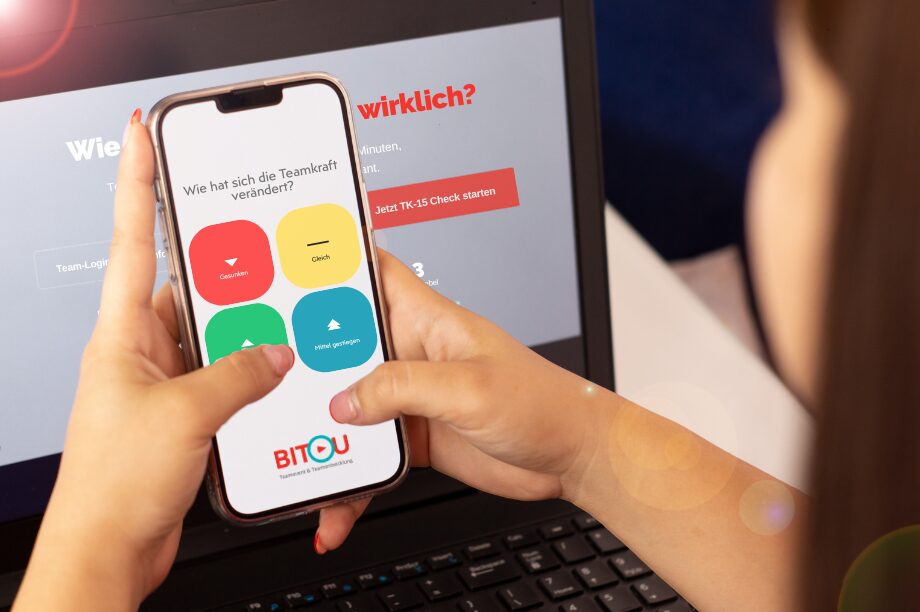
When teams do not work together as intended, this rarely shows up immediately in a metric. It manifests itself in friction, misunderstandings, duplication of effort, protracted coordination, or an atmosphere that still appears stable to the outside world but is already draining energy internally. This is precisely where the question arises of how team performance can be made measurable – not just through output, but through the quality of collaboration that makes that output possible in the first place.
For HR, managers and senior leadership, this is a crucial point. Anyone planning team formats, managing conflicts or supporting change processes needs more than just a good impression following an off-site. Personal rapport is not a performance indicator. A motivational event can provide a boost, but it is no substitute for a robust assessment of whether trust is growing, roles are becoming clearer or coordination is actually improving.
Why making team performance measurable is more than just KPI tracking
Many companies initially turn to the figures that are already available: project durations, error rates, sick leave, staff turnover or target achievement. These data are relevant, but they usually only show the result. They say little about why a team is performing strongly or why it is underperforming.
Team performance does not arise solely from individual competence. It arises where people share information, take responsibility, resolve conflicts constructively and remain capable of acting under pressure. These factors are less tangible than traditional business KPIs, but by no means vague. They can be observed, structured and their development made measurable.
This is precisely where the difference lies between a pleasant team experience and genuine team development. Anyone who seriously wants to improve team performance needs a system that makes visible both the dynamics experienced within the team and the impact on day-to-day work.
Making team performance measurable: What should actually be measured?
The key misconception is often that team performance is synonymous with results. This is an oversimplification. A team can deliver in the short term whilst simultaneously wearing itself out internally. Similarly, during a period of significant change, a team may appear slower to the outside world, yet be laying important foundations for sustainable performance internally.
It therefore makes sense to adopt a multidimensional perspective. Four levels are particularly significant: collaboration, alignment, accountability and execution.
Collaboration encompasses trust, the quality of communication, conflict management and mutual support. Alignment refers to shared goals, priorities and a clear understanding of what good teamwork means in a specific context. Responsibility is demonstrated through commitment, role clarification and the management of interfaces. Execution becomes evident where decisions are made, agreements are upheld and results are shared collectively.
These levels are measurable if they are properly operationalised. Not based on gut feeling alone, but on clear statements, observation criteria and benchmarks.
Common measurement errors made by companies
The first pitfall is the simple satisfaction survey. If participants rate a team format at 4.8 out of 5, this says nothing about behavioural change. People can find a day inspiring and still fall back into old patterns on Monday.
The second pitfall is oversimplification. A single score for team performance sounds appealing, but in practice it is often too crude. Teams are complex. If you only collect an overall score, you cannot tell whether the problem lies in communication, unclear roles or a lack of leadership alignment.
DThe third pitfall is a lack of temporal context. Impact cannot be meaningfully measured if data is collected only once. Only before-and-after comparisons or delta measurements reveal whether a team is making progress in relevant areas.
And then there is the cultural pitfall: if measurement is perceived as a form of control, openness declines. Teams respond in a socially desirable way rather than honestly. Measurability only works if it is understood as a tool for development – not as a ranking instrument used against individuals.
This is how team performance can be made measurable without overburdening the team
In practice, a three-part model has proven effective: diagnosis, intervention and transfer measurement.
The process begins with a structured assessment of the current situation. This captures how the team currently perceives itself and where specific tensions lie. This can be achieved through team checks, focused interviews, facilitated reflection sessions, or a combination of external and self-assessments. It is crucial not to ask about the general mood, but rather about clearly identifiable performance factors.
This is followed by the actual development initiative. Depending on the team’s situation, this could be a team event with focused reflection, a team-building session with clear learning objectives, a development workshop, or conflict-focused team coaching. The difference lies in the depth of the approach. Not every team needs intensive clarification work straight away. But every team benefits when experience is translated into insight, and insight into concrete behavioural agreements.
The third component is often underestimated: measuring transfer. This is where it becomes clear whether the impetus has actually resulted in new behaviour in the team’s day-to-day work. Has coordination improved? Are conflicts addressed earlier? Are roles clearer? Is there less friction at interfaces? It is only at this point that the impact becomes visible.
Which tools are truly helpful
Not every company needs a complex diagnostic system. But every company needs some form of structured comparability. Short, repeatable team checks with fixed criteria are particularly helpful. They create a common language and make development over time visible.
Delta measurements are equally valuable. They look not only at the status quo, but also at the change between two points in time. This is often more motivating for teams than a mere current figure, because it makes progress visible – even when not everything has been resolved yet.
Qualitative observations remain important nonetheless. Numbers alone do not explain dynamics. If a team performs poorly in terms of role clarification, context is needed: Is it due to growth, leadership changes, unclear interfaces or hidden conflicts? Good measurement therefore combines structured scores with professional analysis.
At BITOU, this very combination is central: emotional engagement, clear diagnostics and a transparent transfer into the team’s working reality. This is particularly relevant for companies that do not simply want to create a good atmosphere, but aim to improve collaboration in a targeted manner.
How to recognise good measurability within a company
Measurability is effective when it facilitates decision-making. A team report should not only show that action is needed, but also where exactly development should begin. Does the team need clearer goals? A clear definition of roles? Facilitation at strained interfaces? Or a format that rebuilds trust before operational issues can be resolved?
Furthermore, metrics must be adaptable. HR requires different information to that needed by line managers. Senior management is interested in effectiveness and return on investment, whilst the team is more concerned with clarity and fairness. Good systems therefore do not produce a deluge of data, but rather provide relevant insights tailored to each role.
After all, good measurability is never static. Teams change. Following reorganisations, growth, waves of onboarding or changes in leadership, requirements shift. What was suitable six months ago may be inadequate today. Making team performance measurable therefore also means understanding development as a process rather than a one-off assessment.
What companies gain in concrete terms
When team performance becomes visible, it is not just collaboration that improves. Decisions regarding formats, budgets and priorities also become more robust. Instead of relying on assumptions, those in charge can invest in a more targeted manner.
This applies, for example, to the choice of intervention. A team with strong trust but weak commitment needs something different from a team with unspoken conflicts. Recognising these differences saves time, avoids ineffective standard solutions and increases the likelihood that an intervention will lead to genuine development.
There is also a cultural aspect to this. Teams feel valued when their collaboration is not assessed in a one-size-fits-all manner, but is understood in a nuanced way. This fosters acceptance – provided the results are presented fairly and are not used against the team.
This becomes a real competitive advantage, particularly in companies that are growing, undergoing change, or need to collaborate more closely across departments. After all, high-performing teams do not emerge by chance. They emerge where people develop clarity, trust and commitment – and where this development is taken seriously.
Anyone wishing to make team performance measurable should therefore not stop at key performance indicators, nor at a one-off team event. Impact is created when diagnosis, shared experience and concrete development work together effectively. It is precisely then that not only the sense of ‘we’ grows, but also the ability to deliver reliable performance together.

You might also be interested in

The Power of Integration—How Companies Shape Transformation from Within
Employee engagement is the driving force behind business success. Those who manage to truly engage their employees lay the foundation for profound cultural change and sustainable growth. Excellent service does not come about solely through friendly front-line staff—it comes about when every step of the process is conceived and designed with the customer in mind.

Conflict Resolution in Teams: Strengthen Collaboration and Productivity
Conflicts in a team cannot be completely prevented. But a team can learn to solve them in time before the team spirit or even process flows are endangered.

A sweat lodge, a leadership circle and an intense experience
Team bonding of a different kind: read how we used a sweat lodge ritual as an opportunity to create an exclusive and transformative experience for members of a leadership team here.