
Aligning the team following a change
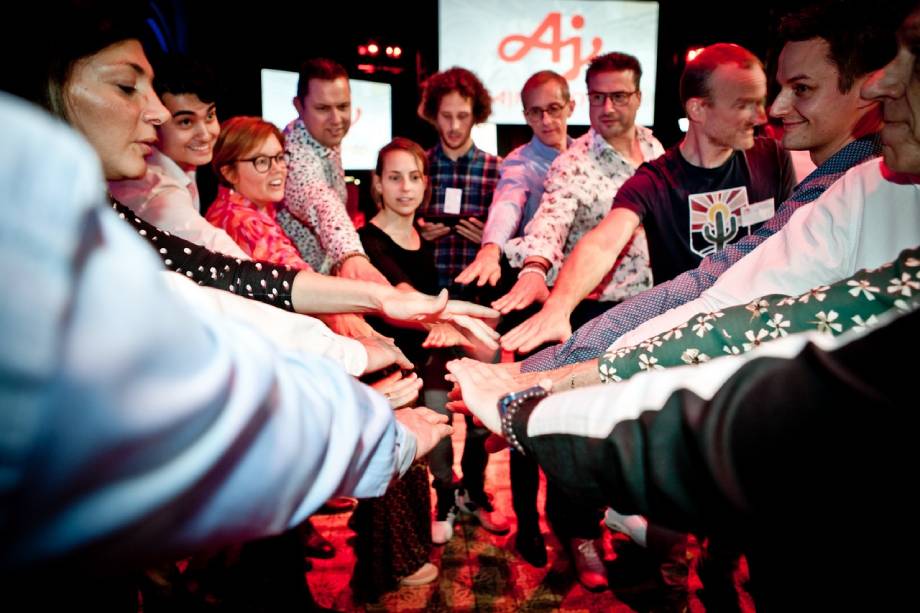
After a reorganisation, everything often looks clear on paper – a new structure, new responsibilities, new goals. Within the team itself, however, the situation is frequently quite different. Decisions are made hesitantly, coordination takes longer, and old patterns persist. Anyone wishing to realign a team following change must therefore do more than simply update organisational charts. It is a matter of restructuring collaboration, providing direction, and ensuring that high performance is once again a reliable possibility.
Why realigning a team after change is more than just change communication
Many change processes fail not because of the strategic idea, but because of how it is translated into day-to-day work. Employees have understood that something has changed. However, it remains unclear what this means in concrete terms for priorities, roles, interfaces and expectations. This is precisely where friction arises.
Aligning a team with change means turning an abstract change back into a system capable of action. This applies to both the practical and the social levels. Who decides what now? Which routines remain useful, and which ones hold things back? How is communication managed when the pace and uncertainty are both increasing? And how does the team know that it is back on track?
This is a crucial lever for managers and HR. If teams are not actively realigned following a change, typical follow-on costs arise: duplication of effort, conflicts at interfaces, declining motivation, and the feeling that ‘nobody really knows’ what matters right now. This is not a trivial matter. It is a question of performance.
How to tell if you need to realign your team following a change
Not every team reacts visibly to change. Some continue to function outwardly, but lose clarity internally. That is why it is worth taking a closer look at the signs.
A common pattern is hidden uncertainty. Tasks are completed, but decisions are delegated back or postponed. Meetings increase, commitment wanes. At the same time, misunderstandings arise about who is responsible for what. At first, this appears to be a communication problem, but it is usually an alignment problem.
A second sign is social withdrawal. Following changes, new team structures, new spans of control or new expectations often emerge. If trust has not yet been rebuilt, employees tend to hold back, play it safe or focus more on their own area. Silo thinking is then not caused by bad intentions, but by a lack of shared direction.
A third sign is a noticeable drop in motivation. Particularly following restructuring, changes in leadership or strategic realignments, teams find themselves asking, unspoken: ‘What on earth are we doing this for together?’ If this question remains unanswered, energy levels wane – even among employees who are fundamentally committed.
What teams actually need following change
There is a strong temptation to jump straight into action: organise a workshop, formulate a mission statement, plan an off-site. However, this only becomes effective once it is clear what the team is actually lacking. In practice, there are usually four key elements.
Firstly, the team needs a new shared focus. Following changes, old goals often remain in place informally, even though new priorities should apply. As long as both run in parallel, it leads to overload. Teams therefore need a clear answer as to what really matters now and what decisions should be based on.
Secondly, roles and responsibilities must be reorganised. This is particularly true when departments have been merged, leadership roles changed or processes redesigned. Not every lack of clarity is immediately problematic. However, persistent uncertainty costs speed and trust.
Drittens braucht es eine tragfähige Form der Zusammenarbeit. Das betrifft Meetinglogik, Informationsfluss, Abstimmung an Schnittstellen und den Umgang mit Konflikten. Ein neues Team oder ein verändertes Team kann nicht mit alten Routinen automatisch gut funktionieren.
Viertens braucht Veränderung soziale Verarbeitung. Menschen müssen nicht jede Entscheidung gut finden. Aber sie müssen verstehen, was sich verändert hat, was davon bleibt und wie sie darin wieder wirksam werden können. Ohne diese Klärung bleibt Veränderung formal beschlossen, aber emotional nicht integriert.
Team nach Veränderung ausrichten: So gehen Sie wirksam vor
Ein belastbarer Prozess beginnt nicht mit Motivation, sondern mit Diagnose. Bevor Sie Maßnahmen planen, sollten Sie klären, an welcher Stelle das Team gerade steht. Geht es primär um Zielklarheit? Um Rollen? Um Konflikte? Um verlorenes Vertrauen? Oder um die Leistung an Schnittstellen? Ohne diese Einordnung wird Entwicklung schnell zu allgemein.
Thirdly, a sustainable form of collaboration is needed. This concerns meeting procedures, the flow of information, coordination at interfaces and the handling of conflicts. A new or restructured team cannot automatically function well by relying on old routines.
Fourthly, change requires social processing. People do not have to agree with every decision. But they must understand what has changed, what remains the same, and how they can be effective within this new context. Without this clarification, change remains a formal decision but is not emotionally integrated.
Aligning the team after change: How to proceed effectively
A resilient process does not begin with motivation, but with diagnosis. Before you plan measures, you should clarify where the team currently stands. Is it primarily about clarity of objectives? About roles? About conflicts? About lost trust? Or about performance at interfaces? Without this assessment, development quickly becomes too general.
Ultimately, the question is one of measurability. Impact is evident not only in the mood of the team, but in observable changes. Are priorities being set more clearly? Is there less friction? Are conflicts being addressed sooner? Is team performance more consistent? Anyone who takes change seriously should also make its progress visible.
The role of leadership and HR
When aligning a team with change, the manager is a key factor – but not the only one. Leadership provides direction, sets priorities and fosters commitment. At the same time, it is often itself part of the change and therefore not always the neutral authority a team needs for open clarification.
This is where HR or People & Culture often plays a key role. Not as an organisational support function in the background, but as a co-creator of team effectiveness. Particularly during sensitive phases of change, it is helpful for teams to be able to work within a professionally established framework that allows for openness whilst still aiming for concrete results.
Depending on the team’s situation, needs can vary greatly. Some teams require a clearly facilitated fresh start following a structural change. Others need more targeted team development focusing on roles, communication or trust. And still others are already caught up in underlying conflicts and require a conflict-focused setting before genuine alignment becomes possible again. This is precisely why standardisation is of limited use in change situations.
Why experience alone is not enough – nor is pure analysis
Many companies are familiar with both extremes. Either a motivational team-building exercise is organised following a change, which generates short-term energy but fails to address the actual points of friction. Or the approach is purely analytical, so that whilst problems are identified, no genuine connection is formed within the team.
What works is a combination of both: emotional engagement and structured development work. Teams must be able to experience themselves as a shared system once again. At the same time, they need clarity about what is to change. It is only from this combination that resilient changes in everyday life emerge.
This is precisely where the difference lies between a nice initiative and genuine team development. A good framework does more than just create a positive atmosphere; it facilitates real change. It highlights patterns, translates insights into concrete agreements, and ensures that progress can be verified later on. BITOU therefore deliberately works with clear development frameworks, transparent checks and measurable changes, rather than relying on the mere impact of an event.
What is often underestimated in practice
Following changes, many decision-makers want speed above all else. This is understandable, but it carries a risk. If teams are expected to ‘function’ again too quickly, without clarifying key issues, old patterns become entrenched under a new guise. The structure may look modern, but collaboration remains stuck in the past.
Another factor that is underestimated is the extent to which changes affect a team’s informal order. Who had influence before? Who served as a point of reference? What unspoken rules applied? A vacuum arises, particularly when people leave the team, leadership roles are filled anew or responsibilities are shifted. This vacuum is filled either consciously – or by chance.
It is also worth noting that not every team requires the same level of intervention following a change. A well-established, self-reflective team with a high level of psychological safety can adapt more quickly than a team that was already struggling with issues of trust, leadership or roles. The right approach therefore always depends on the initial situation.
When external support is particularly useful
External support is particularly valuable when the stakes are high and internal facilitation reaches its limits. This is often the case with team mergers, changes in leadership, conflicts following restructuring, or phases where performance is required but team dynamics have become unstable.
An external perspective creates distance, makes patterns more visible and often increases openness within the group. It is crucial, however, that this support does not remain abstract. Teams do not need general change jargon, but rather precise work on their specific day-to-day work, their interfaces and their collective effectiveness.
Once a team has regained its focus following a period of change, you don’t notice it in grand statements. You notice it in the fact that decisions are made more easily, responsibilities are taken on more clearly, and collaboration once again unleashes energy rather than sapping it. That is precisely the point at which change is no longer merely managed, but is genuinely embraced by the team.

You might also be interested in

Agile thinking as the core of modern leadership intelligence
Accepting ambiguity and using it productively is not purely a question of attitude. It is a skill that can be developed and is a central component of modern leadership intelligence. In a world that is increasingly volatile, complex, and interconnected, leadership intelligence is becoming a decisive factor for success.

AI strategy with substance: How leadership combines speed and safety
AI is transforming entire industries – but success is not determined solely by IT. This article shows why a clear AI strategy is a matter for senior management, how companies balance tradition and innovation, and what we can learn from examples such as China and JPMorgan.

Change Management – How we support you with change processes in your company
The implementation of new processes and structures requires a team culture in which change can be lived, but also openness and a certain degree of curiosity, flexibility and vitality.