

Building trust within the team in a systematic way
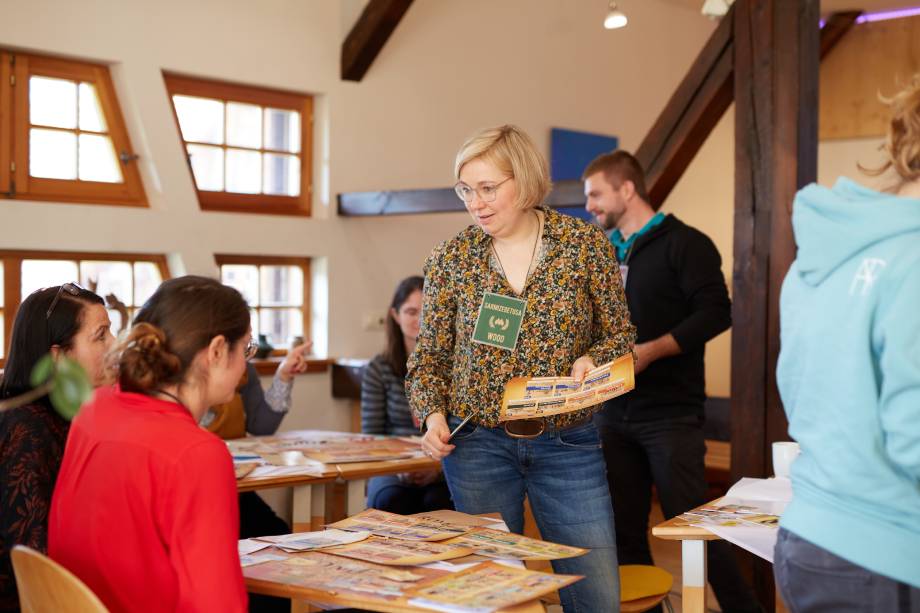
Mistrust is rarely expressed openly within a team. It manifests itself in endless rounds of consultation, in polite reserve, in unaddressed conflicts, and in meetings where everything seems to have been said but little has actually been clarified. This is precisely why building trust within a team is not a minor, optional task, but a key issue for leadership and development. Where trust is lacking, speed, accountability and the ability to learn decline. Where it grows, clarity, commitment and genuine collaboration emerge.
Why trust within a team is so often misunderstood
Many companies talk about trust, but mean harmony. This is a distinction with consequences. A team can treat one another kindly and still not trust one another. For trust does not mean that there is always agreement. It means that different perspectives can be voiced without immediately leading to justification, withdrawal or political cover.
FThis is crucial for day-to-day work. Teams with a high level of trust are quicker to ask for help, address risks more promptly and are more likely to take on responsibility beyond their own roles. Teams with low levels of trust tend to play it safe, communicate more cautiously and invest a great deal of energy in self-protection. Whilst this often appears professional to outsiders, it comes at the expense of internal performance.
It is therefore particularly important for HR, managers and People & Culture teams to recognise that trust is not built through a single event, nor through good intentions alone. It is built through repeated experiences of reliability, fairness, psychological safety and shared effectiveness.
Building trust within a team means pulling the right levers
When teams lose trust, the cause rarely lies solely in team dynamics. Often, it is structural factors that have emotional consequences. Unclear roles, shifting priorities, unresolved conflicts or contradictory leadership signals undermine trust more quickly than any misunderstanding in day-to-day business.
That is why it is worth taking a sober look at the key levers.
1. Clarity before closeness
Many teams try to build trust through personal connections. This can help, but it is not enough. In a professional context, trust is built first and foremost through clarity. Who decides what? How is success measured? How do we deal with mistakes? What expectations apply across the whole team, rather than just in specific situations?
If these questions remain unanswered, teams fill the gaps with assumptions. This is precisely where uncertainty arises. Clarity reduces room for interpretation and makes collaboration more predictable. This is often the first real step towards greater trust.
2. Consistency in leadership
Trust is sensitive to contradictions. If participation is promised but overlooked at the crucial moment, it damages team dynamics. If mistakes are supposed to be discussed openly, but criticism is indirectly penalised, employees will withdraw.
Managers therefore have a far greater influence on the framework of trust than team members alone. Not through perfect communication, but through consistent behaviour. Teams observe very closely whether words, decisions and consequences are consistent with one another.
3. Do not put off conflicts
A team without friction is not automatically healthy. Often, the opposite is true. Where conflicts are not addressed, trust erodes gradually. Issues are sidestepped, informal alliances form, and meetings lose their honesty.
Trust does not grow in spite of conflict, but often precisely through a well-managed conflict. Provided, that is, the team experiences that tension can be addressed and leads to clarification. Then uncertainty turns into clarity.
How to recognise a lack of trust in concrete terms
Not every team articulates its problem so clearly. Rarely does anyone say: ‘We lack trust.’ More often, you’ll hear phrases like: ‘We’re talking at cross-purposes.’ ‘Decisions take too long.’ ‘The atmosphere is tense.’ ‘Everyone is working, but not really together.’
Typical patterns include an unusually high level of hedging, a lack of openness in meetings, cautious feedback, a diffusion of responsibility, and a tendency to wait until problems have become apparent before addressing them. Onboarding also tends to be more difficult in such teams. New colleagues quickly sense whether questions are welcome or whether it is better to observe first and adapt cautiously.
This is particularly relevant for organisations undergoing change. Following restructuring, leadership changes, rapid growth or the merging of departments, trust usually needs to be consciously rebuilt. It is then not merely a cultural aspiration, but a prerequisite for performance.
What really works in practice
Anyone wishing to build trust within a team does not need a motivation programme, but a development framework that combines experience, reflection and application. The most effective approach combines several levels.
First, an honest assessment is needed. Not just a snapshot of the mood with nice-sounding headlines, but a structured analysis: where exactly is the collaboration breaking down? Is it a lack of commitment, unspoken conflicts, a lack of direction, or a disconnect between management and the team? Without this diagnosis, any measures taken will remain too general.
After that, shared experiences are what count. Teams do not build trust simply by talking about trust. They need situations in which collaboration can be experienced in concrete terms. Good team development formats do just that: they reveal patterns without lecturing. Who takes responsibility? Where do misunderstandings arise? How does the team react under pressure, in the face of uncertainty, or when dependent on one another? Such experiences create a solid foundation for reflection.
What happens afterwards is crucial. A strong format without follow-through generates short-term energy, but rarely sustainable change. Only when teams translate their insights into clear agreements does trust become more stable in everyday life. This includes shared communication rules, clear decision-making processes, explicit expectations and a binding approach to feedback.
Why one-off team events are often not enough
Team events can be valuable. They foster a sense of camaraderie, lower inhibitions and facilitate new interactions outside the day-to-day work environment. But their effectiveness depends heavily on the purpose for which they are organised. If trust has already been damaged or structural tensions exist, a positive experience alone is usually not enough.
A typical disconnect then quickly arises: the team has a great day together, but returns to an unchanged working environment. Old patterns reassert themselves. The disappointment is then often greater than before, because the positive energy could not be sustained.
This is precisely where the difference lies between entertainment and effective development. When measures are tailored to the team’s actual situation, professionally facilitated and linked to clear development goals, the result is more than just a good feeling. Collaboration is then specifically improved and becomes measurable.
When which format makes sense
Not every team needs the same approach. If the main focus is on connection, motivation and fostering a new sense of unity, an energising team-building format may be the right place to start. If collaboration is stalling, roles are unclear or tensions are rising, a more thoughtful approach to team-building that includes reflection is needed. In cases of deeper friction, pressure to change or already entrenched conflicts, genuine team development or conflict-oriented team coaching is the more sensible approach.
This may sound obvious, but companies often fail to make this distinction until it is too late. For budgetary or time reasons, a light-touch format is chosen, even though the team actually needs clarification. In the short term, this seems easier. In the long term, however, the root cause remains.
Making trust measurable rather than just talking about it
In the B2B context in particular, one question is key: how can we tell if trust is actually improving? For decision-makers, a positive gut feeling is rarely enough, especially when team initiatives are part of a larger change, onboarding or performance context.
Sinnvoll ist deshalb ein Ansatz, der weiche Faktoren beobachtbar macht. Das kann über strukturierte Checks, Team-Scores, Reflexionsfragen und Vorher-Nachher-Betrachtungen geschehen. Nicht um Vertrauen auf eine Zahl zu reduzieren, sondern um Entwicklung sichtbar zu machen. Wo hat sich die Offenheit verändert? Wie steht es um Verantwortungsübernahme, Klarheit, Konfliktfähigkeit oder bereichsübergreifende Kooperation?
This is precisely where the strength of an impact-oriented approach lies, as BITOU has been applying it for many years in team development and team coaching. When teams are able not only to experience their dynamics but also to understand and make sense of them, the chances of lasting change increase significantly.
The role of leadership in building trust within a team
No team develops greater trust if leadership stays out of the process. At the same time, it is problematic if leadership is too dominant. Both can block progress.
A clear yet thoughtful leadership role is helpful. Leaders should set the framework, articulate expectations and ensure commitment. However, they should not explain every irritation, moderate every tension or control every piece of feedback. Trust also grows when teams take responsibility for their own collaboration.
This is the true test of maturity: not whether everything runs smoothly, but whether the team can work through differences, uncertainty and pressure together. Leadership creates the conditions for this. The team fills them with their behaviour.
What companies should take away from this in concrete terms
If you want to build trust, you should focus less on team morale and more on collaboration. Where is there a lack of clarity, certainty or commitment? Which patterns are really holding the team back? And which approach is best suited to the scale of the challenge?
Trust cannot be imposed. But it can be developed systematically – with a clear understanding of dynamics, appropriate interventions and consistent application in day-to-day work. It is precisely then that a good team spirit becomes a resilient performance factor.
The most helpful question to ask at the end is therefore not: How can we quickly build more trust? But rather: What experience does our team need to have next so that trust can grow again?

Das könnte Sie auch interessieren

The Power of Integration—How Companies Shape Transformation from Within
Employee engagement is the driving force behind business success. Those who manage to truly engage their employees lay the foundation for profound cultural change and sustainable growth. Excellent service does not come about solely through friendly front-line staff—it comes about when every step of the process is conceived and designed with the customer in mind.

Leadership that fosters growth—Why true greatness lies in the success of others
Leadership is changing, just like today’s working world. Whereas authority, control, and expertise often set the tone in the past, other things are now at the forefront: serving the team and the task of developing potential rather than suppressing it.