

Request without obligation & free of charge.
Response guaranteed within 24 hours.


Ch-AI-n reaction
- 6 – 3.000
- 60-180 minutes
- Face to Face
- Indoor | Outdoor
- Level 2
- Innovative team building that combines technology, creativity and artificial intelligence
- High innovation and wow factor thanks to the combination of analogue and AI-generated elements
- Strengthens problem-solving skills, role distribution and cross-group collaboration
- Flexible implementation for different group sizes
When teamwork and artificial intelligence come together
Many companies talk about AI – but how can it be put to good use in day-to-day work?
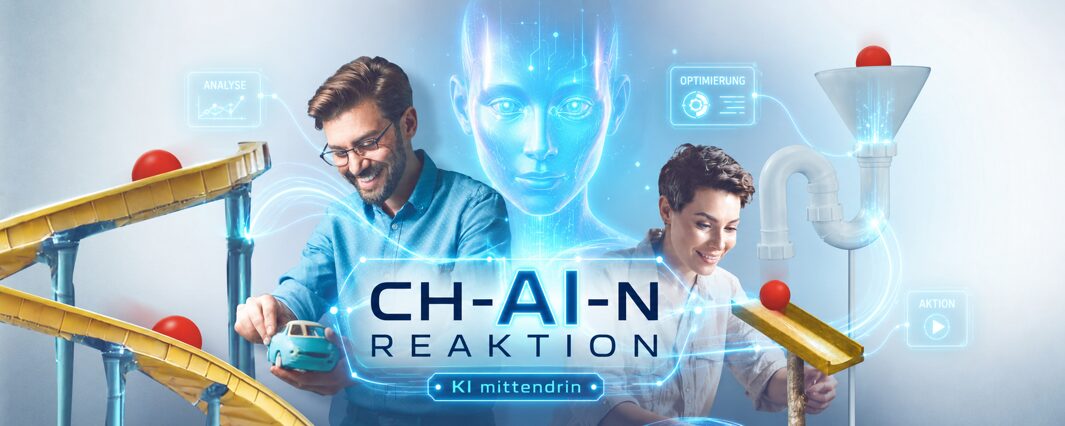
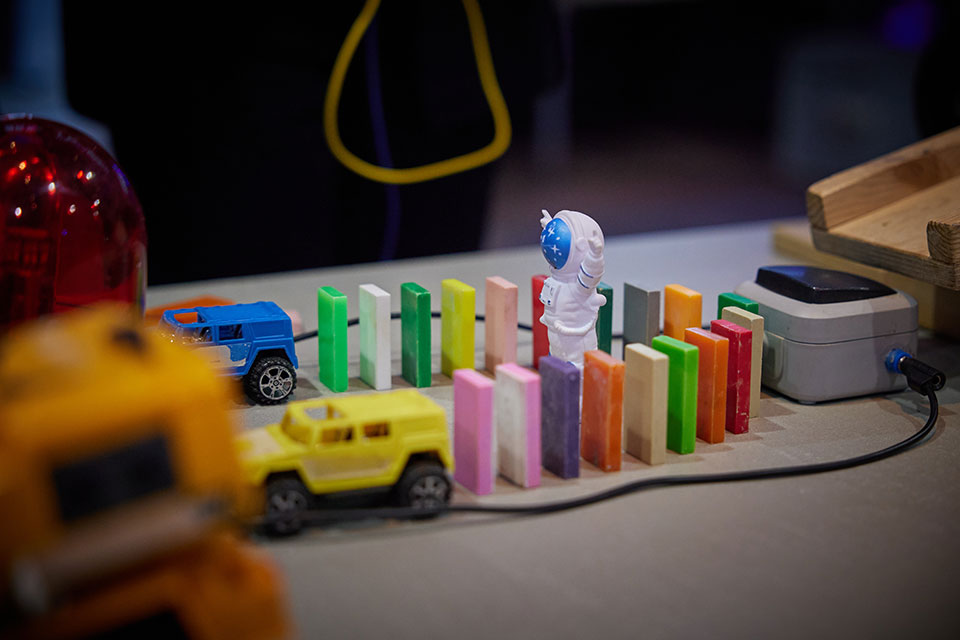
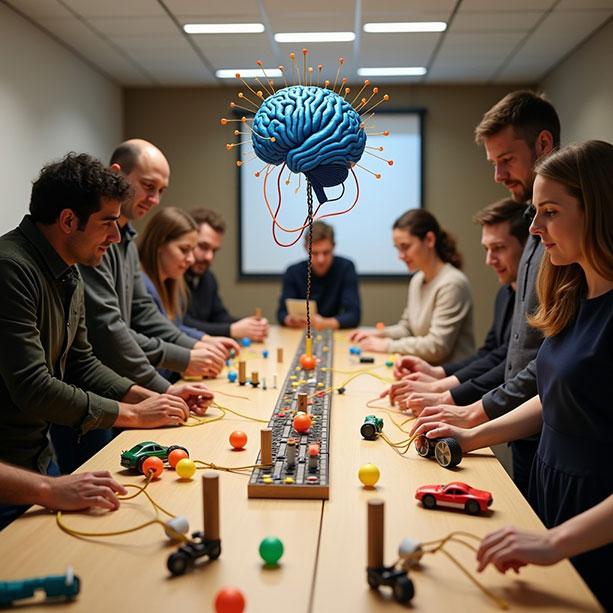
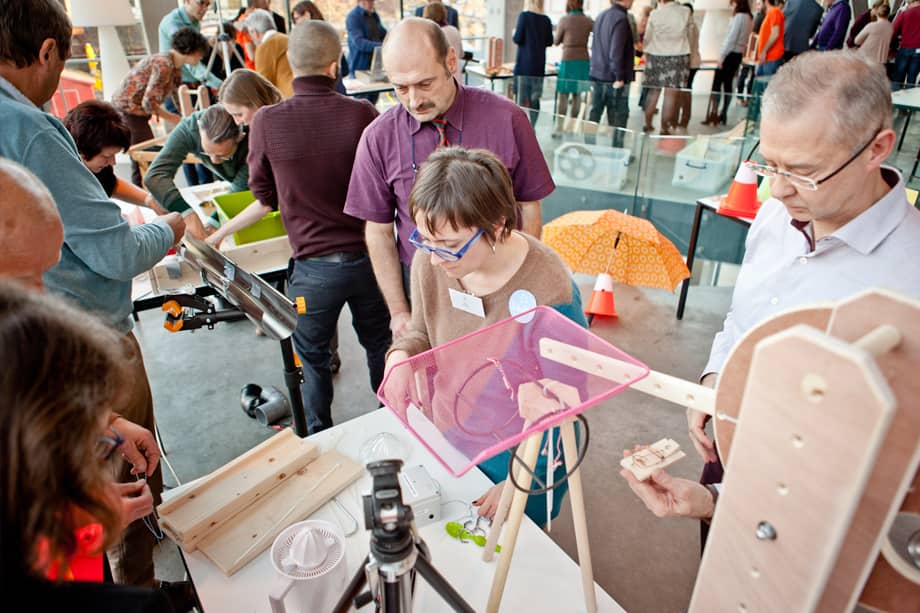
The Ch-AI-n Reaction brings this question to life through a practical, team-based format. Together, participants plan, build and optimise a large-scale chain reaction. They are supported in this by the BITOU AI bot Kai, who provides ideas, organises roles and highlights bottlenecks.
The AI provides inspiration – but it is up to the team itself to decide, test and improve.
Event schedule – Build, test, optimise and experience AI
Introduction & AI Check-in – Where do we stand as a team?
Right from the start, participants are not overwhelmed with theory, but are immediately engaged. A quick Mentimeter poll brings initial associations, experiences and expectations to light: How often do participants already use AI? Which tasks could be supported by AI? And what is particularly important when working with AI?
This helps to establish a shared understanding of the group’s mindset. Differences in experience become apparent, uncertainties are addressed, and the topic of AI is directly linked to day-to-day work. This is followed by an introduction to the BITOU Bot Kai: What can it help with? What are its limitations? And why does the team remain responsible for decisions and implementation?
Challenge briefing & team cards – Each group is given an AI mission
The overall task is then explained: all teams work together to build a large-scale chain reaction. Each team is responsible for its own section, which will ultimately be connected to the other sections. For the chain reaction to work, handover points, timing and interfaces must be carefully coordinated.
The key feature of the format is the team cards. Each group is given its own AI mission, which translates a typical application from everyday working life into a specific construction task. One team uses AI as an idea generator, another as a project organiser, process optimiser, error analyst, interface manager, decision-making aid or automation logic. This means that AI is not simply discussed in general terms, but can be experienced in practice in a wide variety of roles.
Construction phase & AI support – Turning ideas into a fully functional section
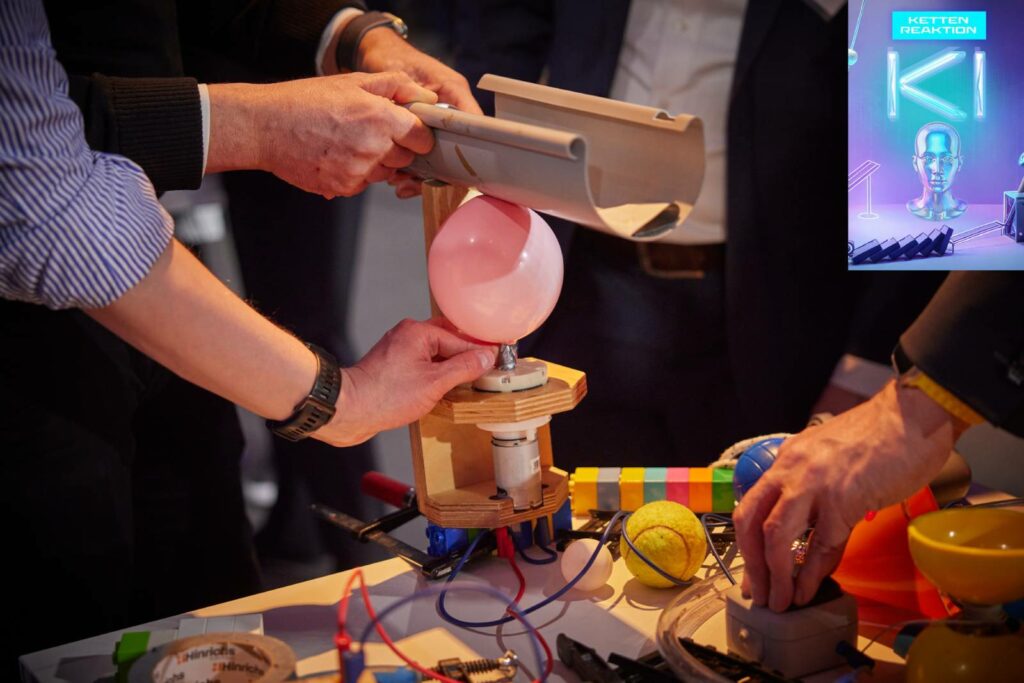
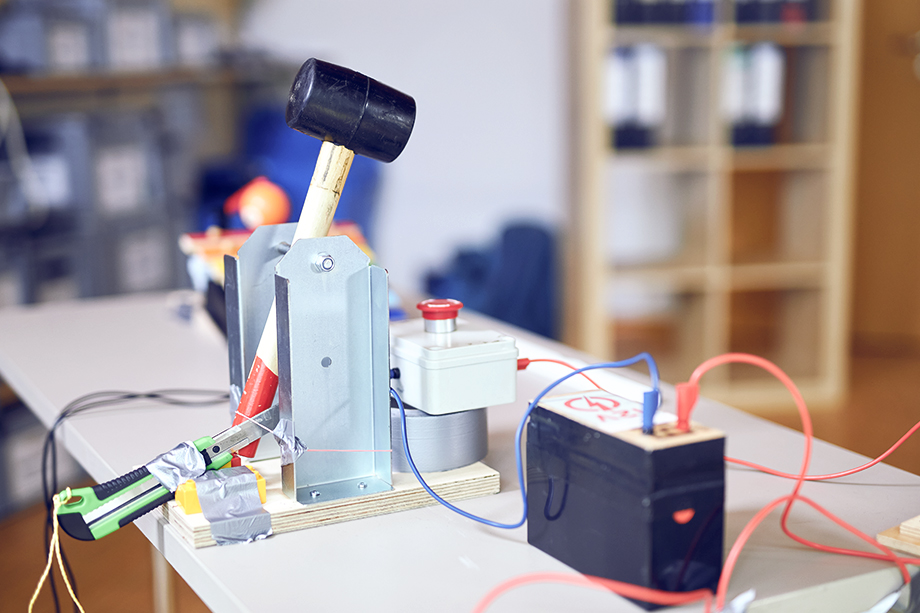
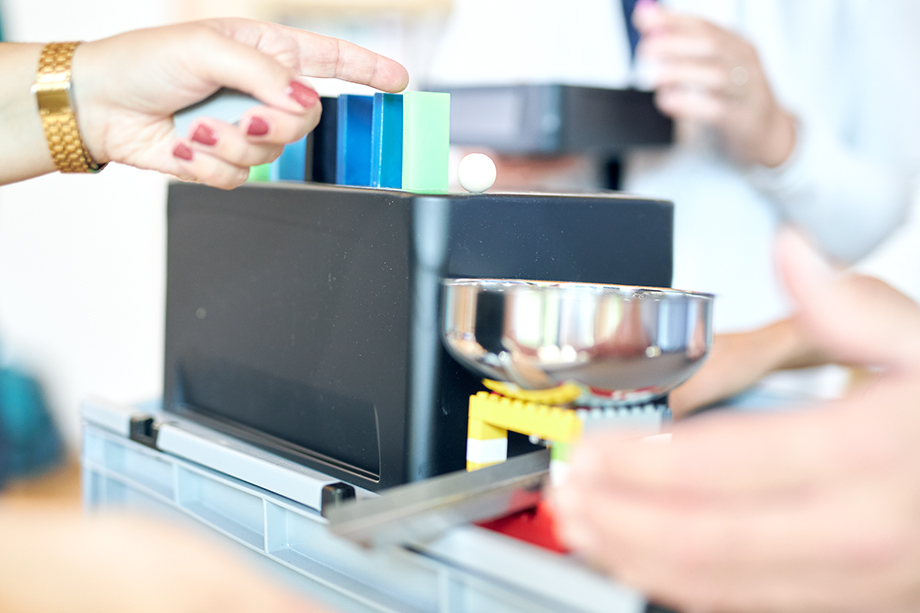
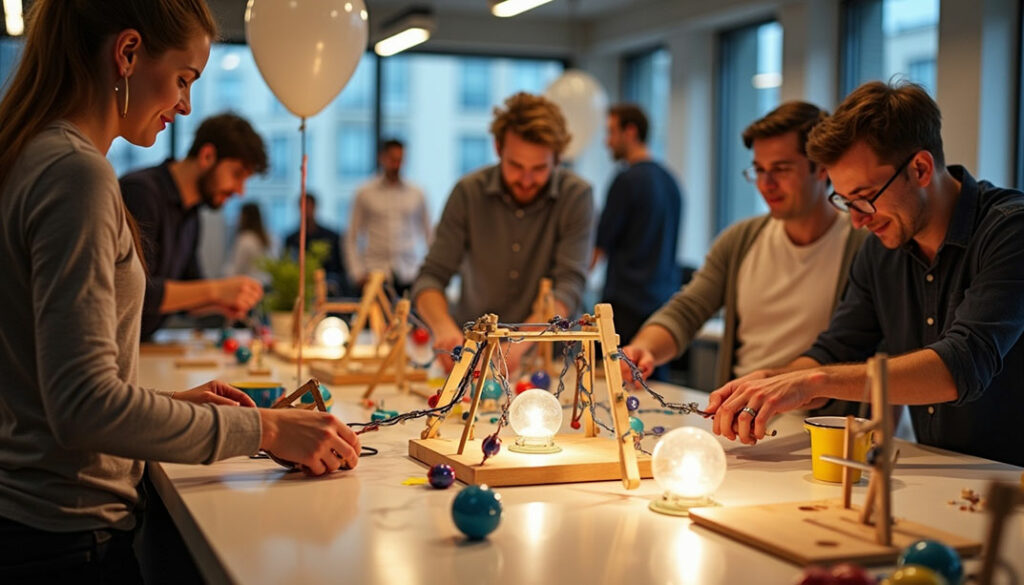
Now the actual construction phase begins. The teams use their materials, develop ideas, test initial mechanisms and receive targeted support from Kai. The aim is not to blindly follow the AI’s suggestions. Rather, the participants learn to ask good questions, describe information precisely and critically evaluate AI responses.
For example, one team asks Kai for three feasible construction ideas, along with associated risks and testing suggestions. Another team uses Kai to structure roles and timelines. Yet another describes a problem in the workflow and uses Kai for root cause analysis and isolated testing. This creates a dynamic interplay between hands-on building, human coordination and AI-supported thinking.
Test, Optimisation & Final – When sections come together to form a CH-AI-N reaction
Following the first construction phase, the sections are tested. This is when it becomes clear whether handover points are functioning, whether target times are being met, and where errors or bottlenecks arise. It is precisely here that the benefits of AI become particularly tangible: teams measure, observe and describe problems, and receive suggestions for optimisation, stability or interfaces.
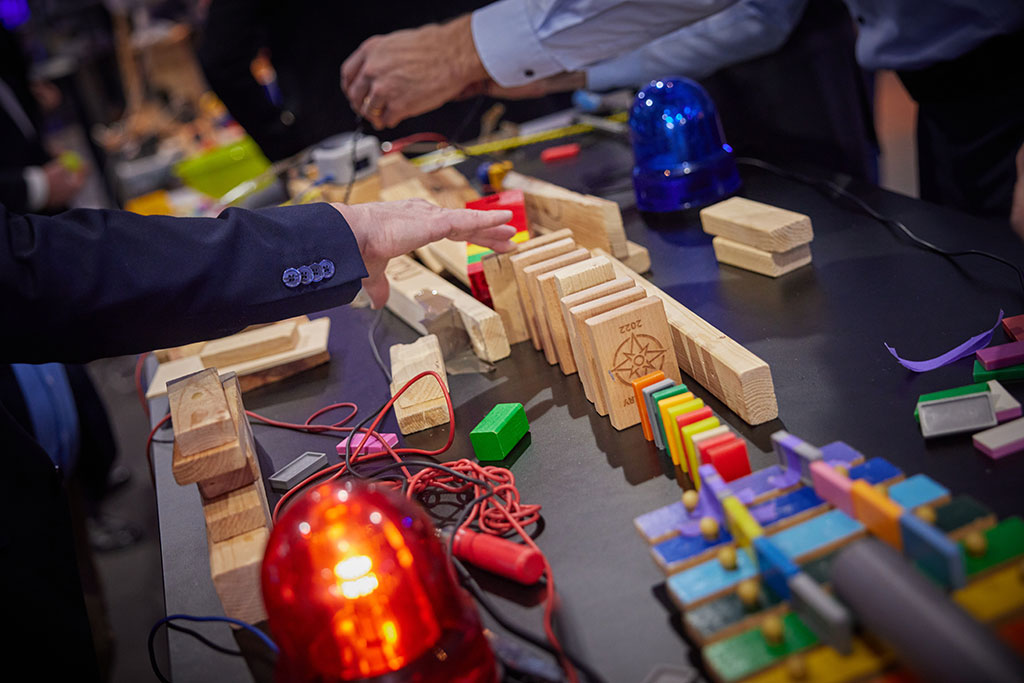
Finally, the entire chain reaction is triggered collectively. When all the sections mesh together, a powerful moment emerges: visible, tangible and collaboratively created. This is followed by a period of reflection. What did the AI make easier? Where was it unrealistic? What information did the team need to provide to ensure Kai was helpful? And which AI applications would the participants like to test more consciously in their day-to-day work in future?




Classification within the BITOU 4-level system
The Ch-AI-n Reaction programme is categorised at Level 2 – Intelligent Team Building – within the BITOU 4-level system.
This means that whilst the experiential element remains strong, the event goes beyond mere fun. Teams work together on a specific task and, in doing so, gain an insight into how they communicate with one another, how they make decisions, and how they can use AI to support their work.
The difference from Level 1 lies in conscious reflection: it is not just about sharing a positive experience together, but about taking away initial insights to apply to everyday working life.
At the same time, the Ch-AI-n Reaction is not yet in-depth team coaching. Rather, it opens up a practical space in which teams can experience the opportunities, limitations and demands that AI brings to collaboration. Those who wish to explore these insights further can continue with Level 3 formats or individual coaching.
The added value of Ch-AI-n Reaction at a glance:
✔ AI is experienced in practice rather than in theory: Participants don’t just talk about artificial intelligence; they use it directly as part of the team process. This makes AI tangible, accessible and a positive experience.
✔ Haptic team-building remains the focus: Despite its focus on AI, the event remains hands-on and action-oriented. The teams build, test, refine and experience collaboration in a very practical way.
✔ Interfaces become visible: A chain reaction only works if handover procedures are properly coordinated. This is precisely what brings communication gaps, assumptions and dependencies to light.
✔ AI skills through hands-on experience: The teams learn how crucial good prompts, clear information and critical evaluation are. AI is seen as a tool – not as an automatic solution.
✔ Process optimisation becomes measurable: Target times, actual times, bottlenecks and tests make improvements immediately apparent. This creates a strong link to real-world work processes.
✔ Promotes cooperation and clarifies roles: The team cards introduce various tasks into the game: developing ideas, organising them, analysing them, making decisions and communicating. This allows participants to experience different forms of collaboration.
✔ Direct application to day-to-day work: Each AI role corresponds to a real-world application: idea generation, structuring, fault analysis, knowledge transfer, decision support, automation or communication.
✔ Enhances critical thinking when dealing with AI: Kai makes suggestions – but it is the team that evaluates, decides and implements them. It is precisely this approach that is key to the effective use of AI within a company.
What our customers say
Ch-AI-n Reaction as part of the BITOU event tour
The Ch-AI-n Reaction activity is part of Level 2 – Intelligent Team Building. It combines a powerful shared experience with concrete insights into collaboration, process-based thinking and the practical application of AI.
Von hier aus kann die Teamreise unterschiedlich weitergehen:
- Level 1 – classic team event:
Formats such as a Team Olympics or Smart Team Challenge generate energy, foster a relaxed sense of connection and create shared experiences. - Level 2 – Intelligent team building:
The Ch-AI-n Reaction event highlights collaboration and the use of AI. Anyone wishing to explore the topic of collaboration further can join in with events such as Turn Around or Chain Reaction XXL. - Level 3 – Team development:
If the experience gives rise to specific development questions, programmes such as Chain Reaction 4.0, Adventure Everest, Before Mars or On Thin Ice are ideal. These programmes allow for deeper reflection on roles, communication, decision-making and team dynamics. - Level 4 – Team coaching:
If, following the Ch-AI-n reaction, a team wishes to explore specific topics in greater depth – such as managing change, collaborating with AI or interface issues – individual team coaching may be the next step.
In this way, an AI team-building exercise can serve as the starting point for a long-term team journey.
Frequently asked questions about Ch-AI-n reaction – FAQ’s
Do participants need any prior knowledge of AI?
What exactly does the BITOU bot ‘Kai’ do?
Is the Ch-AI-n Reaction programme more of a team-building exercise or an AI training course?
Which AI applications will visitors be able to experience at the event?
Will the AI take on the task for the team?
At a glance
General services
- Travel costs and expenses included
- Provision of the required materials
- Preparation of set-up
- Supervision by experienced moderators and trainers
- Moderated reflection round and debriefing
- Follow-up feedback discussion
- Invitation to a non-binding development meeting
- Deletion of participant data after the event
Product-specific services
- Reflection by BITOU trainer (if desired)
- Artificial intelligence
- Final effect – individually customizable
- Experience as ONE team – whether 10 or 3000 people
- Optional for an extra charge: video of the chain reaction
- Optional for an extra charge: branded components
Facts
-
6 – 3.000
-
60-180 minutes
-
Face to Face
-
Germany, EU and Switzerland (we will happily come to your place of choice)
-
Year round indoor and outdoor
-
German, English
-
Min. 30 sqm,, 2sqm per person
Suitable for
- Teams from all areas of the company
- Large groups and entire companies
- International teams
- Customer events
- Employees from all hierarchical levels
- Management teams
- Executive events
- Conferences