

Comparing team-building providers made easy
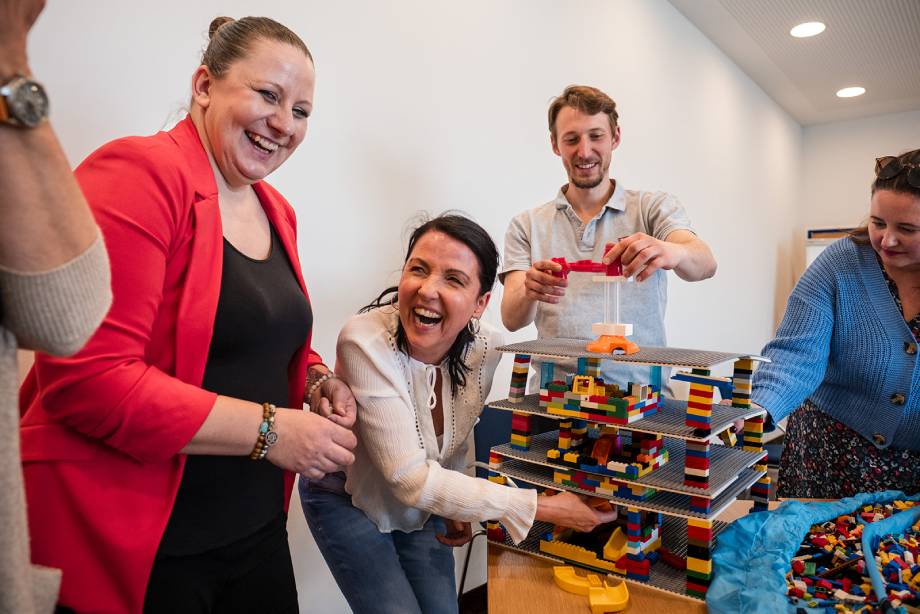
Anyone looking to compare team-building providers is rarely faced with a question about leisure activities. More often than not, it’s about something specific from day-to-day working life: collaboration has stalled, roles are unclear, there’s a lack of shared direction following changes, or a team functions well professionally but doesn’t really work well together. This is precisely why it’s worth choosing programmes not based on the most exciting title, but on the impact they’re ultimately intended to have on the team.
Many companies make the same mistake at this stage. They start by comparing price, duration and the activity itself – raft building, escape games, outdoor challenges, workshops. This is understandable, but it doesn’t go far enough. After all, two formats can look similar yet have completely different effects. What matters is not just what a team experiences, but what this leads to in terms of communication, trust, motivation and performance in day-to-day work.
Comparing team-building providers – clarify the objective first
Before you start comparing offers, you need a clear starting point. Does a team need to come together again following a reorganisation? Is the aim to build more trust between managers and the team? Do new colleagues need to be integrated more quickly? Or does a department need a fresh impetus because friction, silo thinking or declining motivation are holding things back?
The clearer the objective, the more accurate the comparison. A provider who excels at creating emotional group experiences is not automatically the right partner for a team with simmering conflicts. Conversely, a newly formed project team does not always need an in-depth coaching programme if the initial focus is on building connections, generating energy and getting off to a shared start.
It therefore makes sense to sort offers not just by the name of the format, but by the level at which they operate. An experiential format can strengthen cohesion. Intelligent team-building can provide targeted reflection on collaboration. Team development delves deeper into roles, patterns and communication. And if conflicts or stagnant dynamics are already apparent, a motivational day is often no longer enough.
What really sets good providers apart
At first glance, many service promises sound similar. Almost everywhere, there is talk of motivation, a sense of ‘we’ and better collaboration. The difference usually only becomes apparent in the depth of the concept.
A professional provider does not simply work with a modular range of activities, but applies a clear logic linking the occasion, the intervention and the transfer of learning. They enquire about your team’s situation, review the objectives, set realistic expectations and do not automatically recommend the largest or most popular format. This quality of consultancy is a key selection criterion – particularly in a B2B context, where team-building activities are rarely an end in themselves.
The methodological approach is also important. Some providers focus primarily on creating a lively event atmosphere. This can be appropriate when a team deliberately needs a positive shared experience. Others combine experiential learning with in-depth reflection, bringing team dynamics to light. Still others specialise in leadership development, role clarification or conflict resolution. None of these approaches is inherently better than the others, but they must be suited to your specific situation.
Another point is the question of measurability. Not every team-building format needs to start with complex diagnostics. However, if companies wish to work specifically on collaboration and team performance, the impact becomes more tangible if it is recorded in a structured manner before, during or after the initiative. This can be done via checks, scores, feedback loops or delta analyses. For HR, People & Culture and managers in particular, this creates a solid foundation for viewing team-building not as a ‘fun day out’, but as an effective development initiative.
Event-focused or development-focused?
This distinction is extremely helpful when making comparisons. Event-focused providers often excel in dramaturgy, engagement and creating an immersive experience. This is ideal for kick-offs, start-of-year events or team events that focus on energy and camaraderie. Development-oriented providers go one step further. They design formats in such a way that team dynamics are identified, discussed and translated into concrete behavioural changes.
So, when comparing team-building providers, you should ask: Do we primarily want a powerful shared experience or a targeted improvement in collaboration? In many cases, both make sense. The key factor is which priority is set and whether the provider can credibly deliver on that priority.
Standard format or bespoke solution?
Formats that can be booked directly have clear advantages. They are quick to plan and budget for, and are perfectly adequate for many occasions. This can be particularly efficient for established teams seeking a professionally facilitated session.
However, as soon as the situation becomes more complex, the value of a bespoke approach increases. When multiple locations are involved, leadership issues come into play, or conflicts shape the context, standard approaches are often insufficient. In such cases, a provider’s ability to tailor the content, facilitation and knowledge transfer to your specific team situation is crucial.
The most important questions in the selection interview
Good comparability does not come from attractive PDFs, but from asking the right questions. Do not just ask how the format works, but what the provider aims to achieve for your specific event. You can recognise a robust answer by the fact that it is not vague or general.
The following perspectives, for example, are helpful: How is the initial situation assessed? What experience do they have with similar team situations? How is reflection incorporated into the format? What happens after the event to ensure that the momentum is not lost? And how does the provider handle it if tensions arise during the process that require more than just facilitation?
It is equally important to consider the facilitation. The quality of a team-based format depends heavily on the people who run it. Professional confidence, a commanding presence, psychological insight and good timing in group processes often make the difference between short-lived enthusiasm and genuine progress within the team.
Compare prices without overlooking the benefits
Of course, budget plays a role. However, a cheap session with little impact is often more expensive for companies than a higher-quality programme with tangible results. Focusing solely on the total price is too simplistic an approach.
It makes more sense to look at the value for money. Ideally, this should include a preliminary discussion, clarification of objectives, programme design, professional facilitation, materials, tailoring to the team and, where appropriate, a follow-up discussion. If measurement, documentation or knowledge transfer modules are included, this often explains a higher price – but may be precisely the factor that makes the difference in effectiveness.
It is also worth making a clear internal distinction between incentives, team events and development initiatives. If the aim is motivation and recognition, an experience-based format may be entirely appropriate. If the focus is on performance, communication or collaboration, the budget should be assessed from a development perspective.
Typical warning signs when comparing providers
If providers respond to every challenge with the same format, it is wise to be cautious. The same applies if the impact is merely claimed but not described in concrete terms. Statements such as ‘guaranteed to strengthen any team’ sound good, but are of little practical help.
Another warning sign is a failure to engage with your specific context. Anyone who does not ask about team size, the occasion, background, leadership structure or objectives is likely to be planning an activity rather than an effective intervention. Precision is also crucial when dealing with conflict-related issues. Not every team-building format is suitable for safely addressing sensitive tensions.
You should also look at how honestly a provider sets out its limitations. Professional partners do not promise everything. They also explain when a light-hearted team event is sufficient, when a more reflective team-building exercise makes sense, and when team development or team coaching is more appropriate. It is precisely this clarity that builds trust.
This is how comparison becomes truly practical for organisations
In practice, a simple framework helps. Compare providers based on five questions: Does the initiative fit our objective? Is the methodology more event-based or development-focused? How professional is the facilitation? How is the impact demonstrated? And how effectively is the learning transferred into day-to-day work?
This shifts the focus away from programme titles alone and towards the actual fit. For many organisations, this is the point at which ‘We need a team event’ becomes a more precise requirement – such as a format for onboarding new teams, for stabilising the team following change, or for improving collaboration under pressure.
This is precisely where the strength of specialist partners such as BITOU lies: not entertainment for entertainment’s sake, but formats that combine experience, reflection and measurable development. For companies seeking to systematically strengthen their teams, this is often the decisive factor.
Anyone wishing to compare team-building providers should therefore not start by asking which event makes the biggest impression. The better question is: Which provider understands our team’s situation well enough to turn a day spent together into a genuine step forward in development? Once the answer to this is clear, the choice becomes much easier – and the impact significantly greater.

Das könnte Sie auch interessieren
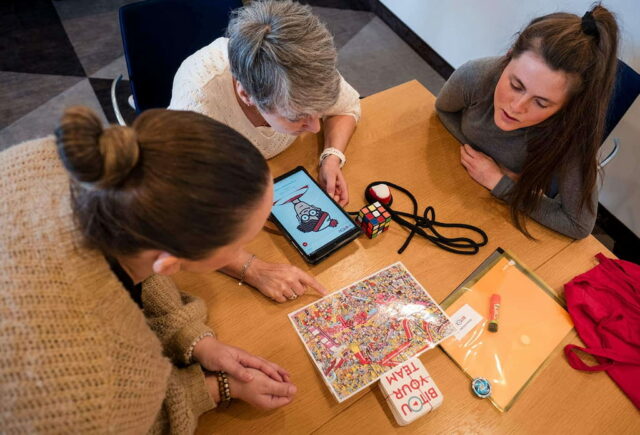
12 team-building activities for businesses
12 effective team-building activities for businesses – from events to team coaching. How to boost collaboration, trust and performance.

Trainee onboarding with Cake Factory
Team spirit meets sweet success: at the Cake Factory, trainees experience first-hand how important communication, understanding roles and cooperation are in everyday working life. In an exciting simulation game centred around cake production, the team grows closer together with every round – from initial chaos to perfect coordination. An entertaining and educational trainee event that is guaranteed to be remembered!

Conflict Resolution in Teams: Strengthen Collaboration and Productivity
Conflicts in a team cannot be completely prevented. But a team can learn to solve them in time before the team spirit or even process flows are endangered.