
A guide to effective team events
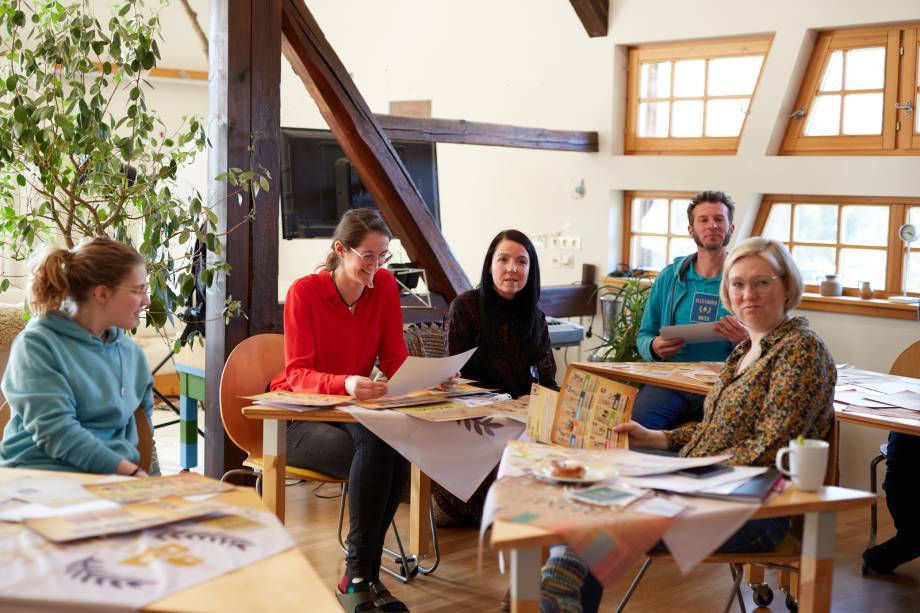
If, after an off-site event, a team comes away with good photos but no improvement in collaboration, the event was too expensive – even if the atmosphere on the day was good. This is precisely where a guide to team events comes in: it helps to plan activities not based on entertainment value, but on their impact.
For HR, People & Culture, managers and in-house organisers, this is a crucial distinction. After all, teams today rarely need simply a change of scenery. They need clarity in their collaboration, mutual trust, effective communication and a shared understanding of how performance is achieved in day-to-day work. A good team event can be a powerful lever for this. A random event often amounts to nothing more than a pleasant day out.
Why a guide to team events is indispensable today
Many companies organise team events under time pressure. There’s an occasion – the start of the year, a departmental meeting, the merger of two teams, a wave of new hires or noticeable friction within the team – and the question of what one ‘could do’ quickly arises. It is precisely at this moment that people often discuss activities too soon and focus too little on objectives.
The problem here is not the activity itself. Escape games, cookery sessions, outdoor challenges or workshops can all be useful. The key factor is whether the format suits the team’s situation. A team with simmering conflicts needs something different from a newly formed project team. A management group following a reorganisation has different requirements to a sales team that needs to regain motivation and focus.
A clear guide to team events helps prevent typical missteps. It creates a framework in which the occasion, the desired outcome, the format, the facilitation and the takeaways all align. This transforms an event into a step towards development.
It’s not the event that comes first, but the team’s situation
Before you approach providers or compare programme options, it’s worth carrying out an honest assessment. What exactly should change after the team event? This question sounds simple, but in practice it is often the crucial bottleneck.
Sometimes the need is clearly visible. Coordination has stalled, responsibilities are unclear, new colleagues are struggling to fit in, or collaboration between sites only works on paper. In other cases, the situation is less clear-cut. Energy levels have dropped, meetings drag on, misunderstandings are piling up, but nobody is clearly identifying the problem.
In that case, it helps not to talk about measures straight away, but rather about observable behaviour. Are sub-groups working against each other rather than with each other? Is there a lack of psychological safety? Are there tensions with management? Or is the team strong professionally, but not yet aligned as a unit? The more precisely this starting point is described, the more appropriate the format will be.
Setting goals that go beyond a good atmosphere
A successful team event should be enjoyable. It should motivate, energise and foster a sense of ‘we’. But a good atmosphere is not a sustainable goal; at best, it is a useful side effect. What matters to companies is whether there is an improvement in collaboration.
Goals become useful when they are specific and actionable. Instead of ‘strengthening the team’, it is more helpful to define whether the aim is to build trust, improve communication, clarify roles or realign collaboration following a change. It is even better if these goals can be identified in advance – for example, through short checks, interviews or structured assessments carried out by the team.
This is particularly important for decision-makers. Anyone investing budget, time and attention in a team-building format needs a clear promise of results. That doesn’t mean that every single outcome has to be measurable down to the last detail. But it should be clear how progress is to be recognised.
The right type of format: experience, team-building or development?
Not every team event serves the same purpose. This is precisely why disappointment often arises when expectations and the format do not align.
A classic experience-based format works well when the focus is on connection, motivation and a positive shared experience. This is particularly useful for anniversaries, team days, kick-offs or as a low-threshold introduction following intensive project phases. Such formats foster closeness and energy, but are no substitute for a more in-depth exploration of team issues.
Team building goes one step further. Here, the shared experience is deliberately linked to reflection. The team doesn’t just do something together, but recognises patterns in communication, collaboration and role behaviour. This is often the right approach when teams are fundamentally capable of working together but need to collaborate more effectively.
Team development is required when structural or interpersonal issues need to be openly addressed. Following changes, when there is friction within the team or when the team’s identity is unclear, a purely activity-based format is usually not enough. What is needed here is facilitation, diagnosis, reflection and the translation of these insights into concrete agreements. BITOU works precisely at this interface between emotional experience, sound team diagnostics and measurable development.
Planning for impact rather than programme logic
Many team events fail not because of how they are run, but because of their structure. The programme is packed, the agenda ambitious, but there is no underlying logic. As a result, one enjoyable activity follows another without the team ever really entering a development process.
A team event becomes effective when the sequence of events contributes to the desired change. A successful day therefore usually follows a clear sequence: arrival, setting the scene, shared experiences or collaborative work, reflection, and drawing conclusions. Reflection, in particular, is often underestimated in practice. Yet it determines whether an ‘aha’ moment remains just that or becomes effective in everyday life.
Equally important is the question of who facilitates. If sensitive dynamics are to be brought to light, mere facilitation is not enough. In such cases, facilitators are needed who can interpret group dynamics, create a sense of security and address sensitive topics constructively. This is a difference that teams notice very quickly.
What is often overlooked in the organisation
Alongside content and objectives, there are a number of practical factors that help determine the impact. The first is the composition of the participants. Should the whole team be involved, or just a part of it? Is the manager actively involved, or deliberately taking on a different role? These decisions influence openness and group dynamics more than many people expect.
The second point is the right setting. Not every issue is suited to an outdoor format, and not every development requires a seminar room. A creative location can open up new perspectives, whilst a safe working environment can make conflict resolution discussions possible in the first place. Here, too, the setting must be appropriate to the task at hand.
The third aspect is timing. Scheduling a team event between two particularly busy weeks can be counterproductive. Teams need the opportunity to really engage. Impact is rarely achieved in ‘sprint mode’.
How to recognise a good team event
A strong format does not demonstrate its quality by having everyone enthusiastic throughout. Particularly when it comes to development topics, friction, reflection and honest discussions are all part of the process. What matters is whether the team has greater clarity at the end than at the start.
Good team events make progress tangible. They not only foster closeness, but also highlight differences. They generate not only motivation, but also a sense of commitment. And they do not end with a general resolution, but with concrete next steps.
This could be a new coordination routine, a clear understanding of roles, a more open approach to feedback, or a jointly formulated vision of good collaboration. The more concrete these agreements are, the more likely an event is to become an effective lever for team performance.
Guide to team events: How to turn the day into real change
The most important step happens after the event. Many good ideas lose their momentum because they are not followed up. The team returns to the pressures of the calendar, operational issues and familiar patterns. Without implementation, the old routine usually prevails.
That is why it should be clear right from the planning stage how the results will be documented. Who records the agreements? When will we review what has changed? What role does the manager play? Where is follow-up, coaching or a further step in development needed?
It is particularly effective not just to assess progress subjectively, but to make it visible. Brief team checks before and after the session, clear observation criteria or delta analyses help not only to sense change, but also to demonstrate it. This fosters acceptance, facilitates learning and leads to better decisions regarding further measures.
The most common misconception: a team event solves everything at once
Team events can make a big difference, but they are no substitute for leadership, structure or continuous development. If a team has been working for months with unclear responsibilities, a single day will not completely resolve this. When conflicts run deep, it often takes more than just a good programme.
That is precisely why it is worth taking a realistic view. Sometimes a team event is the right starting point for building trust and fostering open communication. Sometimes it is a building block in a larger development process. And sometimes, thorough preparation reveals that team coaching or a facilitated workshop is needed rather than an event. Making this distinction not only saves money but also increases the chances of genuine improvement.
So, anyone who plans team events effectively doesn’t think first and foremost about the activity itself, but about the change behind it. When the occasion, objective, format and transfer of learning all come together, the result is more than just a day spent together away from the office. It creates a moment that realigns collaboration – and it is precisely from this that the sense of ‘we’ grows, the very thing that truly sustains teams in their day-to-day work.

Das könnte Sie auch interessieren
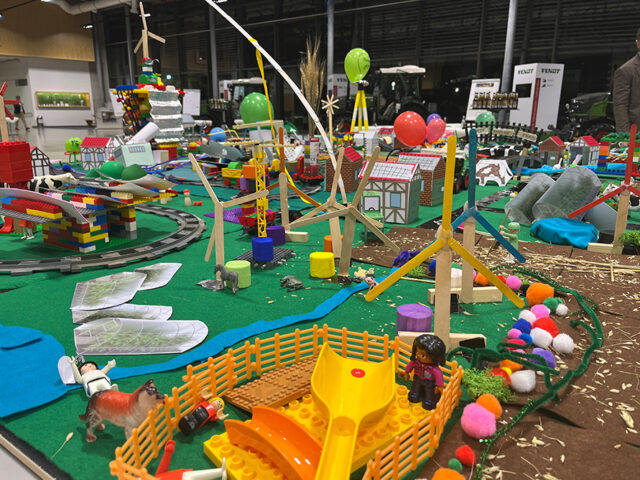
Future Farming with Fendt – What does the future of agriculture look like?
This event with 200 participants shows the uniqueness of individually designed events compared to standard products based on Fendt. Events such as our Smart Challenge, Quer durchs Hotel and Future Farming (City) are the focus and offer content specifically geared towards company-specific topics.
Creative thinking in the workplace: Why this skill will shape our future
New technologies, products, and ways of working demand one thing: creative thinking in the workplace. Goldman Sachs estimates that two-thirds of today’s jobs will soon be automated. At the same time, global GDP is expected to grow by 7%—thanks to AI alone. This means that those who think creatively can take advantage of the opportunities offered by new technologies and reposition themselves.
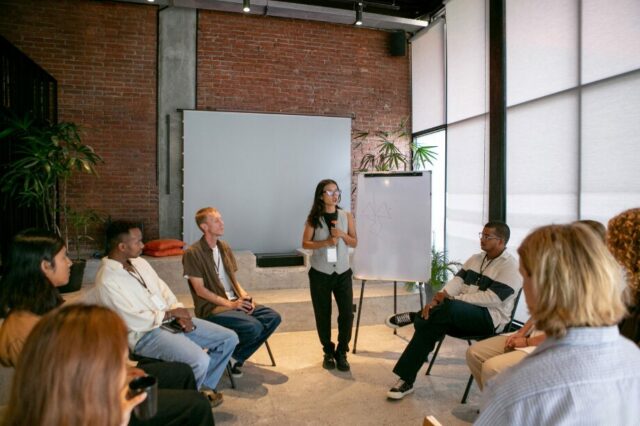
Offsite Workshop: Building an Effective Team
An off-site workshop designed to develop the team fosters focus, trust and clear collaboration – with structure, knowledge transfer and measurable results.